


A comprehensive guide for purchasing one of the most popular kitchen appliances: the dough mixer.
The Guide to Choosing the Best Dough Mixer
Compiled and edited by real Kitchen Appliance Experts
Today, dough mixers are no longer the exclusive preserve of professional kitchens and laboratories, but have become extremely common, thanks above all to the marketing and spread of smaller, more affordable machines that are within the reach of those who want them for domestic use.
It has therefore become an indispensable companion in most Italian kitchens, certainly in those of people who are passionate about good food, eating well and preparing rich and tasty dishes themselves.
An important premise must be made. There are various types of mixers on the market:
- Planetary Mixers
- Spiral Mixers
- Fork Dough Mixers
- Spiral Mixers with Plunging Arms
The most significant difference between the categories is that: the planetary mixer is mainly suitable for soft doughs, whereas the spiral mixer is also suitable for hard doughs, the fork dough mixer is a professional version ideal for dry and delicate doughs, and finally, the plunging arm mixer is the high-quality professional version for working artisan doughs that need to incorporate large amounts of air.
This selection guide is dedicated almost entirely to the second type: spiral mixers.
CONTENTS
1. Spiral Mixer – Description and Main Features
In order to understand how to choose the best spiral mixer, let’s look at its main distinguishing features.
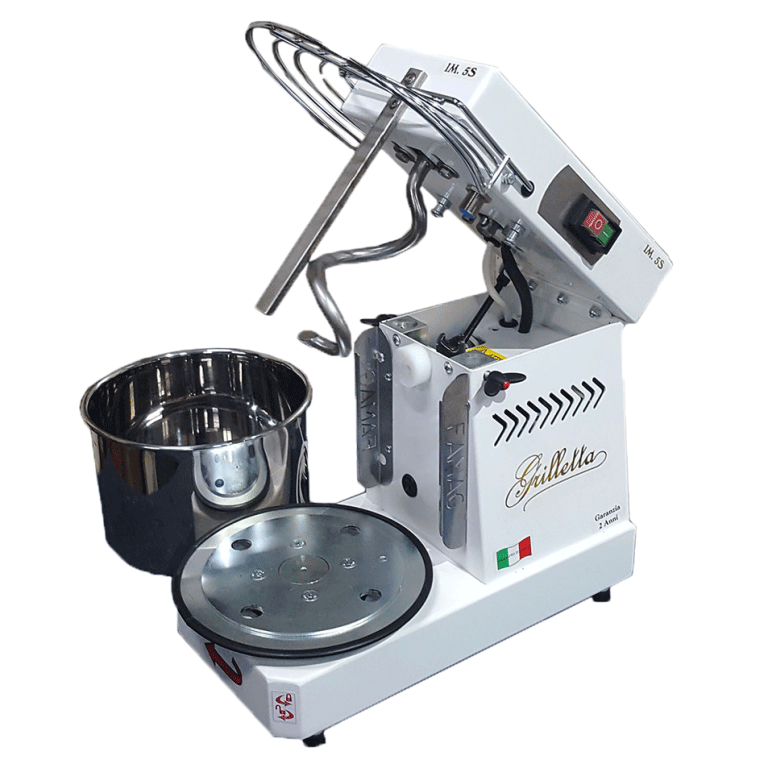
These machines were created for use in professional environments (pastry shops, bakeries, pizzerias, etc.), but thanks to the introduction of smaller, less professional versions, they are now also finding their way into domestic kitchens.
We have already mentioned above how this mixer is more suitable than a planetary mixer for hard doughs used in bakeries, pizzerias, pastry shops, etc.
This difference is fundamentally linked to five elements:
- The large spiral
- The large, sturdy bowl
- The dough splitting bar
- The double rotation (of both the spiral and the bowl)
- The solid mechanical structure
The large spiral
These mixers do not have as wide a range of uses as planetary mixers because their tool – the spiral – is fixed and not interchangeable with other tools for different tasks. This makes the spiral mixer suitable for a single specific use. In other words… it can only do one thing, but it does it extraordinarily well!
The large and sturdy bowl
Made of thicker stainless steel, it has the classic shape of a pot, and therefore does not have a circular wall that tapers towards the bottom. This perfect cylindrical pot shape is linked to the fact that the spiral is not placed in the centre of the bowl (like the tools of planetary mixers, which have a fixed bowl) but is moved to one side. It is the rotation of the bowl that cyclically brings all the dough under the kneading action of the rotating spiral mixer.
The dough splitting bar
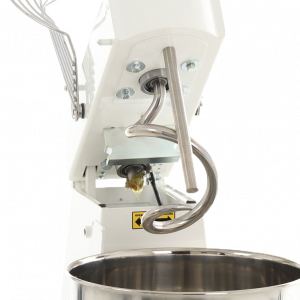
Placed vertically next to the spiral, in the centre of the bowl, it makes the kneading function of the spiral more effective by preventing its rotation from dragging the entire mass of dough behind it.
The double rotation
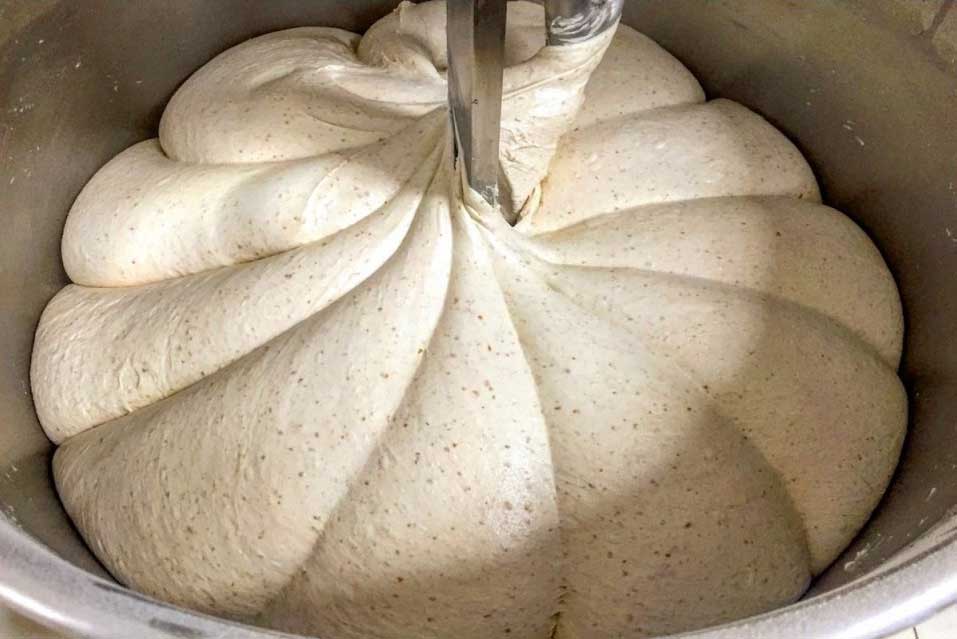
This is one of the secrets of spiral mixers, which determines the exceptional quality of the dough. So let us remember once again that these machines do not only involve the single rotation of the tool placed in a central position (as in planetary mixers), but also the rotation of the spiral tool (off-centre) plus the rotation of the bowl (which obviously has a lower rotation speed).
The solid mechanical structure
It is no coincidence that a spiral mixer can weigh up to 2 or 3 times more than a planetary mixer. It is a structure designed to withstand heavy workloads associated with mixing tough dough, even for uninterrupted processing lasting hours and hours.
2. Spiral Mixer – Classification and Dimensions
When purchasing a mixer, whether for domestic or professional use, there are many factors to consider when choosing the best one.
First and foremost is the dough capacity, i.e. the maximum quantity, expressed in kilograms, of final dough that can be produced with the specific bowl that the machine is fitted with.
It is precisely on the basis of their dough capacity that, for illustrative purposes, we classify them as follows:
Before going into detail, we would like to clarify that the units of measurement used to define the size and capacity of a spiral mixer are kilograms (kg) or litres (L).
Both are commonly used, both by manufacturers and by sellers or end users. Perhaps the most commonly used of the two is kilograms (kg), because it is the one that probably best expresses the “size” or “quantity” of the dough, which is in any case a solid and not a liquid material (however soft and malleable it may be). Therefore, expressing the capacity of each spiral mixer in “kg of dough” is certainly the most correct and understandable approach for the user.
It should be noted that the definition in litres is generally higher than that in kilograms by about 15-20% (for example, an 18 kg mixer has a capacity of 22 litres).
Therefore, from here on, we will define spiral mixers exclusively in kg.
2.1 Small Spiral Mixers (from 5 kg to 10 kg)
Small mixers have a dough capacity ranging from 5 to 10 kilograms. Although most of these are defined as hobbyist level, we are still talking about mixers capable of achieving excellent final results: in fact, always equipped with double rotation (bowl + spiral), what distinguishes them from higher-level models is mainly the size of the bowl, and therefore the actual dough capacity.
However, in terms of the quality and sturdiness of the internal mechanics on the one hand, and the quality of the dough produced on the other, they are in no way inferior to large, professional laboratory models, as they are, to all intents and purposes, perfect smaller-scale reproductions of larger machines.
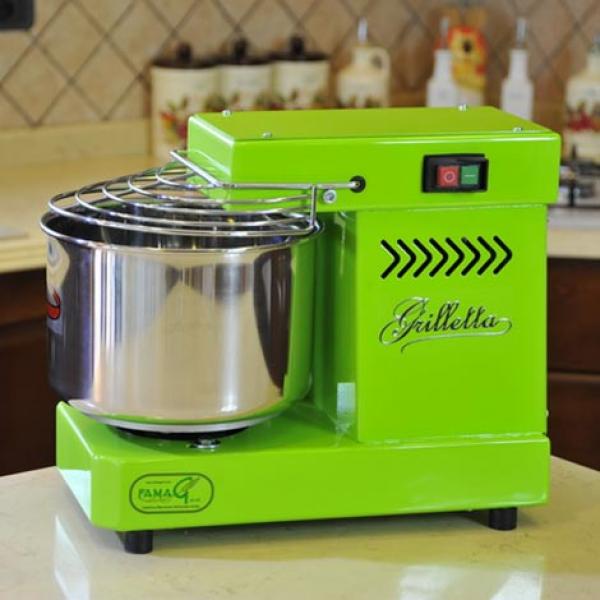
Kneading machines of this size will therefore also be chosen by all those aspiring chefs who want to take care of baking, so that they can knead and then bake bread, pizza, desserts, etc. directly at home, obtaining the best possible results in terms of quality and taste.
As mentioned above, small spiral mixers perfectly replicate the design of industrial ones; however, although the latter have useful features for moving them around, such as transport wheels, they are sometimes considered a little cumbersome by domestic users, who prefer a fixed machine to keep in their kitchen.
To meet this need, there are now spiral mixers with very compact dimensions, which can be easily placed on your kitchen worktop and used without too many problems of movement.
These machines have been specially redesigned to optimise space, weight and portability, while maintaining the same mechanical and structural sturdiness. For this reason, models ranging from 5 kg to a maximum of 10 kg are the most popular with end customers.
Furthermore, given their increasingly frequent placement on domestic kitchen worktops, some manufacturers now also produce different coloured versions of the smaller models to add a touch of colour to the kitchen or to better integrate with its style and colours.
Extremely innovative features have also been recently introduced for smaller spiral mixers, such as:
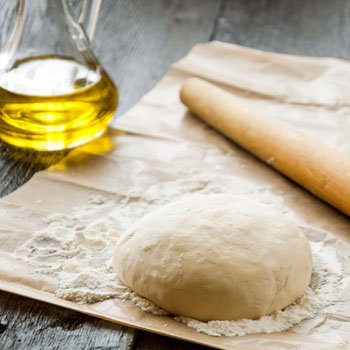
- Tilting head and removable bowl
- 2 operating speeds or 10-speed speed variator
However, we will discuss these features in more detail in dedicated chapters further down this page.
In order to provide home users with some guidance on production, allowing them to achieve the maximum dough capacity obtainable from small dough mixers, i.e. 10 kg, we can say with certainty that you will be able to satisfy a large number of guests. Let’s imagine we want to show our friends the progress we have made as pizza makers: taking the average size of a classic pizza slice, which is 220 g, as an example, with 10 kg of finished dough we will be able to bake up to 45 pizzas.
As for the classic 20×30 baking trays, we suggest a size ranging from 350 g if we prefer a thin pizza to a maximum of 500 g if we want to make a nice focaccia. Again, considering 10 kg of dough, you will be able to make 20 to 28 pizzas.
2.2 Medium Spiral Mixers (from 12 kg to 25 kg)
Medium-sized dough mixers have a dough capacity ranging from 12 to 25 kg.
This classification, we remind you, is not a widespread and recognised convention, but is implemented by us to provide guidance to all those users who do not have extensive experience in the field of spiral mixers.
The models included in this range, in accordance with the ranges of most manufacturers, are generally available in three sizes:
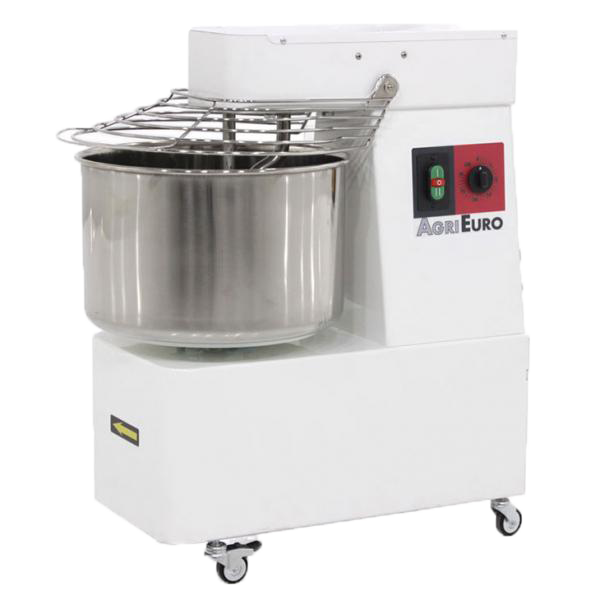
- 12 kg (16 L)
- 18 kg (22 L)
- 25 kg (32 L)
They are available with single-phase 230V or three-phase 400V power supply.
Why do we classify them as medium?
Because, in our opinion, they represent the size that is particularly appreciated by demanding users or families with long-standing culinary traditions who maintain the custom of producing large quantities of desserts, pizzas and focaccia (including Easter cakes), traditional desserts (including panettone and pandoro) or even a certain amount of homemade bread.
The second target group is small businesses or production workshops, such as bars, restaurants, pizzerias, grocery stores, shops selling typical local products, small pastry shops, etc.
In addition to the size of the bowl and therefore the dough capacity, among the aspects that differentiate them from the small ones are elements such as the timer and the transport wheels (not always present on the small models described in the previous chapter).
Additional options (which certainly have a significant impact on the cost) are also available for spiral mixers from 12 kg to 25 kg, such as a tilting head and removable bowl, or the possibility of having 2 operating speeds or a 10-speed speed variator.
As already mentioned, we will discuss these accessories in later chapters.
2.3 Large Spiral Mixers (from 30 kg to 50 kg)
Large mixers have a dough capacity ranging from 35 to 50 kg.
We are stopping at 50 kg for this class because we would no longer define larger models as such, but rather as industrial mixers, suitable for highly structured and large-scale professional activities, and we would be venturing into extremely specialised products.
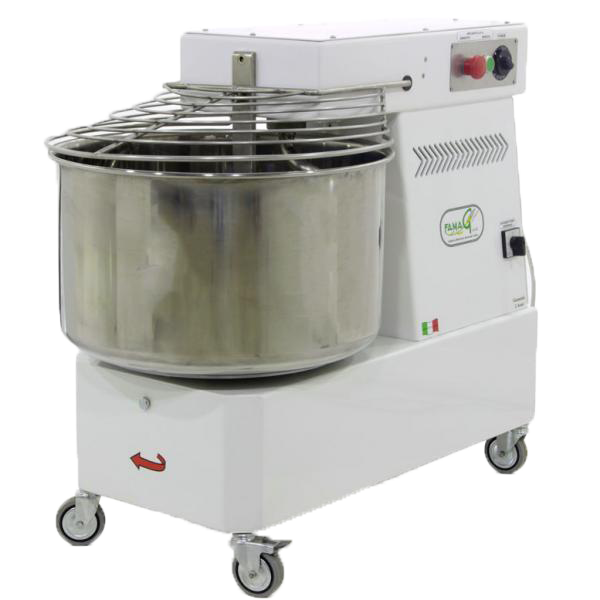
The models included in this range, in accordance with the ranges of most manufacturers, generally come in three sizes:
- 35 kg (40 L)
- 42 kg (48 L
- 50 kg (54 L)
They are available with single-phase 230V or three-phase 400V power supply.
Machines of this level are professional in nature: they include those found in pizzerias that bake over 150 pizzas a day and want to make the dough in a single batch, or even in bakeries and pastry shops. Precisely because they are used in workshops, in most cases they are required to have a three-phase power supply.
Among these we also find models with the option of a tilting head and removable bowl or with 2 operating speeds.
2.4 Conclusions on Mixer Size and… Don’t forget the Minimum Guaranteed Dough!
In summary, dough capacity is the main factor to consider when deciding which mixer to choose.
We suggest that you never be too restrictive when choosing the size and capacity of the machine, because once you have purchased it and become familiar with its special features, its use often extends far beyond your initial intentions.
Some people even regret not having bought a larger one…
However, it is also useful to pay a little attention to the opposite factor, known as the minimum guaranteed dough, which refers to the minimum amount of final dough that a dough mixer can produce.
In fact, when choosing a mixer, the size is chosen based on the maximum amount of dough that is expected to be kneaded, but the entire capacity will not always be used to produce dough.
It would be a shame not to use the spiral mixer even for the simple preparation of a single dessert or other small jobs, thus using only a small part of its capacity.
This is why today’s mixers can also handle minimal amounts of dough thanks to their deep suction and the double rotation of the spiral and the bowl.
However, we always recommend researching and evaluating this aspect before purchasing.
This becomes particularly relevant in the case of small mixers, which can achieve a minimum dough quantity of 300 g. This allows domestic users to knead small quantities, for example to make a small cake or tart or a limited quantity of biscuits.
3. Equipment, Accessories and Spiral Mixers Innovations
Spiral mixers are also undergoing continuous development by the leading manufacturers, making them subject to constant innovation.
Below we look at the main accessories, from the more classic ones that come as standard to the more innovative and recently introduced ones, supplied by a smaller group of manufacturers and most often not included as standard but available at an additional cost.
3.1 The Timer
As far as the timer is concerned, the mixer can be used in two modes:
- in manual mode, i.e. the user will manually start and stop the process without activating the timer;
- in “countdown” mode, where the user can set the mixing time for a certain period of time, so that it stops automatically once the set time has elapsed.
3.2 Removable Bowl and Tilting Head
The removable bowl and the tilting head are interrelated features: where it is possible to tilt the mixer head, it will also be possible to remove the bowl from its base (these features are generally provided together in the same mixer).
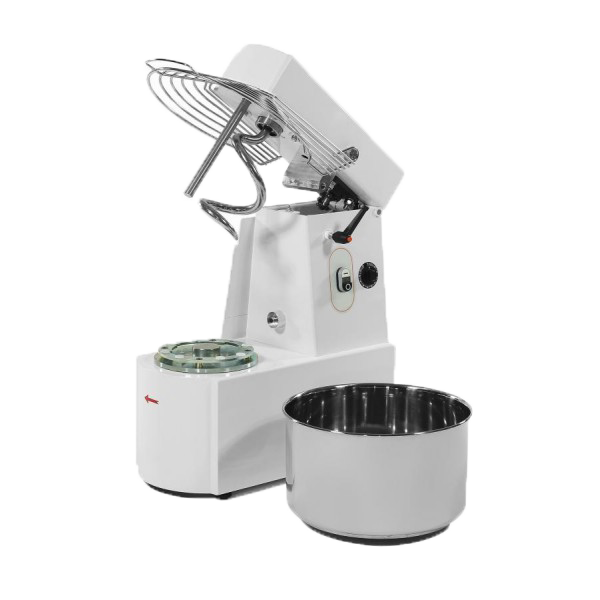
These features offer considerable advantages, both from a hygienic and a functional point of view. Why?
- The tilting head allows for much more convenient and effective cleaning of the spiral and dough scraper.
- The same applies to the removable bowl, which can be washed by hand with extreme ease (without the spiral and dough breaker bar in the way) or directly in the dishwasher.
These two aspects are very important to consider when making dough with gluten-free flour: these types of preparations leave a very sticky residue that is difficult to remove; in this regard, being able to remove the bowl from the base can be very convenient and, above all, much more hygienic.
As for the processing, the removable bowl also allows you to let your dough rise in your preferred location. In fact, if you are making an ‘indirect’ dough (in the case of pre-doughs, such as biga or poolish), simply remove the bowl from its base and move it to where you want the dough to ferment. At a later stage, all the other ingredients will be added to the initial pre-dough.
However, many expert chefs and pastry chefs (and sometimes even the manufacturers of the mixers themselves) claim that, in principle, there should be no need for the liftable head + removable bowl functions when it comes to the washing operation, because ‘a well-made dough comes away completely and easily from the steel bowl without leaving the slightest residue in it, thus remaining almost perfectly clean’.
3.3 Single Speed – 2 Speeds – 10-speed Variator
The speed setting allows the dough ingredients to be mixed gradually. For example, in the case of a For example, in the case of a basic pizza dough, the flour is first mixed with the yeast and water at a low speed; only when the gluten network begins to form are the oil and salt added, kneading at a higher speed. This allows the dough to be made in less time.
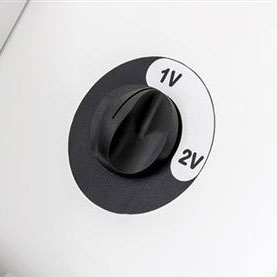
The ability to use different speeds in the dough-making process can sometimes require a certain amount of experience with both the kneading machine and the dough being made. For this reason, we recommend that all home users use a single speed to avoid overworking the dough.
The speed variator, which allows you to reach up to 10 different levels, will be very useful for issues related to processing time: especially when working with liquid dough, such as whipping cream or egg whites, the fastest level will help you make the mixture in the shortest time possible.
However, it should be noted that too high a speed, in the case of hard doughs, such as those for pizza or bread, can overheat the mixture and produce an unsatisfactory dough. For this reason, we reiterate that if you have any doubts because you are making pizza dough for friends, it is always best to use a single speed; this way, you will avoid embarrassing yourself in front of your guests.
4. Prices of Spiral Mixers
Let’s now talk about the prices of spiral mixers that we find at the time of purchase.
First of all, as at the beginning of this guide, we must distinguish between the prices of planetary mixers produced by suppliers, which start at €50, bearing in mind that these are very limited machines with poor structural strength, from the prices of proper spiral mixers, which, even if they have reduced dough capacity, have the same characteristics of strength and functionality as professional mixers, and which therefore start at €500.
Let’s now take a detailed look at how the price of spiral mixers varies.
It is clear that the first factor that determines the price of a mixer is its size and, therefore, the maximum dough capacity that can be achieved with the machine.
Following this criterion, we start from a minimum cost of €500 for a 5kg mixer, used mainly for home preparation, up to €2000 for machines intended for professional use, for example for pizzerias that bake over 200 pizzas a day.
In addition to size, the other aspects that significantly affect the final price of the dough mixer are all the elements we have seen above, which modify the functionality and convenience of the machine.
First and foremost are the removable bowl and the tilting head: these features, which we remind you are always connected to each other, can increase the price by more than €200, depending on the manufacturer of the dough mixer.
Having dual speed or a speed variator can also add €200 to the price.
Finally, aspects of lesser importance in terms of the final price are the timer and the wheels: the increase may vary depending on the size of the bowl, but for these features, the increase can be up to €50.
5. Brief Description of the Planetary Mixer
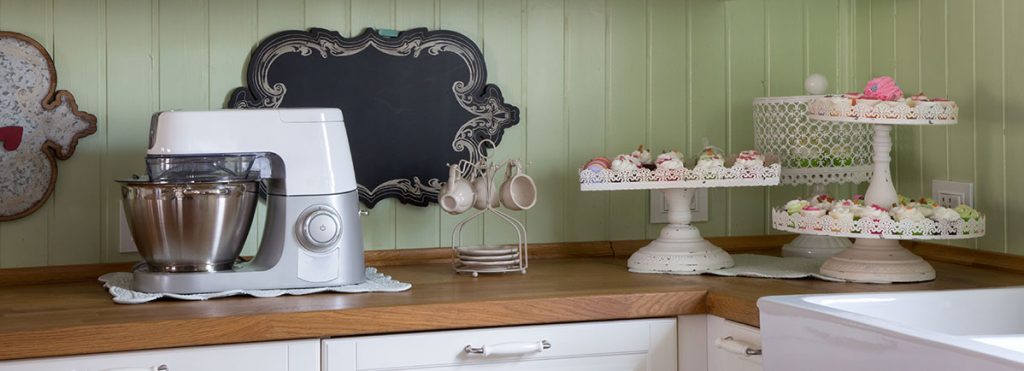
As already mentioned, planetary mixers are mainly suitable for making homemade desserts or soft doughs; however, this does not completely exclude their use for the hardest doughs (without too many pretensions!), such as those for bread or pizza, as they are very versatile machines.
In most cases, these machines are for strictly domestic and limited use, both in terms of frequency of use and the quantity of dough produced, as they usually have a small/medium-sized bowl.
However, they are highly appreciated for their versatility of use, as they can perform a wide range of functions. Their versatility derives from the possibility of attaching different types of accessories:
- The hook: particularly suitable for leavened doughs, such as those for brioche, focaccia, or panettone, which require a certain amount of energy.
- The flat beater: suitable for doughs that are not too liquid but not too hard either, such as shortcrust pastry or even meatball mixture or for making excellent mashed potatoes.
- In the case of desserts, however, it can be used for all those doughs that do not need to be whipped and are denser, such as muffins.
- The wire whisk: specifically for mixing liquid doughs, especially when they need to be whipped, such as cream or egg whites, or even for all those doughs that need to accumulate air, such as meringues.
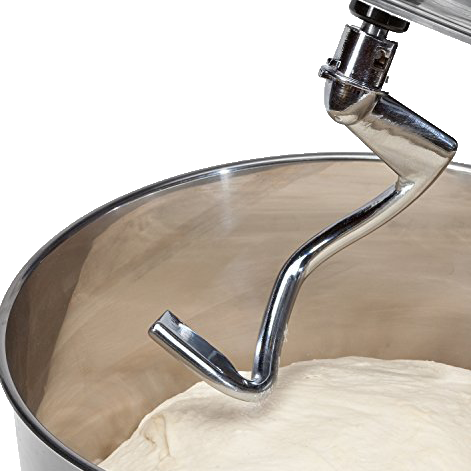
Dough mixer hook 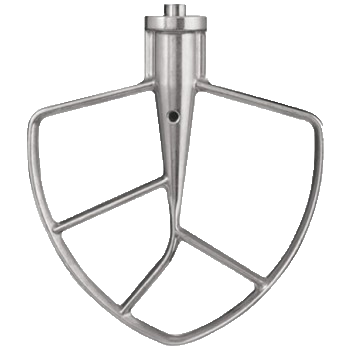
Dough mixer flat beater 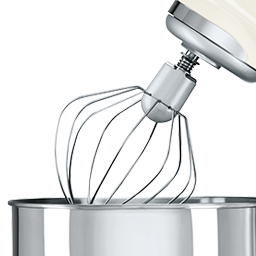
Dough mixer wire whisk
6. Fork Dough Mixer
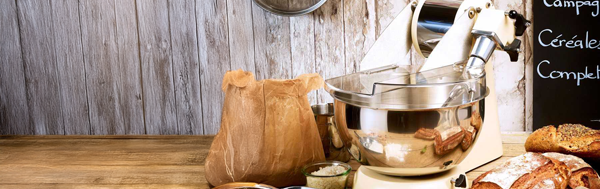
Fork dough mixers are a professional choice for those who want dough to be kneaded very gently, without altering its organoleptic properties.
Their structure consists of a rotating bowl and a fork-shaped tool that rotates slowly, mimicking the manual movements of kneading. This system is ideal for processes that require long times and temperature control, such as naturally leavened bread, high-hydration pizza or artisan baked goods.
Compared to other faster models such as spiral mixers, fork mixers do not overheat the dough and allow perfect oxygenation of the mass, promoting gluten development and optimal leavening. They are often used by professional bakers and pizza makers, but also by demanding users who focus on quality.
Among the main advantages are:
- Perfect distribution of ingredients
- Ideal for long processing times and highly hydrated doughs
- Silent and constant movement
- No mechanical stress on the dough
These mixers are also particularly appreciated for their versatility, as they can work with both hard and very soft doughs without compromising quality.
7. Plungning Arm Dough Mixer
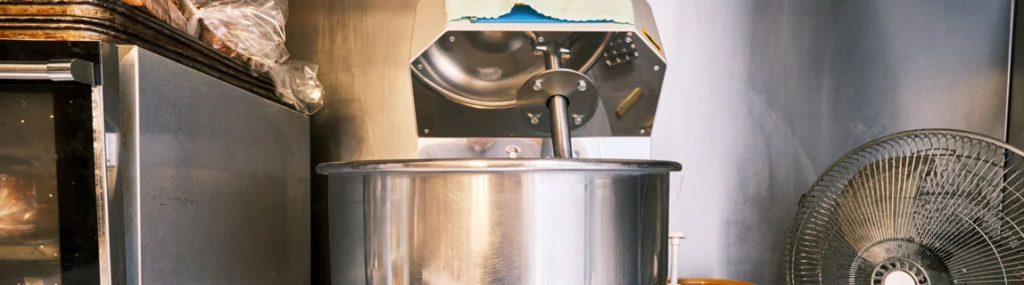
Plunging arm dough mixers are considered by many experts to be ideal for working with complex, delicate and high-fat doughs. They operate using two mechanical arms that simulate the action of kneading by hand, alternately diving into the dough to stretch, fold and oxygenate it with unique delicacy.
They are the tool of choice in artisan bakeries, especially for the preparation of large leavened products such as panettone, colomba, brioche and highly hydrated doughs, but they are also perfect for high-quality bread and pizza.
The great advantage is that during processing, the dough is never cut or stressed, keeping its structure and temperature intact and ensuring excellent results in terms of fragrance, airiness and digestibility.
The main benefits of double arm mixers:
- Perfectly mixed dough without overheating
- Movement extremely similar to manual kneading
- Gluten network developed harmoniously
- Perfect for long, low-speed kneading
- Ideal for professional use in pastry shops and bakeries
These mixers are designed for those who do not compromise on quality, even if they require adequate space and a higher investment than other models. However, for those who aim for the highest quality finished product, they are an excellent choice.
