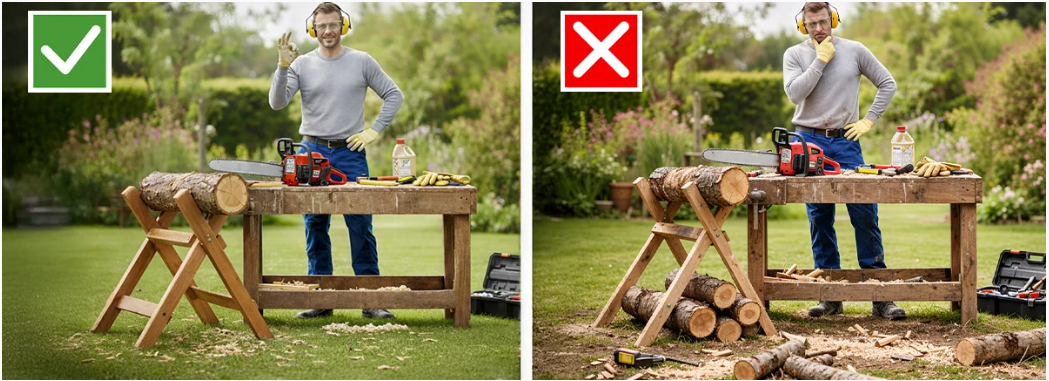
Complete guide on the correct use of chainsaws, what to do and what to avoid before and during use, and how to react in the event of unexpected situations.
The chainsaw is a powerful and versatile tool, essential for cutting firewood, pruning medium to large diameter branches and felling small trees. Precisely because of its effectiveness, however, it requires conscious and methodical use.
After pruning or cutting firewood, it is common to be left with branches and logs that seem never-ending.
In such cases, the chainsaw becomes a practical ally: when used correctly, it allows you to work steadily, obtain clean cuts and handle material more quickly, without jamming, unnecessary effort or wasted time.
This is precisely the key point: the most common problems rarely stem from a “defective” chainsaw, but rather from minor errors in preparation, cutting technique, or machine handling, which increase effort, accelerate wear, and reduce performance.
CONTENTS
How should this guide be used?
Since many problems depend on operational errors, it is useful to clarify what the purpose of this guide is and how to use it properly. Here you will find practical, general advice on how to use a chainsaw correctly, explained in a straightforward way to help you quickly build a solid foundation of knowledge, especially if you are a beginner.
However, it does not replace the manufacturer’s instruction manual. The manual, in fact, is a more technical and comprehensive document, as it contains the machine’s specific features, controls, correct operating procedures, and above all, all the safety rules that must be read, understood, and followed during use. This guide should therefore be regarded as a supplement to the manual: it offers additional advice and general guidance, but the main reference should always remain the product documentation.
Now that the purpose of this guide has been clarified, we can move on to the practical part: let us examine what should be done and what should be avoided in order to use the chainsaw methodically, achieve cleaner cuts, and minimise effort, wear, and unforeseen issues!
1. Before Beginning
Proper use of a chainsaw always begins before any cutting operations start.
Simple but systematic checks drastically reduce the risk of problems during work and allow the machine to operate under the conditions for which it was designed.
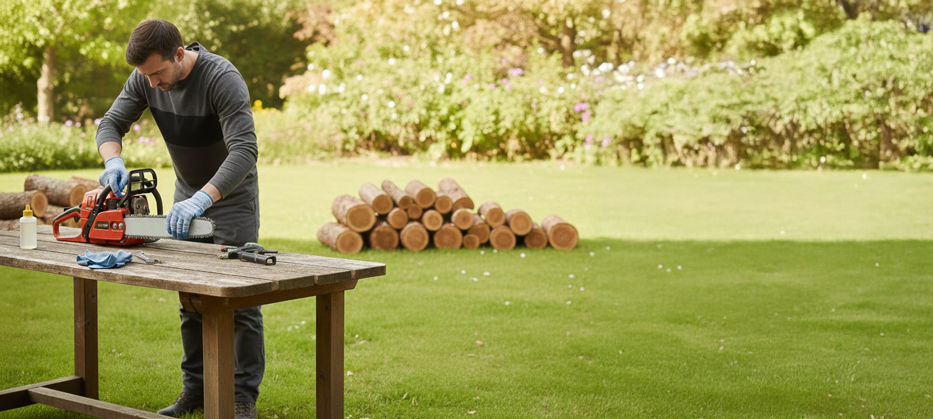
1.1 Checking Bar and Chain
Before each use, it is essential to check that the cutting unit is in good condition. The chain and guide bar operate at high speeds, and any irregularity is immediately reflected in reduced performance, less precise cuts, and accelerated wear.
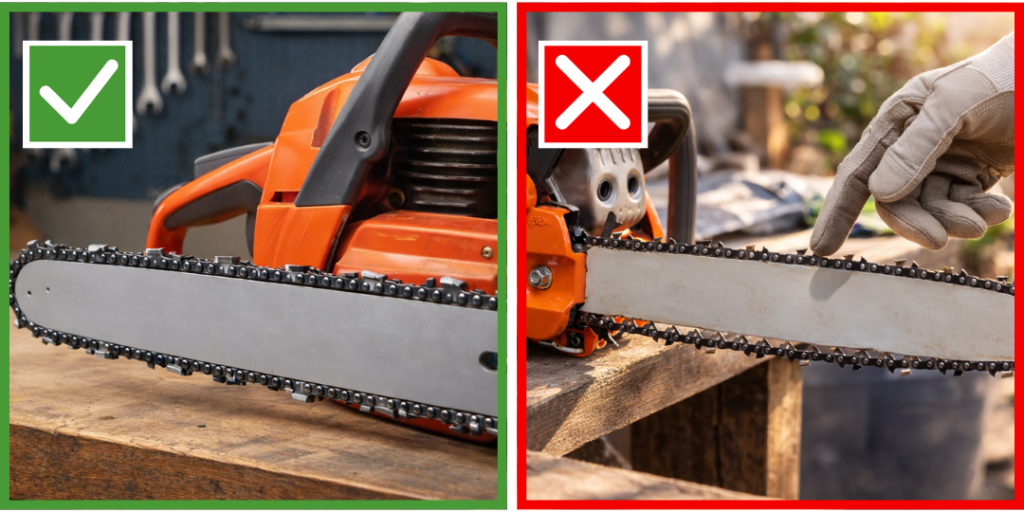
- What to do: check that the chain is correctly tensioned, properly sharpened, and adequately lubricated, as these three factors work together to affect both cutting quality and wear on the bar-and-chain assembly.With the engine switched off and while wearing gloves, check that the chain sits properly on the guide bar without being loose, and that, when moved by hand, it runs smoothly without excessive friction.
If the chain is new, check the tension more frequently during the first few hours of operation, as it is normal for it to settle and stretch slightly. - What to avoid: working with a loose chain, an excessively tight chain, or a visibly blunt one. A loose chain may come off the guide bar or cause uneven wear to the bar; it also increases friction and temperature, forcing you to apply pressure and placing additional strain on the engine and transmission. With a new chain, avoid the “tighten it once and forget it” approach: if it loosens during operation, it may damage the guide bar groove, reduce cutting precision, and, in the worst cases, come off the guide bar.
1.1.2 The Effect of Wood Type on Cutting Performance and Wear
Not all types of wood behave in the same way during cutting. Hardness, moisture content, and fibre uniformity directly affect smoothness of operation, vibration levels, and wear of the bar-and-chain assembly.
- Softwoods (e.g. fir, pine, and poplar) require less effort and allow for smoother cutting, but they may produce more resin or fine sawdust, which tends to accumulate.
- Hardwoods (e.g. oak, beech, olive) are more resistant, so the chain is put under greater strain and becomes dull more rapidly.
- Dry wood is generally more abrasive than green wood and accelerates wear on the cutting teeth.
- Wood with knots or irregular fibres can generate vibrations, cause the cut to deviate, and place greater stress on the guide bar and chain.
For this reason, it is normal for the frequency of inspections to vary according to the material being cut: with hard, dry, or knotty woods, it is advisable to check sharpening, tension, and lubrication more frequently.
Tip: also check that the air intakes are not obstructed by dust or sawdust, and make sure that the chain lubrication system is operating properly. Unobstructed ventilation helps keep the engine temperature stable, while effective lubrication reduces friction and wear on the guide bar and chain, improving the smooth operation and service life of the cutting assembly.
1.2 Checking Guide Bar and Chain Lubrication
The guide bar and chain operate at high speeds and remain in continuous contact. Without constant lubrication, friction increases rapidly, temperature rises, and the cutting assembly loses smoothness of operation. Even a well-sharpened chain, if dry, operates under stress and wears out much more quickly.
A guide bar that becomes very hot in a short time during cutting is often the first sign of insufficient lubrication.
So, how can you check whether the oil pump is functioning correctly and whether lubrication is truly effective?
- What to do: before starting, check the chain oil level. With the chainsaw running and properly stabilised, direct the tip of the guide bar towards a light surface (for example, a clean stump or cardboard) from a short distance. When accelerating for a few seconds, you should notice a light trace or mist of oil being thrown off by the chain: this is a sign that the pump is operating correctly and that lubrication is active.
- What to avoid: starting to cut without first checking that lubrication is actually present, or continuing to work if the chain appears dry. Under these conditions, friction increases, the guide bar may overheat and become deformed, and the chain quickly loses efficiency, resulting in reduced performance and a greater risk of jamming.
Tip: if no trace of oil appears, switch off the machine and check that the tank is not empty and that the guide bar lubrication hole is not blocked by sawdust or debris. Constant lubrication is a major factor in preserving the service life, cutting precision and smoothness of the bar-chain assembly.
1.3 Setting Up the Work Area
A chainsaw is used while moving, with frequent changes in position and cutting angle. For this reason, the work area should be organised before starting, in order to ensure sufficient free space for controlled work and to avoid sudden adjustments.
- What to do: clear the area of obstacles, tangled branches, and any objects that may interfere with movement. Arrange the pieces to be cut and the supports (such as a stump, sawhorse, or stack) in an orderly manner as well, leaving adequate surrounding space to move and adjust position without obstruction.
- What to avoid: working in cluttered environments, with branches scattered on the ground, tools left around, or pieces resting in an unstable manner.
A loss of balance or a stumble can lead to inaccurate cuts and sudden movements, as well as posing a serious safety risk.
1.4 Correct Preparation of the Fuel Mixture
In chainsaws, the fuel mixture of petrol and oil is far from being a minor detail; rather, it is an integral part of correct use, as it ensures proper internal engine lubrication and helps maintain consistent performance over time. An inaccurately prepared fuel mixture can cause difficult starts, power drops and, over time, premature wear of internal engine components. How to prepare the mixture correctly?
- What to do: always use fresh petrol and good quality two-stroke engine oil, following the percentage indicated in the chainsaw manufacturer’s manual, generally around 2% (always check the specific figure). Prepare the mixture in an approved fuel canister, pouring the oil first and then the petrol. Close the container properly and shake it well to ensure a homogeneous mixture before using the fuel mix in the chainsaw tank.
- What to avoid: estimating the proportions by eye, using oil that is not specifically intended for 2-stroke engines, or using unsuitable or dirty containers. Incorrect proportions or impurities can compromise smooth operation and reduce reliability over time.
Tip: if the chainsaw suddenly stops during operation, check the fuel mixture level immediately before assuming there is a fault. When the tank is almost empty, the engine can stop suddenly.
| Aspect | Good practice | Common mistake |
|---|---|---|
| Oil type | Specific oil for 2-stroke engines | Generic or 4-stroke oil |
| Mixture ratio | Approx. 1:50 (e.g. 20 ml oil to 1L petrol) | Dosing ‘by eye’ |
| Container | Approved fuel canister | Unsuitable containers |
| Storage | Use the mixture within 30 days | Store old mixture for months |
1.4.1 How Long the Mixture Lasts and How to Store It
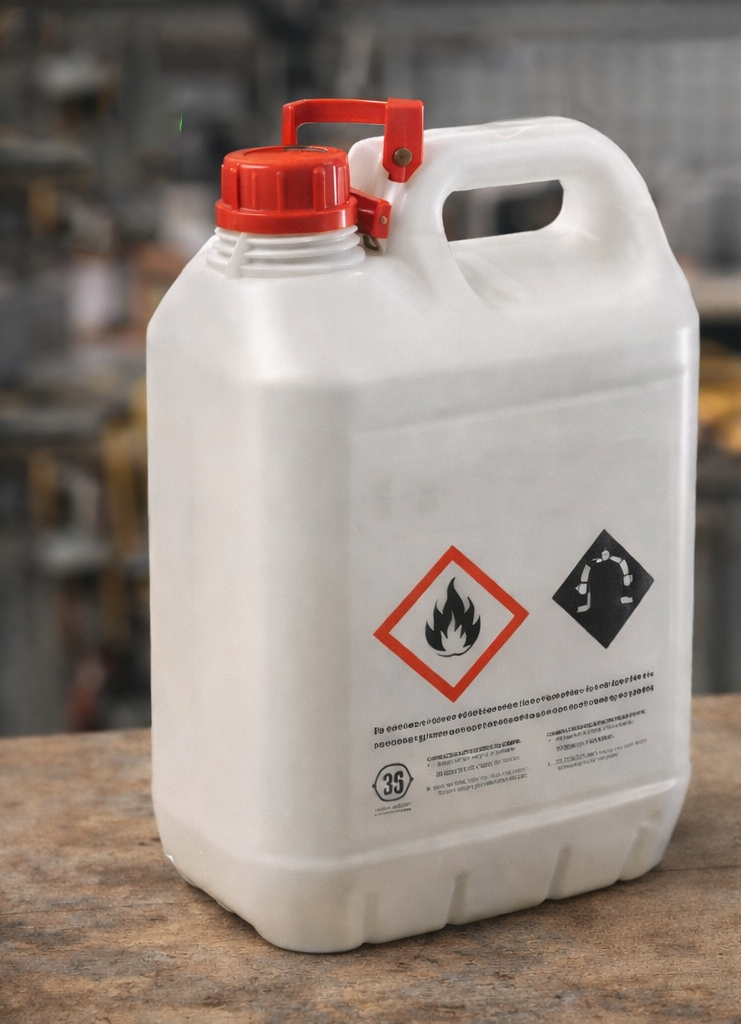
The mixture for two-stroke engines does not retain the same characteristics over time. When left unused for weeks in the canister or tank, it degrades and loses some of its lubricating and combustion properties.
In fuels containing ethanol, moisture can promote separation between petrol and oil, making lubrication less uniform. In these circumstances, internal engine lubrication is no longer even, and difficult starting, irregular running, and the risk of deposits in the fuel system all become more likely.
To avoid these problems, it is important to manage both the quantity and storage of the fuel mixture correctly: prepare only the amount needed for short-term use and preferably use it within approximately 30 days.
Store the canister tightly closed, in a cool place and away from heat sources.
Avoid using fuel mixture that has remained unused for months, or shaking and reusing fuel that has already undergone separation. Although seemingly normal, a deteriorated mixture can cause drops in performance and compromise proper engine lubrication.
Tip: if, after a period of non-use, the chainsaw is difficult to start or runs irregularly, always check the quality of the fuel mixture before working on the spark plug or carburetion. Often the problem is simply related to unsuitable fuel.
Use only fuel containers approved for petrol, bearing the UN marking (containers certified for flammable liquids in accordance with ADR regulations), made of plastic specifically designed for hydrocarbons or of painted metal.
1.5 Correct Start-Up
The starting phase is a delicate one, because it is the moment when the operator effectively takes control of the chainsaw.
Doing it correctly reduces the risk of sudden movements during the first few seconds and, at the same time, avoids unnecessary strain on the starter rope, spring, and starting mechanism, which may wear over time.
- What to do: start the chainsaw on a stable and clear surface, with the machine well supported and under control. For internal combustion models, follow the starting sequence indicated in the manufacturer’s manual. A firm, guided start reduces jolts and sudden movements, preserves the starting system and allows work to begin in a safer and smoother manner.
- What to avoid: starting the chainsaw in an unstable position, on slippery ground, or ‘in mid-air’. Under these conditions, it is easy to lose control during the first few seconds of operation, and the starter rope tends to be pulled irregularly, increasing wear on the starting system and overall stress on the machine.
2. Correct Use During Cutting Operations
It is during cutting that the chainsaw is really put to the test. Even a machine in perfect condition can lose efficiency and wear out quickly if it is operated with poor technique, excessive pressure, or incorrect posture.
At this stage, not only safety matters, but also the quality of the result and the durability of the components.
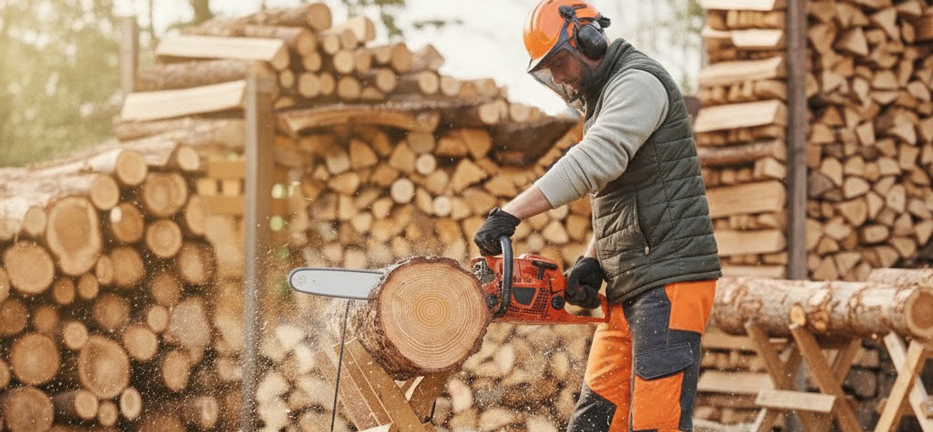
In the following points, we will examine what should be done and what should be avoided in order to work more smoothly, reduce mechanical strain, and maintain consistent performance over time.
2.1 Grip and Posture When Cutting
The way the chainsaw is held has a direct impact on control, cutting precision, and safety. Correct posture allows the machine to work in alignment, keeps the engine speed stable, and distributes stress evenly across the guide bar and chain.
Conversely, an unbalanced stance leads to compensatory movements, torsion, and vibrations that, over time, have an impact on wear and on the quality of the result.
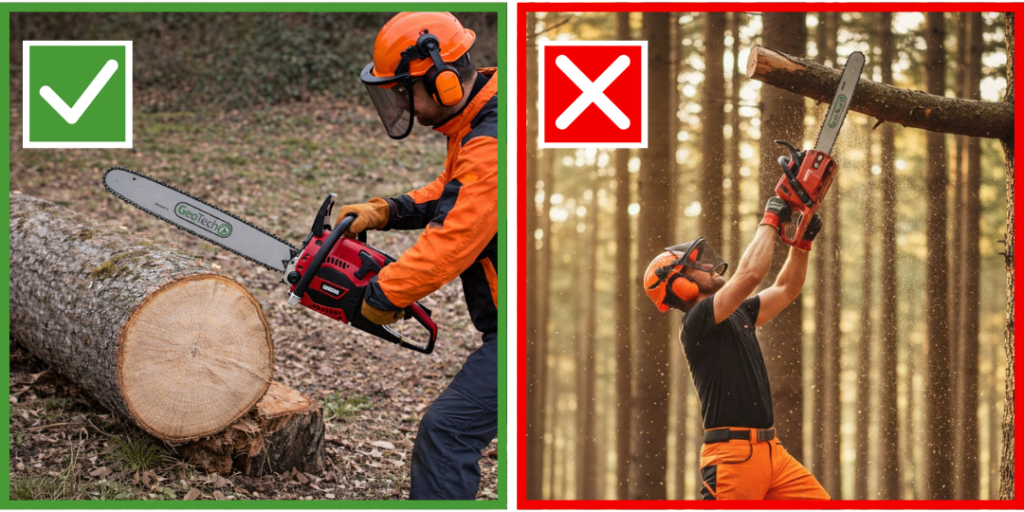
- What to do: always hold the chainsaw with both hands, with your fingers and thumbs firmly wrapped around the handles, maintaining a stable position slightly to the side of the guide bar. This improves control, reduces the risk of kickback and allows for a smoother cut with less strain on the transmission.
- What to avoid: working with one hand or with an unbalanced posture, and in particular making cuts with the chainsaw above shoulder height.
In this position, proper forward pressure is lost, and the operator tends to “pull” the machine towards the branch. The guide bar operates out of alignment, increasing vibrations and stress on the clutch, sprocket, and guide bar, resulting in faster wear and less precise cutting.
Above shoulder height, control of the tip is also reduced: a sudden movement of the wood is enough to cause abrupt corrections or binding.
Tip: keep the cut below shoulder height; if the branch is high, reposition yourself and bring the cutting point lower, or use a suitable tool (a pole pruner) instead of trying to “reach up” with the chainsaw.
2.2 Managing Cutting Pressure
One of the most common mistakes is thinking that pushing harder makes the chainsaw cut faster. In reality, a chainsaw works properly when the chain maintains good speed and the engine remains within its correct operating range: in this way, chips are expelled effectively, the cut proceeds smoothly, and stress on the components remains under control. By contrast, when the cut is forced forward or the machine is operated under load at low revs, friction and temperature increase, the chain has difficulty clearing the cut, and the machine loses performance.
How can the pressure on the cut be managed, avoiding jamming and premature wear of chain and bar?
- What to do: apply moderate and constant pressure, allowing the sharp chain to penetrate the wood, and maintain an adequate working regime while cutting. An engine operating within its correct range keeps the chain speed stable and makes the cut more consistent, reducing stress and wear over time.
- What to avoid: pushing hard to ‘force’ the cut forward, or plunging the guide bar into the wood while the engine is at idle or operating at low speed. Working under excessive torque forces the clutch to slip and increases its wear. Under these conditions, friction and temperature increase, the risk of binding becomes greater, and the chainsaw operates under stress, resulting in reduced performance and faster chain wear.
Tip: if, during cutting, you feel that you need to apply more pressure than usual, stop and check the sharpness of the chain and the efficiency of the chain lubrication system. A well-sharpened and lubricated chain ‘enters’ the wood with moderate pressure and keeps the engine at its optimum speed.
2.3 Avoiding Contact with the Ground
Contact with soil, sand, or small stones is one of the fastest causes of chain dulling.
Unlike wood, these materials are abrasive: it takes only a few moments for the cutting edge to become damaged and for the chainsaw to begin cutting less effectively. When the chain loses sharpness, you are forced to push harder, the engine works under greater load and vibration and overheating increase.
Avoiding contact with the ground means maintaining clean cuts, reducing stress on the bar and chain and limiting the frequency of sharpening.
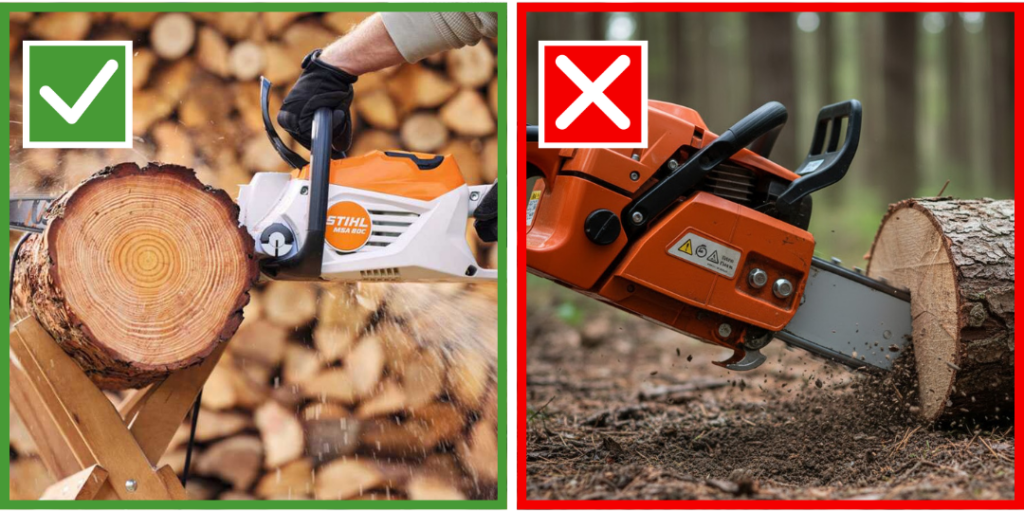
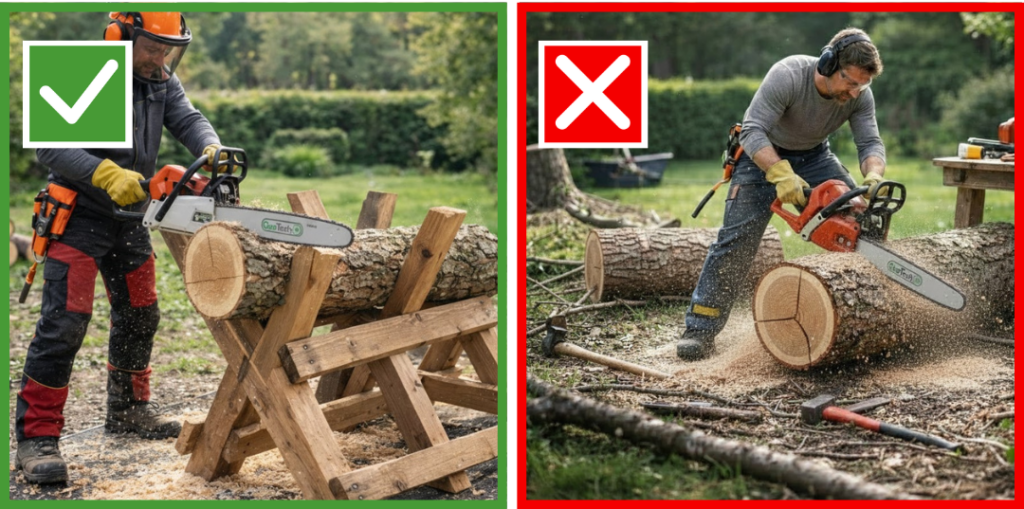
- What to do: whenever possible, complete cuts on clean, raised supports, for example on a sawhorse or with the piece properly supported and lifted off the ground. In this way you preserve the sharpness of the chain and maintain more consistent performance, without having to force the machine.
- What to avoid: driving the guide bar into the ground to complete the cut, or cutting directly on pieces resting on the ground.
Even brief contact with sand or soil quickly ruins the cutting edge, worsens the quality of the cut and accelerates chain and bar wear.
2.4 Managing Working Time
Even when the chainsaw is working properly, continuous work under stress causes the temperature of the engine and cutting unit to rise progressively. When the machine operates for too long without breaks, performance may decline, perceived vibrations increase, and binding or overheating becomes more likely, especially during demanding cuts. What should be done to give the chainsaw a breather and what should be avoided so that it does not overheat and lose performance?
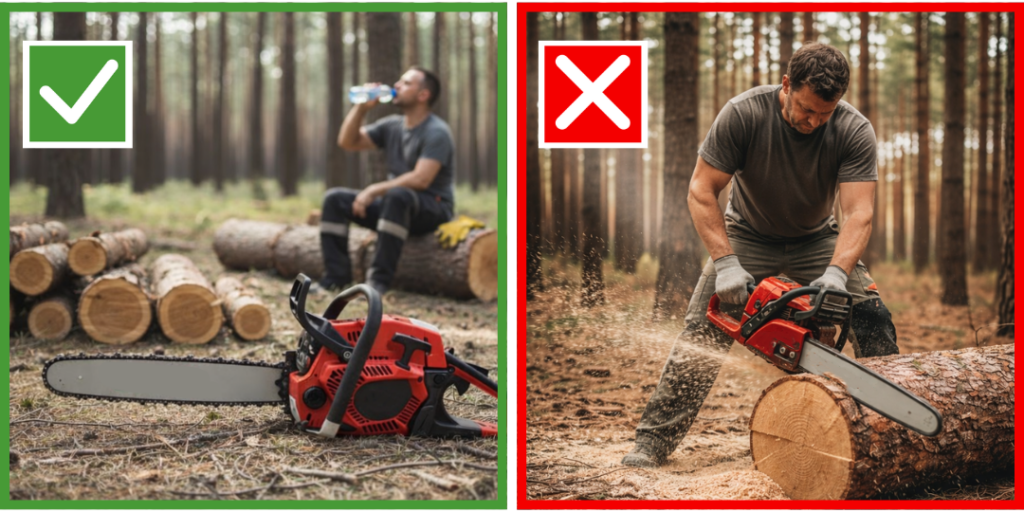
- What to do: alternate cutting phases with short breaks, especially when working on hard wood or large diameters. Natural cooling between one series of cuts and the next helps the chainsaw maintain more consistent performance and contributes to extending the service life of the components under greatest stress.
- What to avoid: working continuously without breaks during prolonged periods of strain. Under these conditions, the machine tends to heat up more, may lose cutting smoothness, and becomes more prone to performance loss and premature wear.
Tip: after a demanding cut, leave the chainsaw idling for a few seconds before switching it off. This short stabilisation time helps to dissipate accumulated heat and helps to preserve engine, clutch and internal components over time.
3. What to Do if Something Goes Wrong?
Even when following all the advice and working carefully, unexpected situations can still arise with a chainsaw, especially when the type of wood, the cutting diameter, or the conditions of the work area change.
Sometimes all it takes is a branch under tension, a chain beginning to lose its sharpness, or a poorly set cut for vibrations, performance loss, or minor binding to occur.
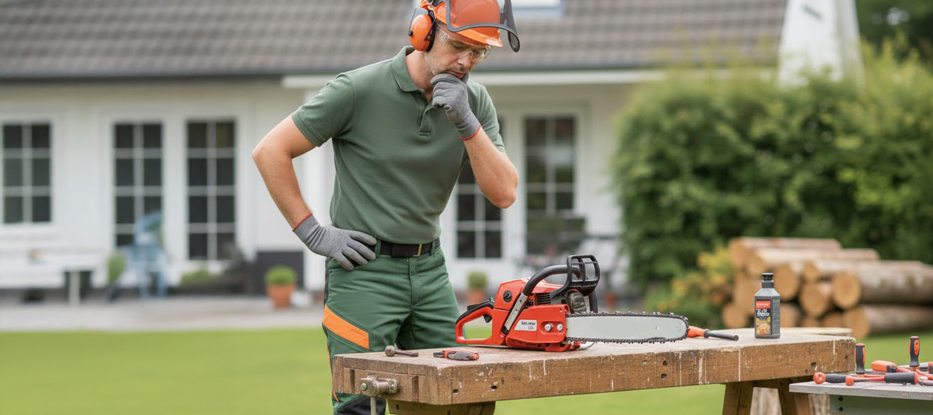
The difference is not only in the problem, but in the way one reacts. Stopping the chainsaw at the right time and acting methodically can prevent a temporary inconvenience from turning into damage to the bar, chain or engine. On the contrary, continuing to work by forcing the machine increases wear and tear, overheating and the risk of prolonged downtime.
In the following points we look at what to do and what to avoid in the most common situations, so as to quickly restore correct operation and protect the service life of the machine.
3.1 Chain Cutting Poorly
When the chainsaw no longer “bites” into the wood as it should, produces very fine sawdust, or tends to deviate from the cut, the problem is almost always related to the chain.
A loss of sharpness or incorrect tension reduces cutting efficiency and increases the strain on the engine and transmission. Recognising these signs promptly makes it possible to take timely action, restore cutting quality, and prevent accelerated wear of the bar and sprocket.
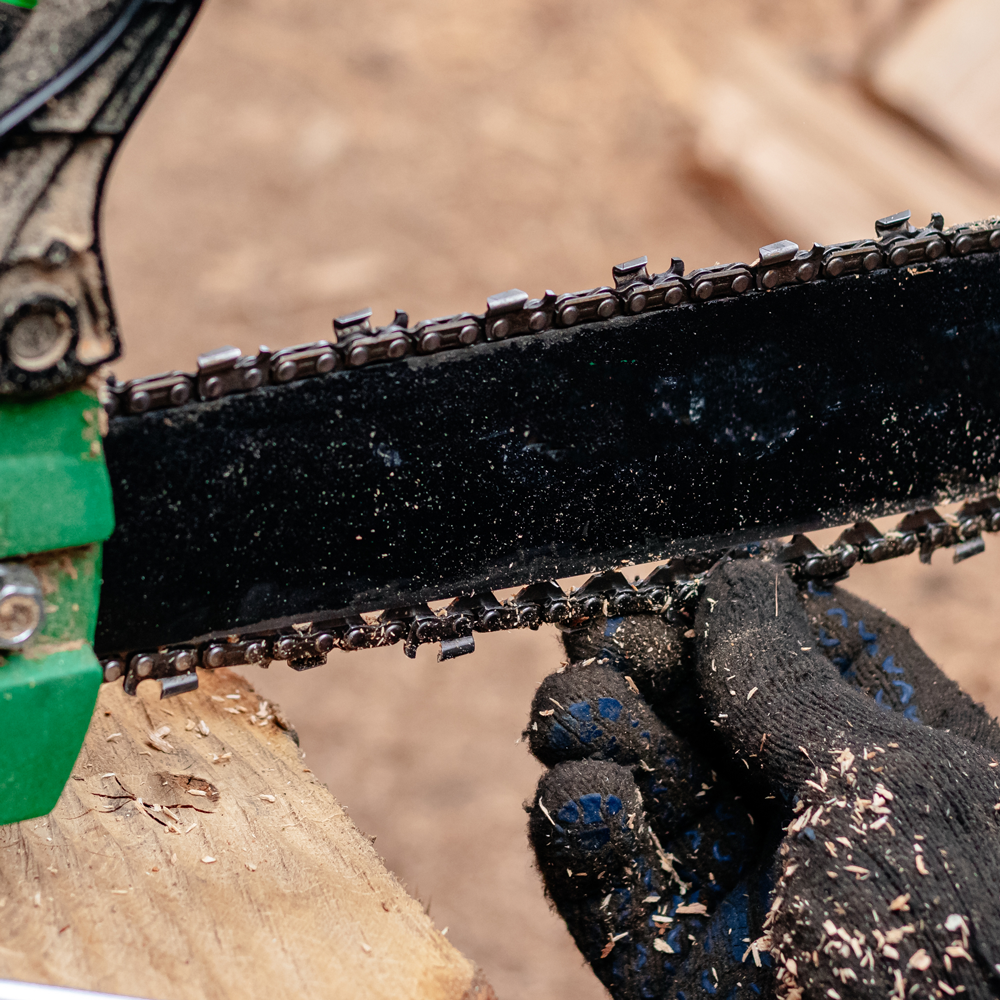
When the chain loses efficiency and cutting quality worsens, what should be done to restore performance quickly and what should be avoided so as not to accelerate wear of the cutting unit?
- What to do: fstop the saw, secure the machine and check tension, lubrication and condition of the chain. Only resume work when the chain is properly sharpened and can cut without the need for pressure.
- What to avoid: continuing to work by forcing the cut or applying greater pressure while cutting.
Under these conditions, consumption and temperatures increase, vibrations and stresses on the bar and chain increase, and cutting becomes less and less accurate, with the risk of accelerated wear of the cutting unit or damage to the saw itself.
3.2 How to Assess the Chain’s Sharpness
A chain does not suddenly lose efficiency: the loss of sharpness is gradual and reveals itself through clear signs. Learning to recognise these signs allows you to take action at the right time, avoiding the need to force the cut and preventing unnecessary stress on the engine, clutch, and bar. How to tell if the chain is still efficient, if it is at its limit or if it needs resharpening?
- What to do: observe how the machine behaves during cutting and examine the form of the material produced.
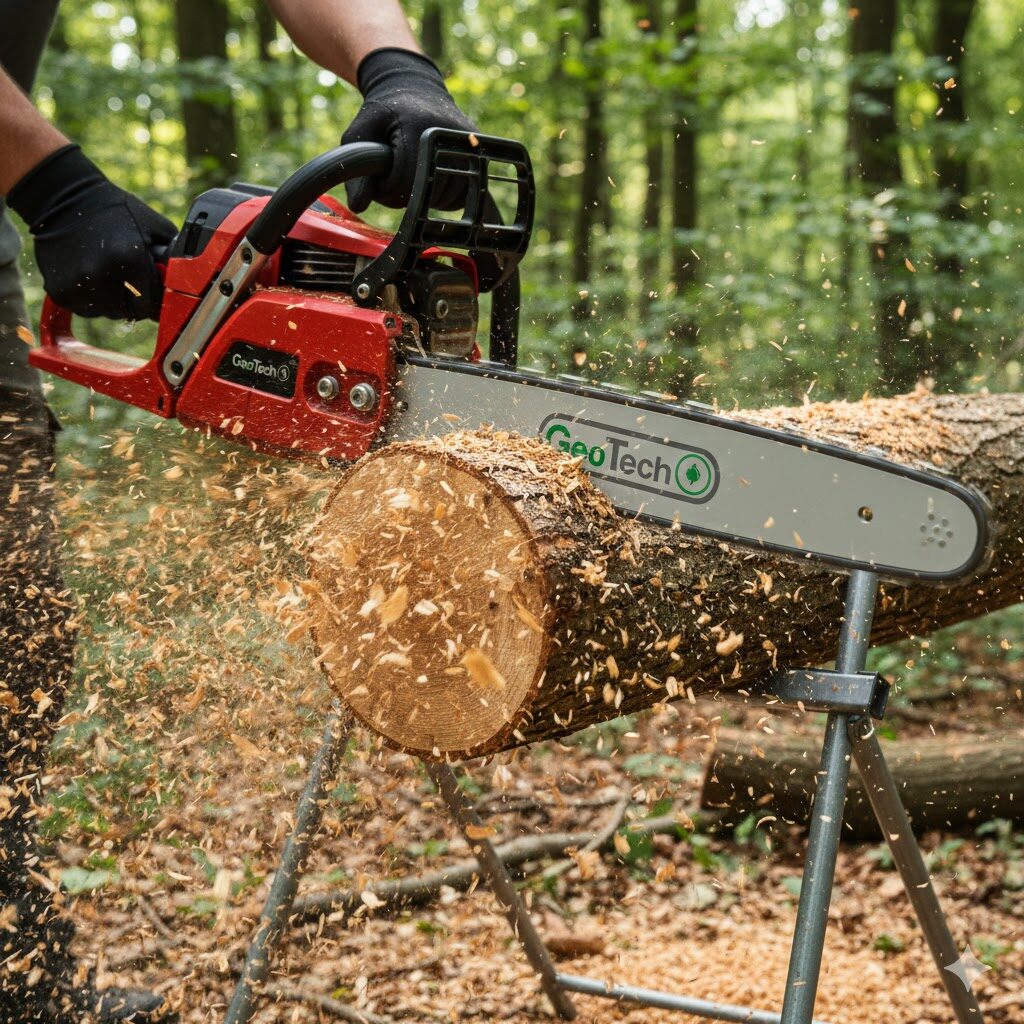
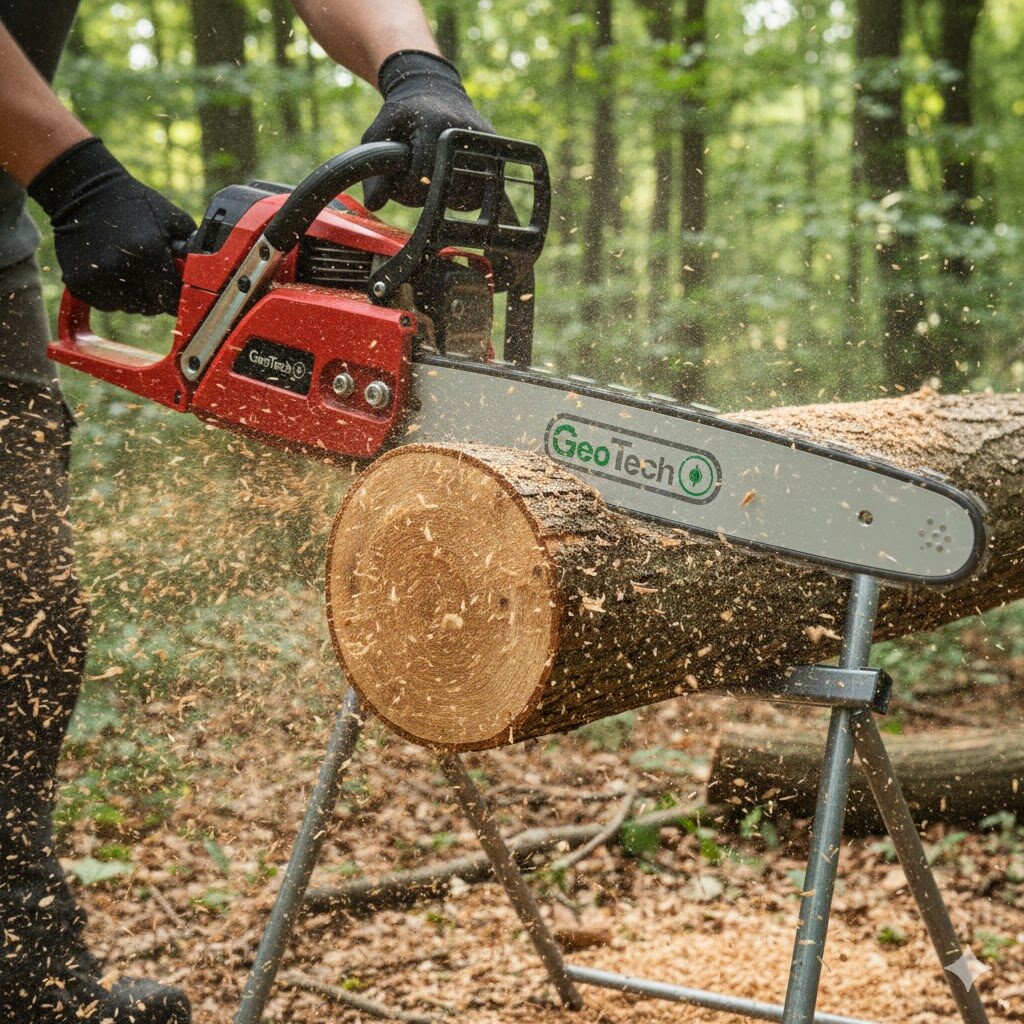
- A well-sharpened chain produces coarse, well-defined chips, similar to small wood flakes. The cut proceeds smoothly, and the chainsaw tends to enter the wood with moderate, steady pressure.
- When sharpness begins to decline, the chips become smaller and more irregular. This indicates that the chain is still usable, but is losing efficiency.
- If, on the other hand, the chain produces mainly fine, powdery sawdust and you need to apply firm pressure to make progress, it needs sharpening.
- What to avoid: continuing to work with a chain that has become blunt by increasing pressure or persisting with the cut.
Under these conditions, friction and temperature increase, the clutch operates under stress, and the bar wears more quickly. Moreover, the cut tends to wander and becomes less precise.
Tip: do not wait until the chain becomes completely inefficient before taking action. Timely sharpening requires less material to be removed, maintains the correct tooth profile and helps to preserve the cutting unit over time.
| Signal during cutting | Chain condition | What to do |
|---|---|---|
| Large, well-defined and regular chips. The chainsaw enters the wood with moderate pressure. | Good sharpness | Continue working while maintaining constant pressure and correct speed. |
| Smaller, irregular chips. You need slightly more pressure to advance. | Sharpness still acceptable, but declining | Schedule sharpening shortly to avoid forcing the cut. |
| Fine, powdery sawdust and the need to push firmly. Cut that tends to deviate. | Dull chain / chain requiring sharpening | Stop work and sharpen the chain before continuing. Avoid increasing the pressure. |
3.3 Bar Overheating
The bar remains in continuous contact with the chain and can function properly only if lubrication is constant.
If the guide bar becomes very hot to the touch or you notice a burning smell, in most cases it means that the chain is running with excessive friction: this may be due to insufficient lubrication, overly forceful cutting, or a chain that is not in optimal condition or is too tightly tensioned.
Ignoring these signals quickly leads to accelerated bar and chain wear and compromises the smoothness of the cut.
- What to do: stop the chainsaw and check the chain oil level. Before resuming work, make sure that lubrication is present and that cutting can proceed without forcing the chainsaw.
- What to avoid: carrying on working even though the guide bar is very hot or there is a burning smell.
Under these conditions, friction increases, the guide bar may wear or become deformed, and the chain quickly loses efficiency, resulting in reduced performance and a greater risk of binding or damage.
3.4 Jammed Chainsaw
It can happen, especially with wood under tension or poorly supported logs, that the cut closes up, pinching the guide bar and jamming the chainsaw. It is a common occurrence, but the way you handle it makes a real difference: releasing the machine properly prevents the guide bar from twisting, protects the chain and sprocket, and reduces the risk of damage that may later compromise cutting precision and smooth operation.
- What to do: switch the chainsaw off and wait for it to come to a complete stop. Secure the working position and free the cut by using a wedge or lever to reopen the kerf in the wood, so that you can withdraw the guide bar without forcing it. This limits abnormal stress on the guide bar and chain and allows you to resume work with a better-planned cutting sequence.
- What to avoid: trying to pull the chainsaw out by force or using the machine itself as a lever. Twisting can deform the bar, damage the chain and stress the clutch and crankcase. Moreover, when the wood is suddenly released, the risk of sudden movements and loss of control increases.
4. PPE and Safety Clothing
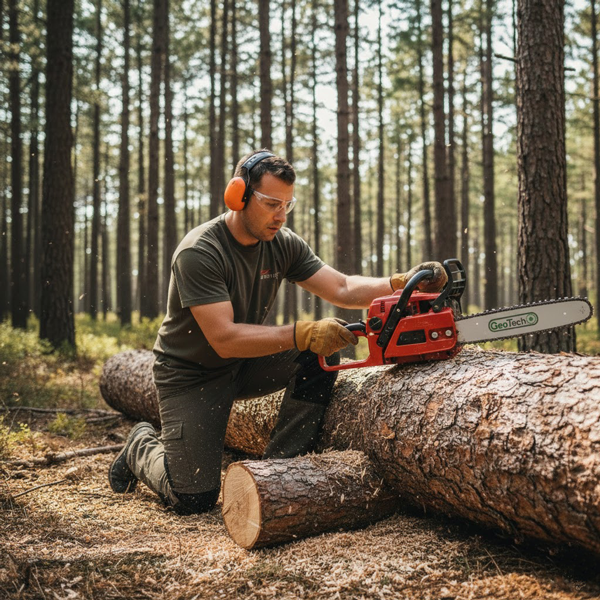
Using a chainsaw exposes the operator to specific risks: flying chips, high noise levels, vibrations, possible kickback, and accidental contact with the chain. Even in the private or hobby sector, it is essential to use appropriate protective equipment. PPE not only serves to prevent serious injuries, but also helps to work with greater stability and concentration:

- Protective helmet with visor: uring pruning operations or when working near branches, the helmet protects against impacts and falling twigs from above. The integrated visor, or alternatively wrap-around safety glasses, prevents chips and splinters from striking the eyes and face during cutting. To be effective, the helmet must fit securely and the visor must be kept lowered and clean.
- Hearing protection: chainsaws, especially petrol-powered models, produce high and continuous noise levels. Helmet-integrated noise-reducing earmuffs or certified earplugs reduce prolonged noise exposure and help maintain concentration and alertness during work. Underestimating noise, especially during repetitive work, can cause fatigue and reduced attention, indirectly affecting the quality of operation.
- Cut-resistant clothing: cut-resistant trousers are among the most important PPE when using chainsaws. They help limit the consequences of accidental contact with the chain. They must be the correct size: if too loose, they may snag; if too tight, they restrict movement and lead to awkward postures. General clothing also matters: it is better to wear durable garments that fit closely yet remain comfortable, with no loose parts or dangling drawstrings. In woodland areas or in poor visibility conditions, it may be useful to add high-visibility elements so that the operator can be easily seen.
- Work gloves: gloves must provide good grip and abrasion resistance. A stable grip improves chainsaw control and reduces the risk of irregular movements. Too smooth, worn or loose-fitting gloves can slip on the handle, reduce control precision, and increase vibration and fatigue.
- Safety footwear: with a non-slip sole and toe protection, it helps maintain stability and protects the foot in the event of impacts or falling pieces of wood. Lightweight footwear or footwear with a smooth sole reduces grip and increases the risk of slipping, especially on wet or sloping ground.