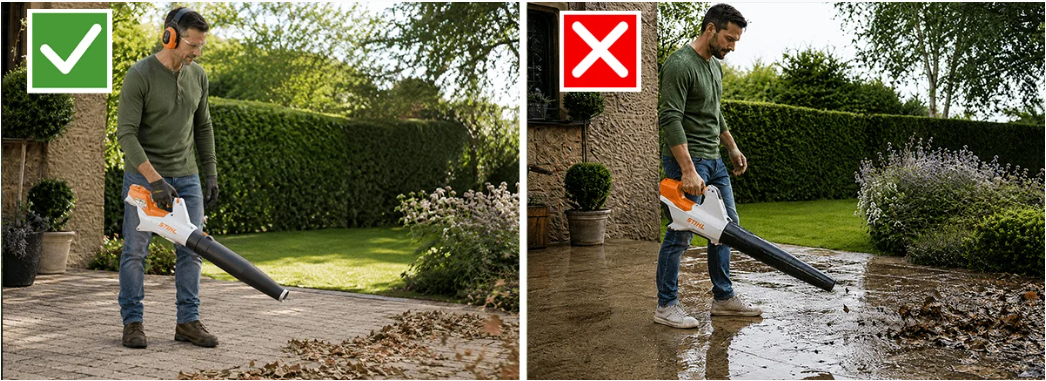
A clear and practical guide to the correct use of a leaf blower vacuum.
Using a leaf blower or leaf blower vacuum correctly makes it easier to collect leaves and debris in an orderly manner, reducing the number of passes required and the strain placed on the machine.
Power adjustment, nozzle position, work organisation and, in vacuum models, the type of material collected all have a direct impact on the machine’s performance and service life. This guide outlines the main best practices for the correct use of leaf blowers and leaf blower vacuums, both when blowing and vacuuming.
CONTENTS
How should this guide be used?
Since many problems are caused by operating errors, it is important to clarify the purpose of this guide and how to use it correctly. Here you will find practical, general advice on the correct use of a leaf blower or leaf blower vacuum, explained in simple terms to help you quickly build a solid foundation of knowledge, particularly if you are new to using this type of equipment.
However, this guide does not replace the manufacturer’s instruction manual. The manual provides more detailed and comprehensive technical information, including the specific features of the machine, its controls, the correct operating procedures and, above all, all the safety instructions that must be read, understood and followed during use. This guide should therefore be regarded as a supplement to the manual: it provides additional advice and general information, but the product documentation must always remain your primary reference.
Now that the purpose of this guide is clear, we can move on to the practical aspects: let us look at what to do and what to avoid in order to use your leaf blower vacuum effectively, achieve cleaner results and reduce effort, wear and unexpected problems!
1. Preparation before starting
Proper preparation ensures that you can start work under the right conditions and helps prevent interruptions, loss of performance and problems during use. Before starting the leaf blower, it is therefore important to check the power supply, the work area and the condition of the material to be collected.
1.1 Prepare the power supply correctly
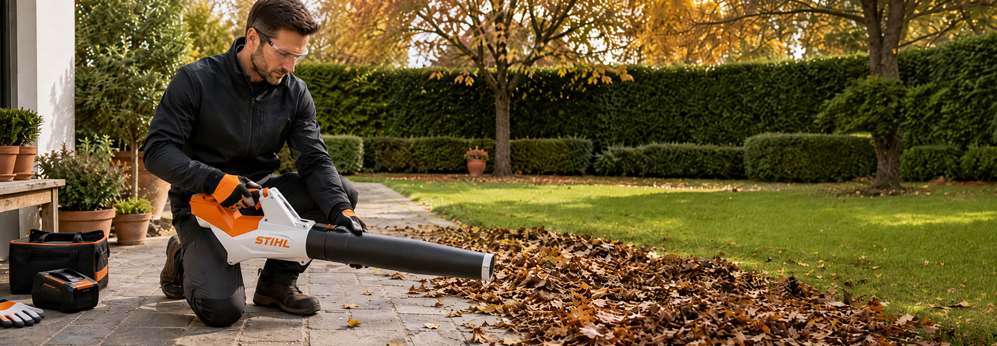
Before starting work, it is important to check that the machine has the correct power supply and sufficient energy to complete the intended task.
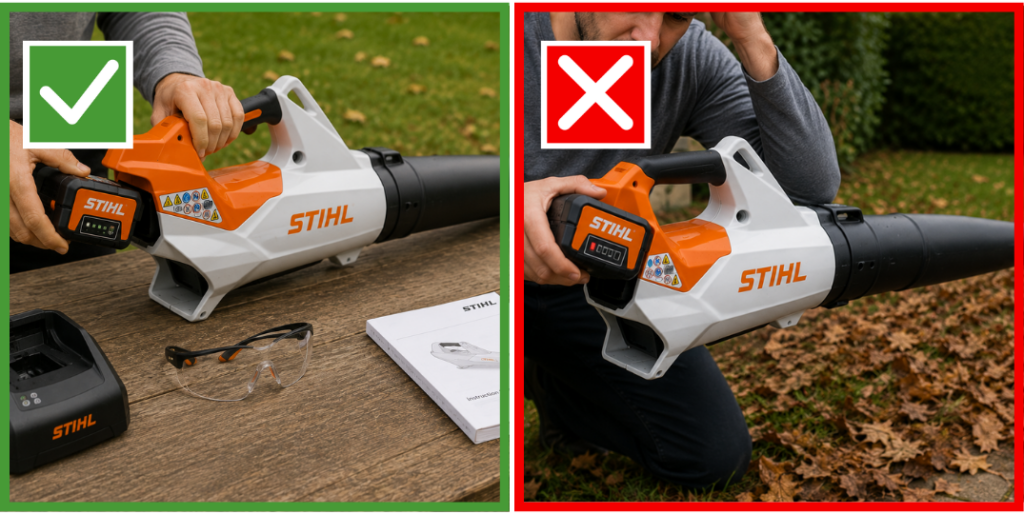
- What to do: on battery-powered models, check that the battery is sufficiently charged and correctly fitted. On electric models, check the power cable, extension lead and connections. On petrol models, use the fuel and, where required, the fuel mixture specified by the manufacturer.
- What to avoid: starting work with a nearly discharged battery, damaged cables or unsuitable fuel. An incorrect power supply or fuel can cause interruptions, loss of performance or malfunctions.
1.2 Inspecting the work area
A quick inspection of the work area will help identify any branches or other objects that could be lifted by the airflow or accidentally drawn into the machine.
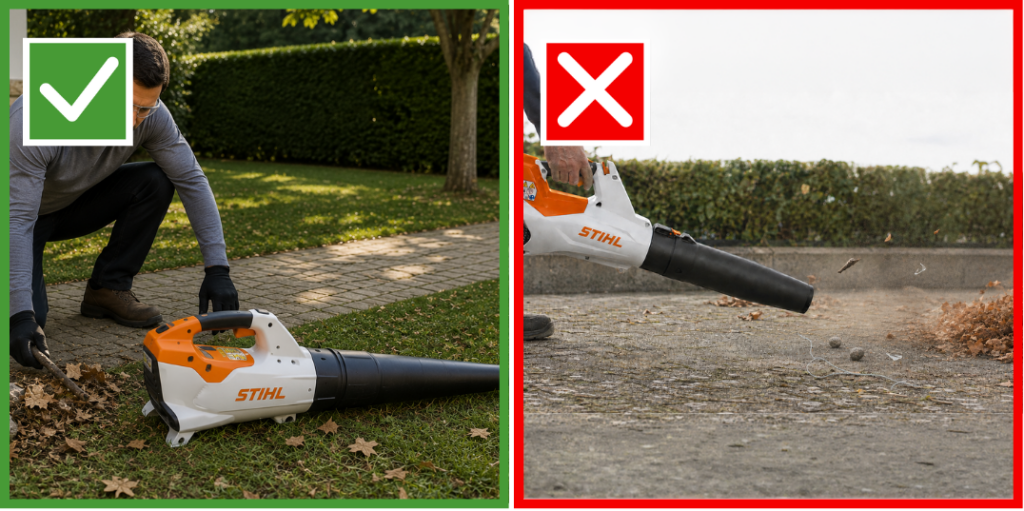
- What to do: before starting, inspect the ground and remove any pieces of glass, wire, rigid branches and other foreign objects. This check is particularly important when using the vacuum function.
- What to avoid: blowing or vacuuming without first checking what may be hidden among the leaves. Small objects may be propelled by the airflow or drawn into the machine, potentially damaging the fan, shredder or other internal components.
1.3 Assessing the condition of the leaves
The condition of the leaves is often underestimated, but it has a direct impact on how effectively the work can be carried out. Dry, lightweight leaves are easier to move and vacuum, whereas wet or compacted material requires more effort and can reduce the machine’s performance.
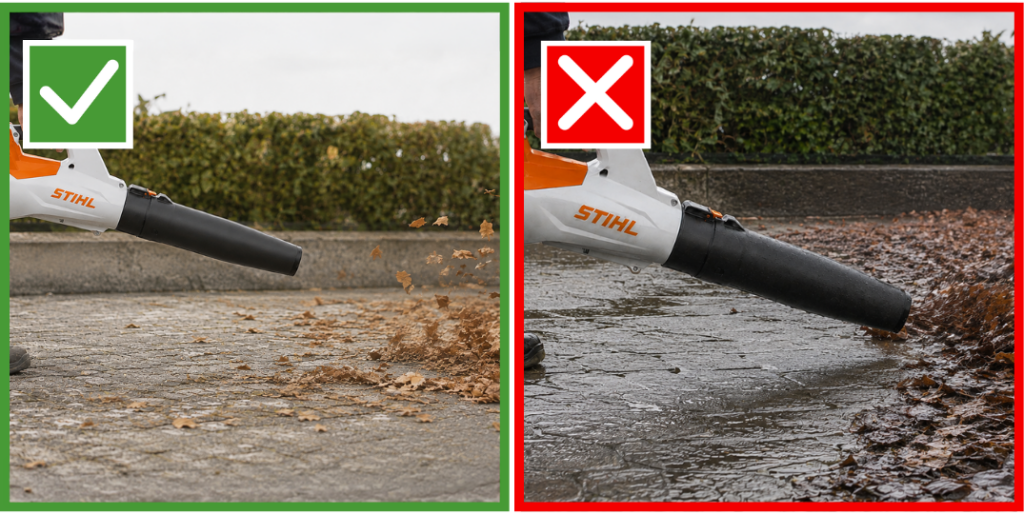
- What to do: whenever possible, work with dry leaves and debris. Dry material is easier to move and, on vacuum models, passes more easily through the tube and collection system.
- What to avoid: expecting the same level of performance when handling large quantities of wet or heavily compacted leaves. Damp material is heavier, can stick to the ground and, when vacuuming, is more likely to cause build-up and blockages.
Tip: if the leaves are very wet or stuck to the ground, it is advisable to wait until they have dried at least partially before starting work. This will make the job quicker and reduce the strain on the machine.
1.4 Plan the work before starting
Deciding in advance where to direct and collect the leaves helps you work in a more organised manner, avoiding unnecessary passes and reducing the amount of time the machine needs to be used.
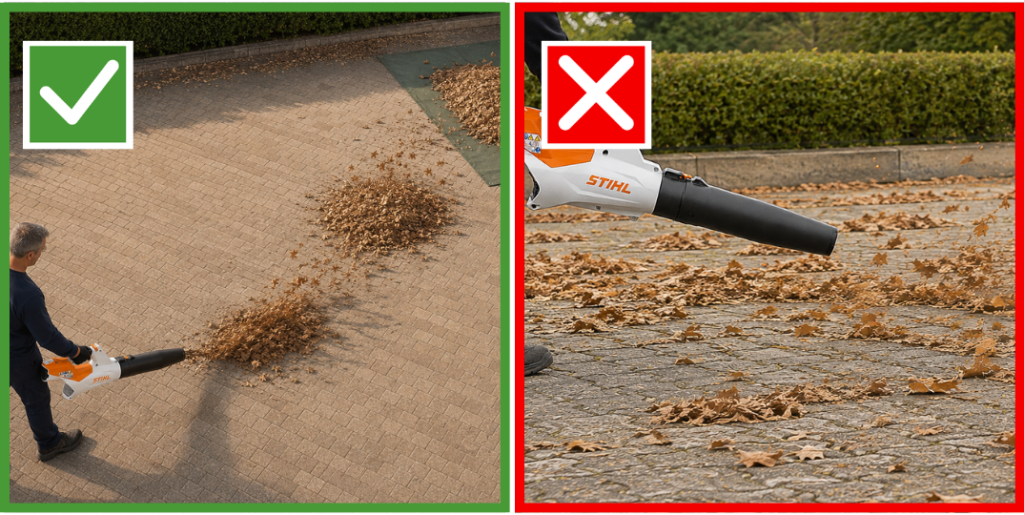
- What to do: decide beforehand where the leaves are to be gathered. If you are also using the vacuum function, it is advisable to first use the blower to gather the material into small piles and then vacuum it up.
- What to avoid: moving leaves around without a clear direction or attempting to vacuum widely scattered material over a large area from the outset. This unnecessarily increases working time and energy or fuel consumption.
Tip: on larger areas, divide the work area into several sections and complete one section at a time. This helps prevent leaves that have already been collected from being scattered again and reduces unnecessary passes.
2. Correct use when blowing or vacuuming
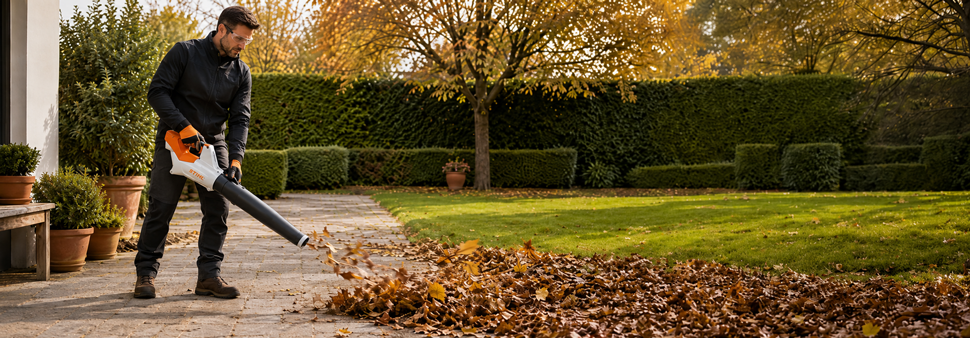
During operation, the power setting, nozzle position and amount of material being handled have a direct impact on the machine’s effectiveness. On vacuum models, it is also important to keep the airflow unobstructed and avoid collecting materials that could cause blockages or damage.
2.1 Use only the power required
Adjusting the power according to the amount and weight of the material allows you to work more precisely while avoiding unnecessary energy consumption and strain on the machine.
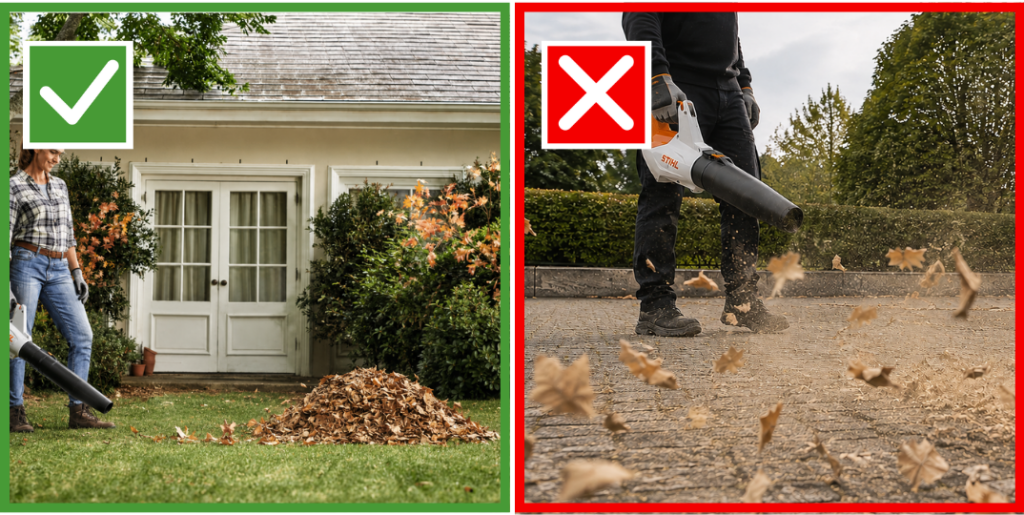
- What to do: start with a moderate air speed and increase it only when required by the material being moved. Higher power is particularly useful for larger accumulations or heavier debris.
- What to avoid: always using maximum power. With lightweight leaves, this is more likely to scatter them, increasing noise, energy consumption and strain on the machine without providing any real benefit.
2.2 Keep the nozzle at the correct distance and move it properly
The position and movement of the nozzle have a direct impact on the effectiveness of the airflow and on your ability to direct the leaves towards the collection point.
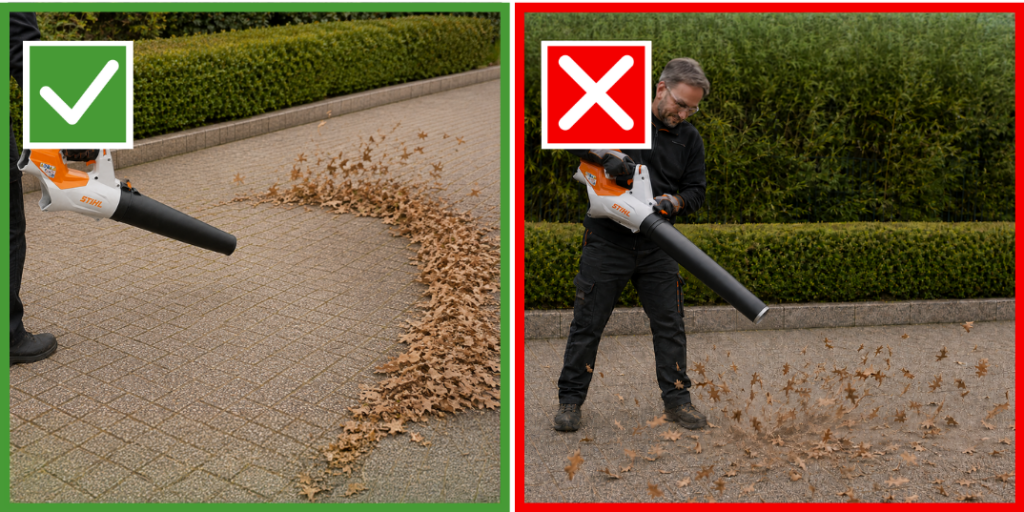
- What to do: keep the nozzle close enough to the ground to make effective use of the airflow, without dragging it across the surface. Direct the airflow slightly ahead of the leaves and use steady side-to-side sweeping movements, gradually working towards the collection point.
- What to avoid: holding the tube too high, pointing it vertically downwards or making rapid, random movements. This disperses the airflow, makes it easier to stir up dust and small debris, and causes the leaves to scatter rather than being directed towards the collection point.
2.3 Vacuum only suitable material
The vacuum function is designed for leaves and small amounts of plant debris compatible with the manufacturer’s specifications. Hard or heavy objects can damage the internal components.
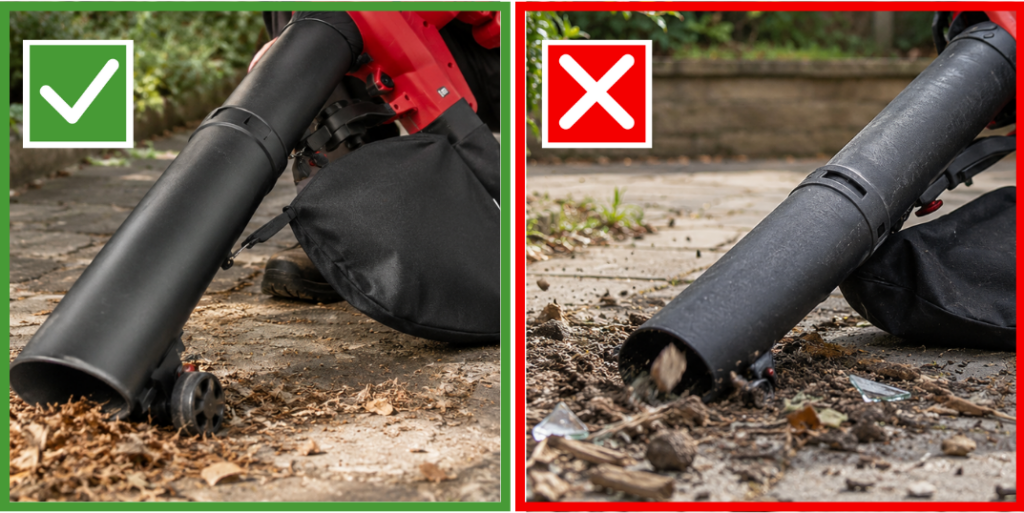
- What to do: when using the vacuum function, collect leaves, small amounts of plant debris and other materials permitted by the manufacturer. Move the tube gradually towards the material, avoiding pushing it directly into the pile.
- What to avoid: vacuuming large amounts of soil, pieces of wood, metal, glass or other hard objects. These materials can damage the fan, shredding system or vacuum tube.
2.4 Prevent blockages and maintain proper airflow on vacuum models
On models with a vacuum function, it is important to prevent blockages and keep the airflow unobstructed. During vacuuming, the tube and collection bag must allow air to circulate freely: restricted airflow reduces performance and increases the risk of blockages.
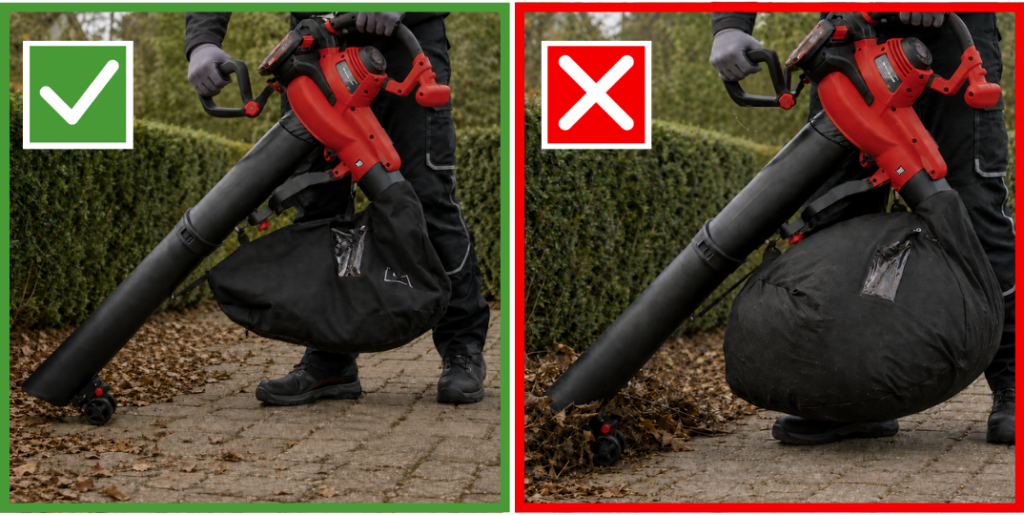
- What to do: vacuum moderate amounts of material without pushing the tube into densely compacted piles. Check the collection bag regularly and empty it before it becomes completely full. If the airflow decreases, stop working and check for any blockages only after switching off the machine and making sure it is in a safe condition.
- What to avoid: continuing to vacuum with a partially blocked tube or a full, heavily compacted collection bag. Material may obstruct the tube, reducing the airflow and causing the machine to operate under greater strain.
Tip: if the airflow begins to decrease during vacuuming, first check how full the collection bag is and the amount of material entering the tube.
2.5 Mantain a stable working position
Correct posture provides better control over the direction of the airflow and, above all, helps reduce fatigue during longer periods of use.
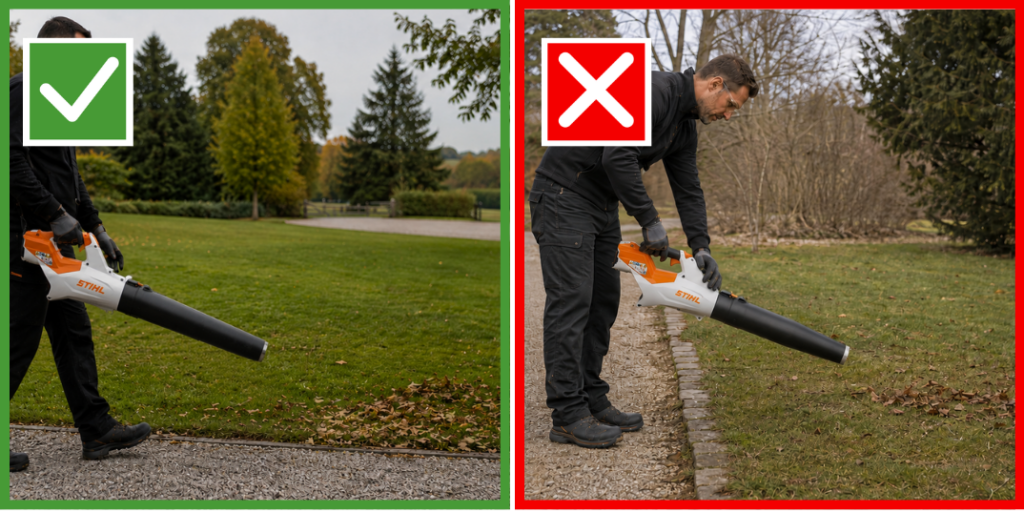
- What to do: adopt a balanced posture from the outset, keeping the machine under control without placing unnecessary strain on your arms and back. On backpack models, adjust the shoulder straps correctly to distribute the weight evenly.
- What to avoid: working in an unbalanced position, overextending your arm or using a backpack blower with incorrectly adjusted straps. This increases fatigue and reduces precise control of the airflow or vacuum tube.
3. What to do if something goes wrong?
If the machine loses performance, becomes blocked, vibrates, overheats or stops unexpectedly during use, it is important to stop working and identify the cause before resuming operation. Let us therefore look at what to do in the most common situations that may arise.
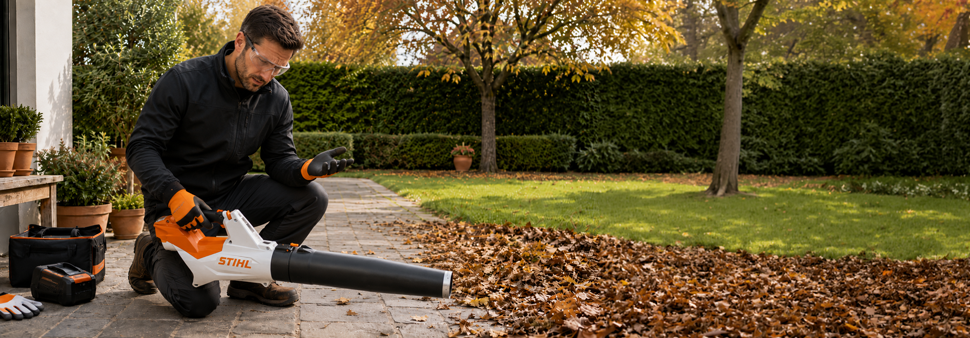
3.1 If the airflow decreases or the tube becomes blocked
A noticeable reduction in airflow may be caused by partially obstructed air intakes, the tube or the nozzle. On vacuum models, damp leaves, overly compacted material or unsuitable debris may block the tube.
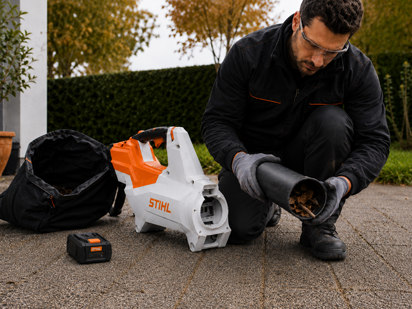
- What to do: switch off the machine, disconnect it from the power supply or remove the battery, where applicable, and wait until all moving parts have come to a complete stop. Then check that the nozzle, tube and air intakes are unobstructed and, on vacuum models, that the collection bag and vacuum duct are also clear.
- What to avoid: continuing to work by increasing the power or attempting to clear a blockage while the machine is switched on or could start accidentally. Restricted airflow reduces performance and places greater strain on the components.
3.2 If the machine overheats
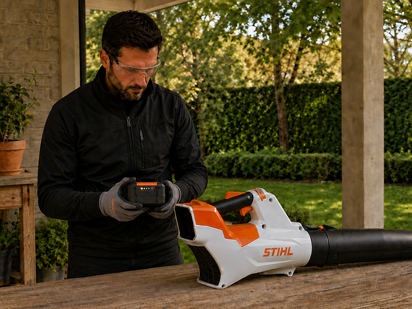
Abnormal overheating may be caused by blocked air intakes, accumulated dirt or operating conditions that prevent the machine from cooling properly.
- What to do: switch off the machine and allow it to cool down. Then check that the air intakes are unobstructed and that there is no build-up of dirt preventing proper cooling.
- What to avoid: continuing to use the machine despite obvious overheating or attempting to cool it with water. Prolonged exposure to high temperatures can shorten the service life of the components.
3.3 If the machine stops during operation
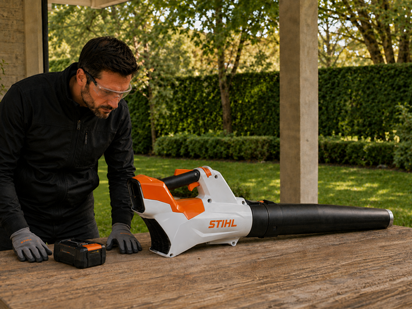
If the machine stops unexpectedly, this may be due to the power supply or the activation of a protective device. Before attempting to restart the machine, it is therefore important to check the most common causes.
- What to do: make sure the machine is in a safe condition and check the battery charge, electrical connection or fuel level, depending on the type of power supply. If the problem occurs again, consult the manufacturer’s manual before continuing.
- What to avoid: repeatedly attempting to restart the machine without identifying the cause of the shutdown. If a fault is present, repeated restart attempts may place unnecessary additional strain on the machine.
4. PPE and protective clothing
When using a leaf blower or leaf blower vacuum, the most important PPE is that which protects against the most common hazards: dust, small debris lifted by the airflow, noise, contact with plant debris and loss of stability while working.
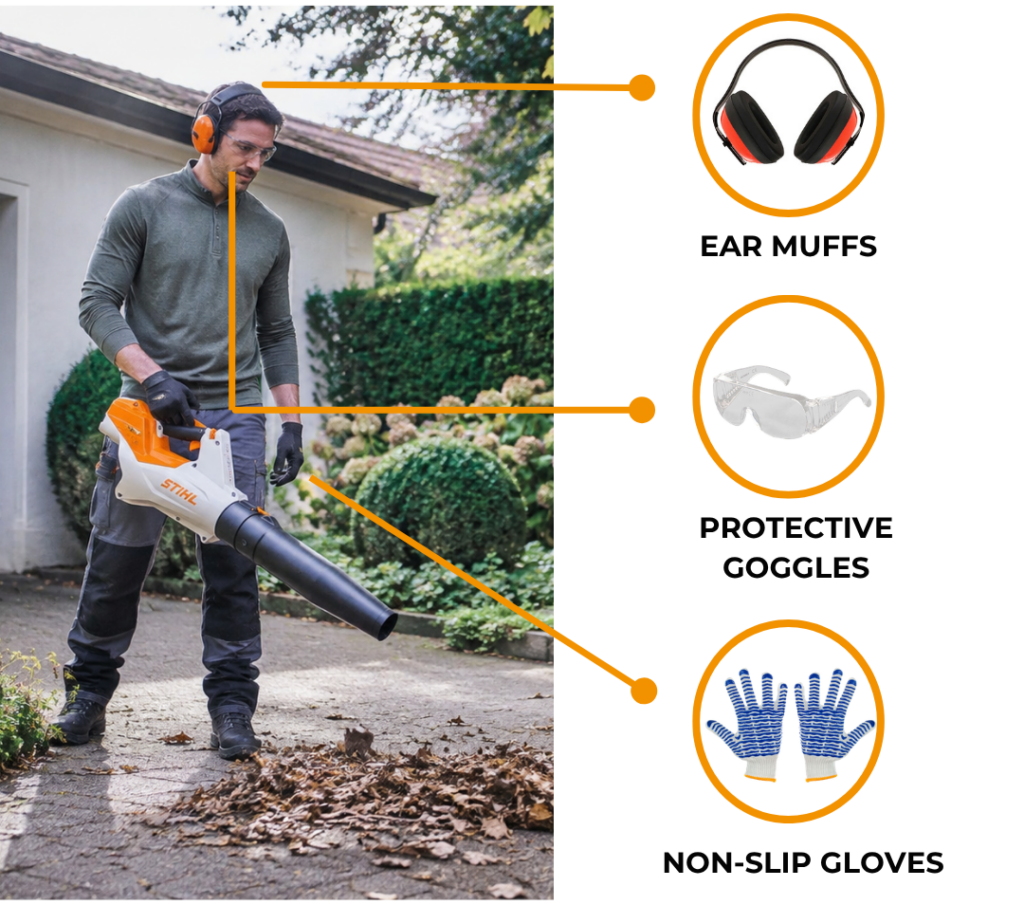
- Hearing protection: This is particularly recommended when using noisier models, especially petrol-powered machines, and during prolonged periods of use. Suitable hearing protection helps reduce prolonged exposure to noise.
- Protective goggles: These are essential for protecting the eyes from dust, leaves, soil and small debris lifted by the airflow. They are particularly important when working on gravel, dry ground or surfaces covered with fine material.
- Close-fitting, practical clothing: Long trousers and durable clothing are recommended. Avoid loose clothing, cords or any other items that could hang freely. When using leaf blower vacuums, it is particularly important to avoid anything that could be drawn towards the air intakes.
- Work gloves: These help maintain a secure grip on the machine and protect the hands when handling leaves, branches and collection bags. They should fit closely and must not interfere with the operation of the controls.
Tip: respiratory protection may also be useful when working in very dusty environments or with dry material that generates large amounts of fine particles.
In all cases, always consult the manufacturer’s manual before use and check which PPE is specified for the particular model and working conditions.