The pressure washer is a highly effective machine for removing dirt, debris and stubborn deposits from paving, walls, outdoor furniture, equipment and, with due care, even from some vehicles. Precisely because it works with pressurised water, however, it must be used judiciously. Many problems arise not from faults with the machine itself, but from very common user errors, such as an insufficient water supply, an incorrect distance from the surface being cleaned, an excessively aggressive spray pattern, or a hurried shutdown procedure.
CONTENTS
How should this guide be used?
Since many problems depend on operational errors, it is useful to clarify what the purpose of this guide is and how to use it properly. Here you will find practical, general advice on how to use a pressure washer correctly, explained in a straightforward way to help you quickly build a solid foundation of knowledge, especially if you are a beginner.
However, it does not replace the manufacturer’s instruction manual. The manual, in fact, is a more technical and comprehensive document, as it contains the machine’s specific features, controls, correct operating procedures, and above all, all the safety rules that must be read, understood, and followed during use. This guide should therefore be regarded as a supplement to the manual: it offers additional advice and general guidance, but the main reference should always remain the product documentation.
Now that the purpose of this guide has been clarified, we can move on to the practical part: let us examine what should be done and what should be avoided in order to use the pressure washer methodically, achieve cleaner results, and minimise effort, wear, and unforeseen issues!
1. Pre-operational preparation
Good preparation contributes far more to the quality of the final outcome than is often realised. Before using the pressure washer, it is worth checking the power supply, connections, accessories and working area.
1.1 Check that the water flow rate is adequate
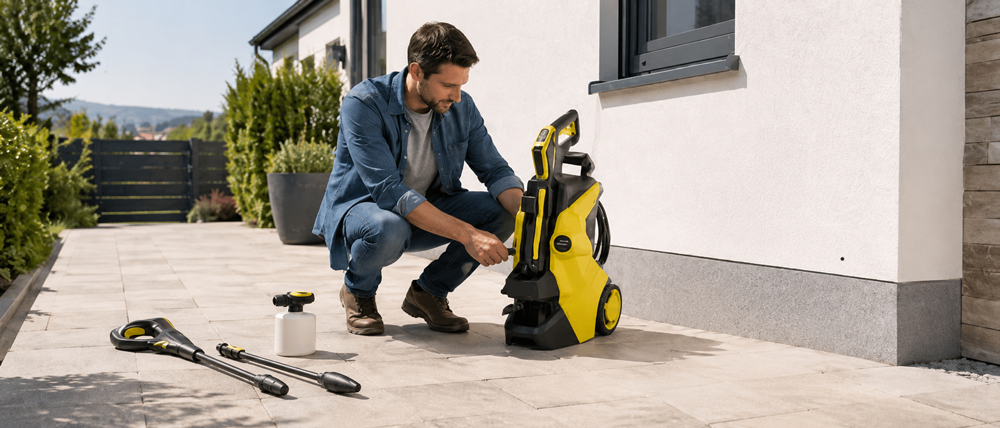
Before starting the machine, it is important to ensure that the pressure washer receives a steady and continuous supply of water. In fact, the pump only works well if the supply is adequate: when there is a lack of flow or the flow is irregular, the machine loses efficiency and becomes unnecessarily fatigued. This is why it is important to check that the tap can provide a flow rate at least equal to that required by the pressure washer, indicated in the data sheet in litres per minute.
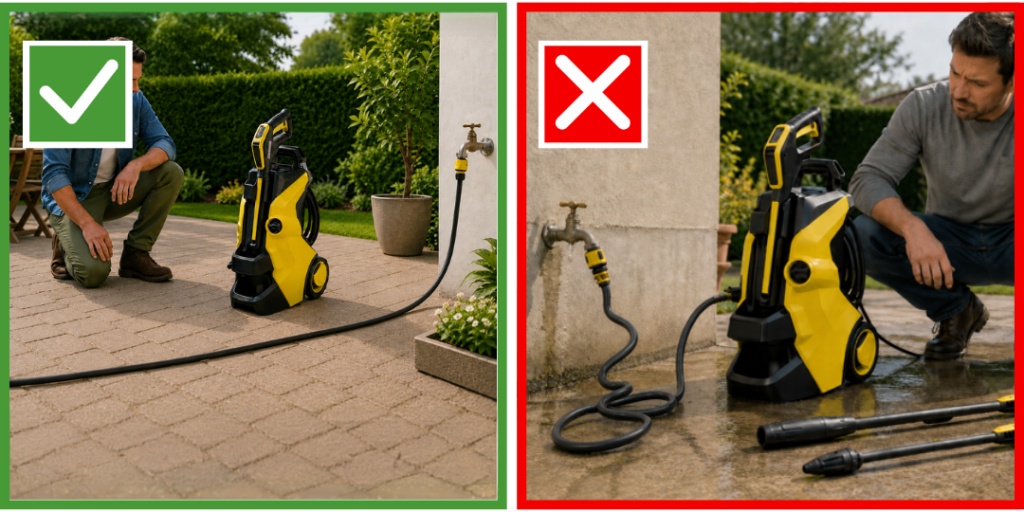
- What to do: check that the tap is well open, that the supply hose is not constricted, and that the water reaches the machine continuously and sufficiently. In particular, it is important to check that the available flow rate is at least equal to that required by the pressure washer. A regular flow rate allows the pump to operate under the correct conditions, maintains a more stable jet and reduces stress on the internal components.
- What to avoid: starting the pressure washer with an insufficient water supply, with a kinked hose or with an irregular supply, without first checking that the tap can provide an adequate flow rate for the machine. In this case, the pressure washer may work poorly, lose efficiency, operate erratically with power fluctuations and, in the long run, put unnecessary strain on the pump.
1.2 Check the electrical connection
The electrical connection must also be checked carefully before starting. Pressure washers often have a high power consumption and, in mid- or high-end models, can even reach around 3 kW. That is why it is important to connect them to a suitable power socket, preferably one located close to the electricity meter or connected to a circuit capable of supporting the required load.
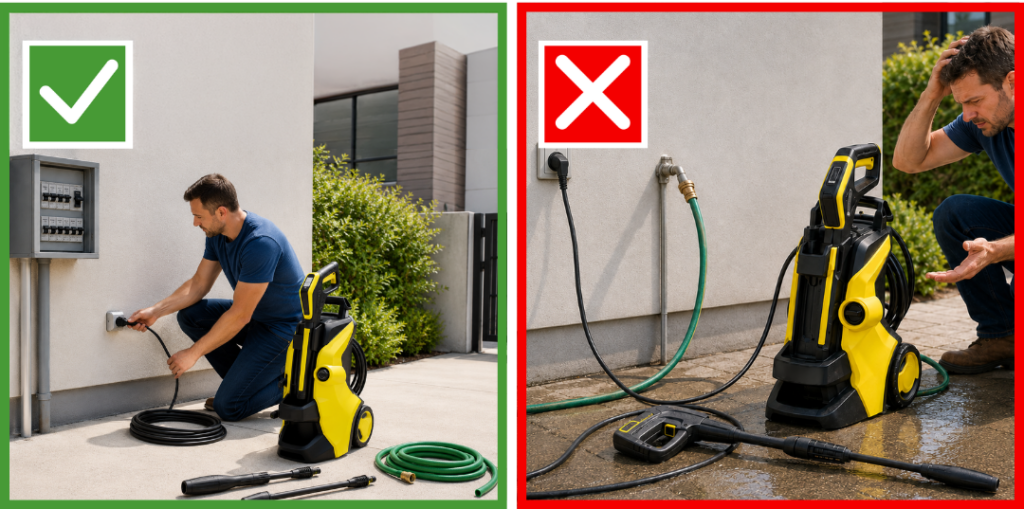
- What to do: connect the pressure washer to a socket located close to the electricity meter, or in any case to one suitable for the machine’s power requirements, and ensure that the electrical system can support the load without any loss of performance.
- What to avoid: powering the machine from an unsuitable socket or electrical circuit. Under these conditions, the motor may produce a humming noise without starting properly, it may start but fail to reach the required power output, or it may cause the circuit breaker to trip frequently due to overload or thermal protection.
1.2.1 Using electrical extension cords correctly
When it is not possible to connect the pressure washer directly to a nearby socket, the choice of extension cord also becomes important. As mentioned earlier, pressure washers draw a significant amount of electrical current and, if the extension lead is too long or has an insufficient conductor cross-section, the power supply may no longer be adequate for the machine.
This is why it is advisable to use as short and large-diameter extensions as possible, in order to minimise power losses and ensure smoother operation.
An unsuitable extension cord can in fact cause starting difficulties, reduce the available power, or result in frequent tripping of the circuit breaker or thermal protection system.
1.3 Check connections and accessories
The connections also deserve a quick check before starting. Hose, gun, lance and fittings must be fitted correctly, because just a small leak or an imperfect connection is enough to compromise pressure, ease of use and quality of result.
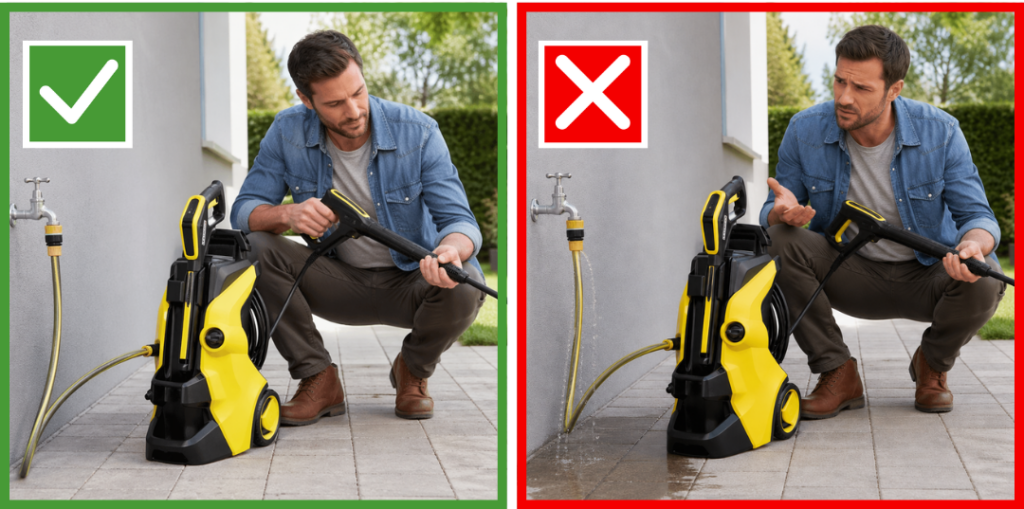
- What to do: check before use that the high-pressure hose, nozzle, lance and fittings are connected correctly and without leaks. Precise fitting helps maintain pressure, improves jet control and makes work more orderly and less dispersive.
- What to avoid: starting work with poorly fitted, loose or already leaky connections. Even a seemingly minimal dispersion can reduce the effectiveness of washing, worsen user comfort and become a more noticeable problem during work.
1.4 Choosing the nozzle and jet according to the type of work to be performed
Before starting, it is useful to decide which nozzle or jet type to use according to the work to be done and the type of dirt to be removed. Not all cleaning tasks require the same pressure level or the same jet pattern.
For example, one can distinguish:
- light maintenance washing, with surface dirt or dust;
- removal of more stubborn or built-up dirt;
- cleaning of large, even surfaces, such as floors or walls;
- work on sensitive points or materials;
- final rinse or finishing pass.
The correct choice helps to achieve more effective and controlled cleaning, avoiding using more force and preventing unnecessary damage to the surface.
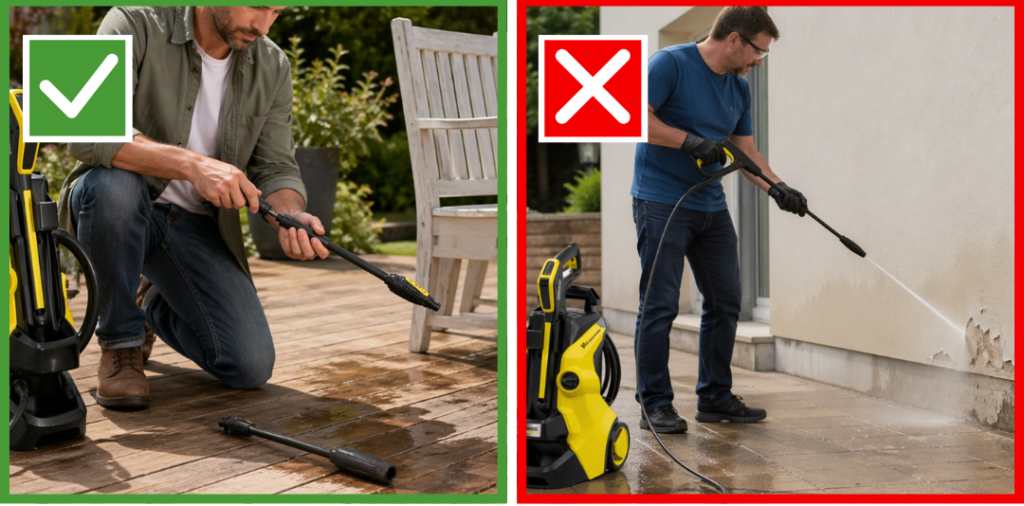
- What to do: select the nozzle or jet setting according to the work to be done, the type of dirt and, only then, the material to be treated. This allows you to work with greater precision, improves washing performance and reduces the risk of damaging delicate surfaces or already worn finishes.
- What to avoid: always starting with the most aggressive jet or maximum pressure, without assessing the type of work to be done, the level of soiling and the sensitivity of the surface. This mistake can damage plasterwork, grout joints, wood, painted surfaces and plastics, and often forces the operator to slow down or rectify the work after damage has already occurred.
1.5 Preparing the work area
Organising the area to be cleaned well helps to work more smoothly and limit unforeseen events. Obstacles, light objects, misplaced cables or carelessly inspected surfaces can slow down work and lead to avoidable mistakes.
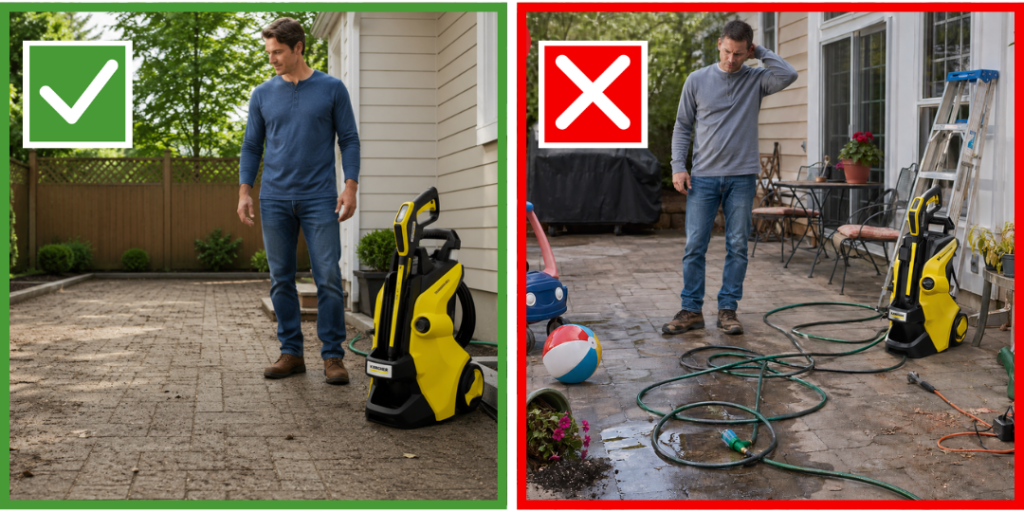
- What to do: remove fragile or lightweight objects from the work area, check where dirt and water spray are likely to end up, and arrange the hose and power cable neatly to avoid obstructions. Working in a well-organised area improves operational continuity and reduces the risk of sudden pulls, trips and unnecessary movements.
- What to avoid: starting work in a cluttered area, with obstacles, makeshift extension leads or hoses routed without proper planning. This often leads to loss of time, less control of the lance and more wear and tear on the hose and connections.
2. Correct use of the pressure washer
During work, the difference between correct and incorrect use can be seen immediately. An orderly technique allows better cleaning, with fewer passes and less effort, while impulsive use of the pressure washer often leads to wasted time, poorly treated surfaces and unnecessary strain on the machine.
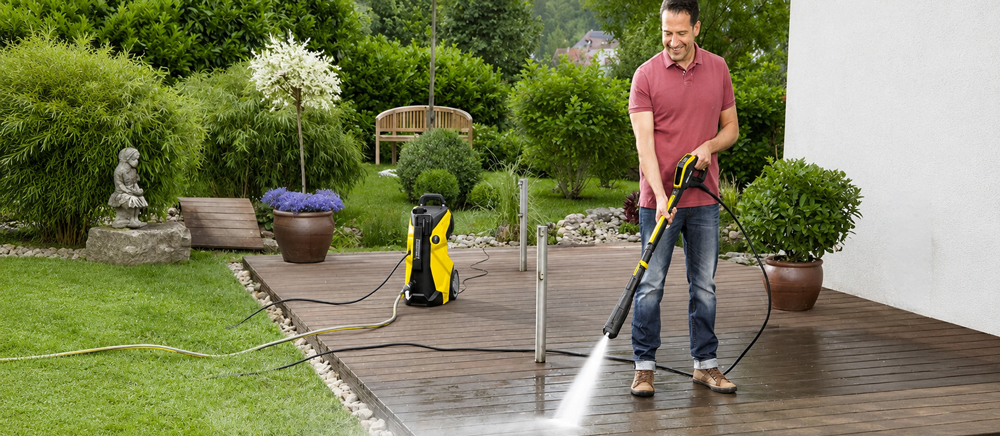
At this stage, the key factors are working distance, consistency of movement, pressure selection and workload management.
2.1 Keeping the right distance from the surface
The distance between nozzle and surface directly influences both the force of the jet and the quality of cleaning. Maintaining the correct working distance allows better control of the water’s cleaning action and makes it easier to adapt it to the material being treated.
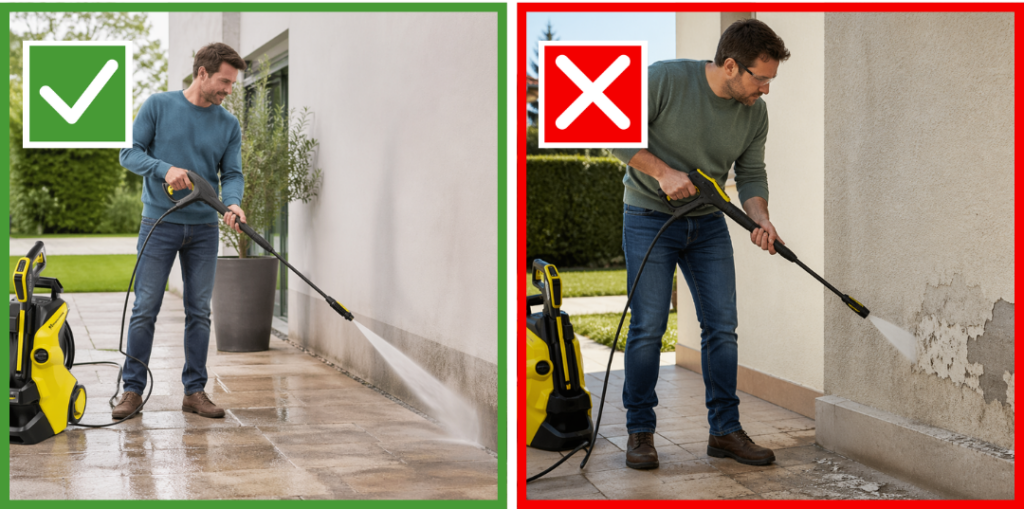
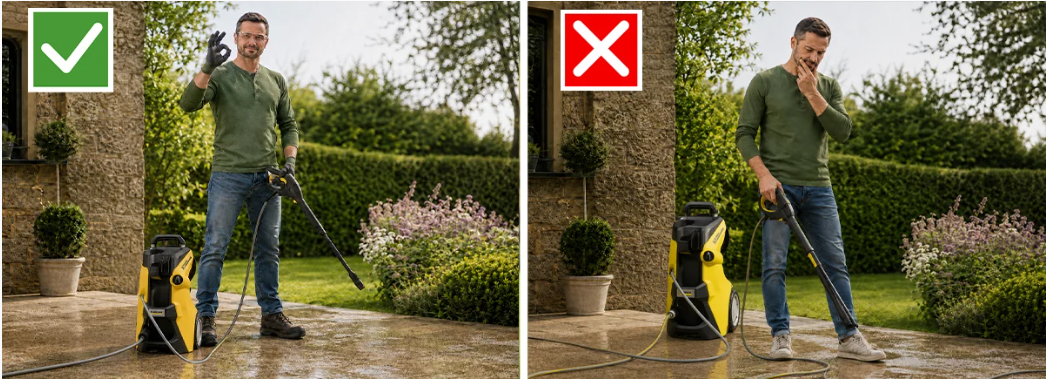
- What to do: start from a cautious distance and only get as close as you need to, always maintaining precise control of the jet. This allows you to clean effectively without concentrating too much energy in one spot.
- What to avoid: working too close from the start, thinking you will speed up the work. In reality, holding the jet too close to the surface can mark, fade or damage the material and often forces the operator to slow down to avoid further damage, reducing both the quality of the results and overall user satisfaction.
2.1.2 Pay attention to tyres and lubricated mechanical parts
Some areas require more attention than a normal washing surface. This applies to tyres, valves and lubricated mechanical parts, as a jet directed too closely or too directly at them may cause damage or remove protective substances essential for proper operation.
On tyres and valves it is good to maintain an adequate distance, avoiding going below 30 cm. On mechanical parts with lubricating grease, on the other hand, it is best not to direct the jet directly onto the protected areas.
2.2 Correct management of jet, cleaning passes and pressure correctly
The pressure washer performs best when the work is organised with progressive, uniform movements and a jet that is suited to the type of work to be carried out. Moving in an orderly manner helps to cover the entire area evenly, while correctly choosing the intensity and shape of the jet allows effective cleaning without concentrating too much force in one spot or unnecessarily attacking the material. Good jet management therefore improves the end result, reduces reprocessing times and helps to preserve both the treated surface and the machine.
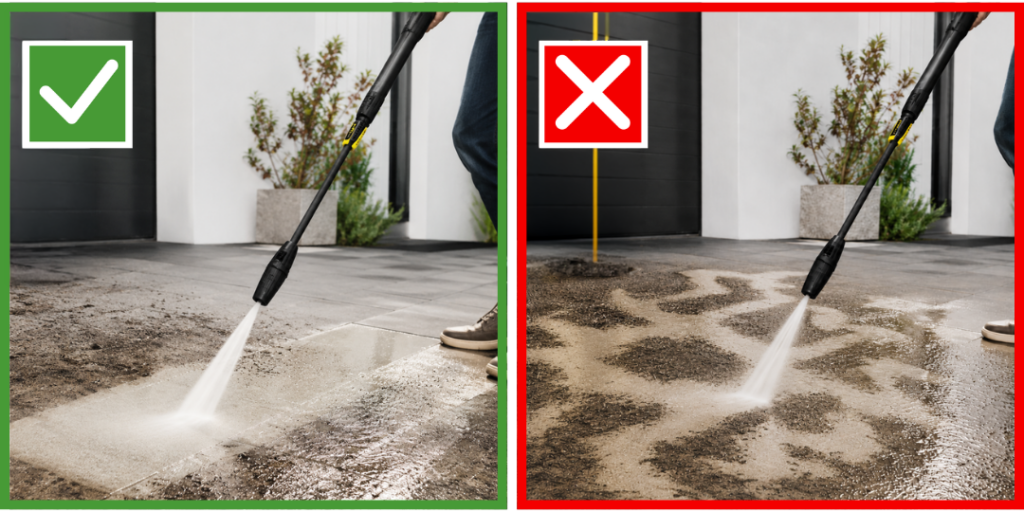
- What to do: work in regular passes, slightly overlapping the treated areas and maintaining a constant speed, without blocking the jet for too long on the same area. At the same time, it is best to use the pressure necessary for the actual work, increasing it only when the material allows it and the dirt really requires it. In the case of more stubborn dirt, it is better to proceed step by step with several controlled passes instead of forcing the spray immediately.
- What to avoid: moving the lance erratically, working in short, jerky movements, or lingering too long on certain areas in an attempt to remove stubborn dirt immediately. Similarly, it is to be avoided to always keep the machine at full capacity even on light dirt or sensitive surfaces. This often results in uneven cleaning, with some areas becoming excessively marked while others remain dirty.
Tip: To maintain uniform cleaning results, it is advisable to work in regular sections and tackle stubborn dirt with several light passes rather than prolonged concentration on a single area. This controls the spray better, protects the surface and reduces the need for additional passes
2.3 Managing breaks and prolonged work correctly
During longer cleaning tasks, it is important not to treat the machine as though it can operate continuously under load without consequences.
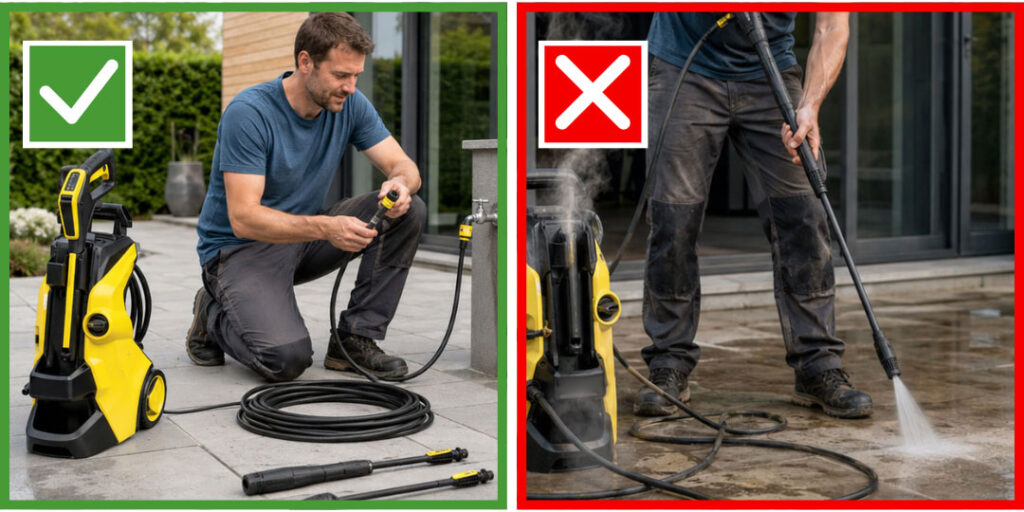
- What to do: in extensive work, proceed at a regular pace and take sensible breaks when necessary, checking that hose, connections and power supply remain in good order. More careful handling avoids unnecessary overheating and keeps the machine more efficient over time.
- What to avoid: continuing to work for extended periods without any checks, while ignoring signs such as reduced performance, pulsation or an unusual increase in operating noise. Continuing to work under these conditions can worsen an initial problem and turn it into downtime.
3. What to do if something goes wrong?
When the pressure washer is not operating smoothly, the correct response is not to force the machine to continue working, but to stop and investigate the issue carefully. Many failures, such as pressure drops, irregular jets, vibrations or abnormal shutdowns, depend on simple causes, often related to water, filter, nozzle or connections. Acting in the right way helps to avoid greater damage and makes it easier to resume work safely
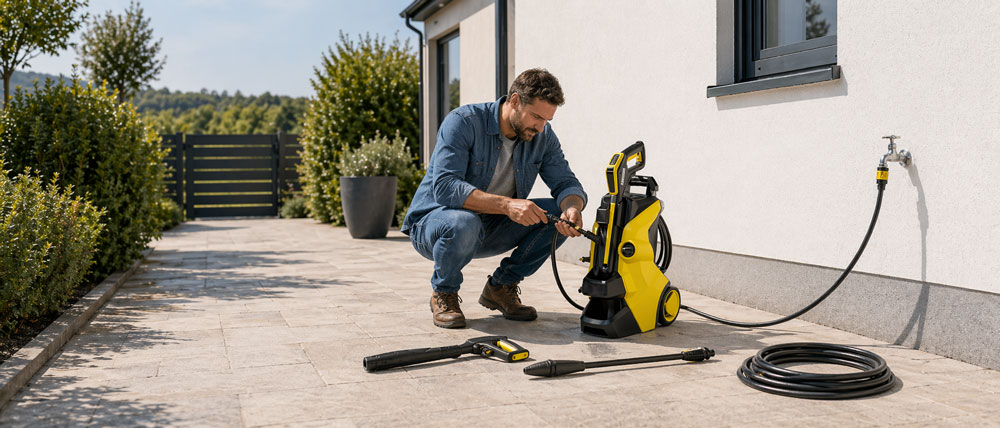
3.1 Weak jet or uneven pressure
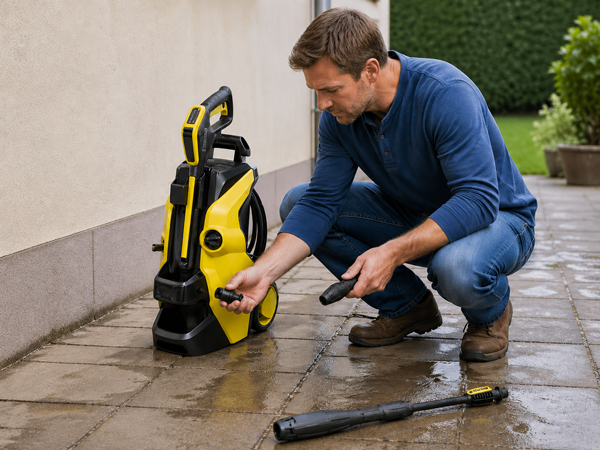
A weak or discontinuous jet is among the most frequent signals and often depends on elements that are easy to control. In these cases it is always best to start with the water supply and the accessories that directly influence the flow.
- What to do: first check that an adequate water supply is available, that the filter is not blocked, that the inlet hose is not kinked and that the nozzle is clear. This often allows the problem to be resolved quickly and a more stable pressure to be restored without stressing the machine.
- What top avoid: continuing to work with a weak or irregular jet, hoping that the problem will resolve itself. This results in poorer cleaning performance, longer working times and forces the machine to operate under suboptimal conditions, potentially increasing wear.
3.2 Abnormal vibrations or noises
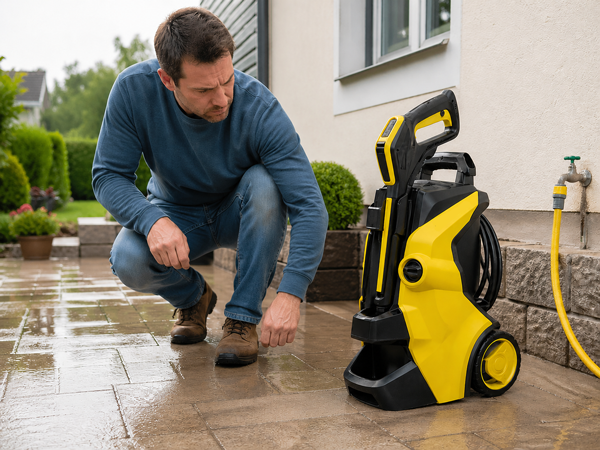
Unusual noises and vibrations other than normal should not be overlooked. Even if the machine still appears to be working, these signals may indicate incorrect connections, power supply problems or components under abnormal stress.
- What to do: stop work and check that the hose, lance, fittings and water supply are in order, observing whether the issue occurs continuously or only during certain phases of operation. This helps to prevent the problem from worsening and reduces the risk of more serious damage as work continues.
- What to avoid: ignoring abnormal noises or vibrations and going on as long as the machine ‘holds’. This behaviour can progressively reduce performance and anticipate avoidable failures or breakdowns.
3.3 Overheating or sudden shutdowns
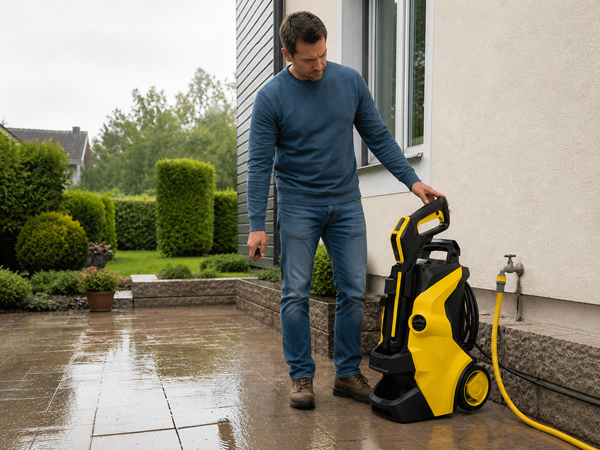
When the machine stops on its own or shows signs of overheating, this should be regarded as a sign of protection or overuse. In such cases, it is important not to force a restart without first checking the working conditions.
- What to do: let the machine cool down, check that the water supply is correct and that the work being done is not requiring too much or too continuous effort. This cautious approach helps to preserve the machine and resume work under better conditions.
- What to avoid: attempting immediate and repeated restarts without understanding why the machine has stopped. This may worsen the situation, increase stress on the machine’s components and compromise its reliability and long-term durability.
4. PPE and safety clothing
When using a pressure washer, the only personal protective equipment (PPE) that is truly necessary is that which helps manage the most common risks: high-pressure spray, flying dirt and debris, wet and slippery surfaces, accidental impacts, and prolonged contact with water and detergents.
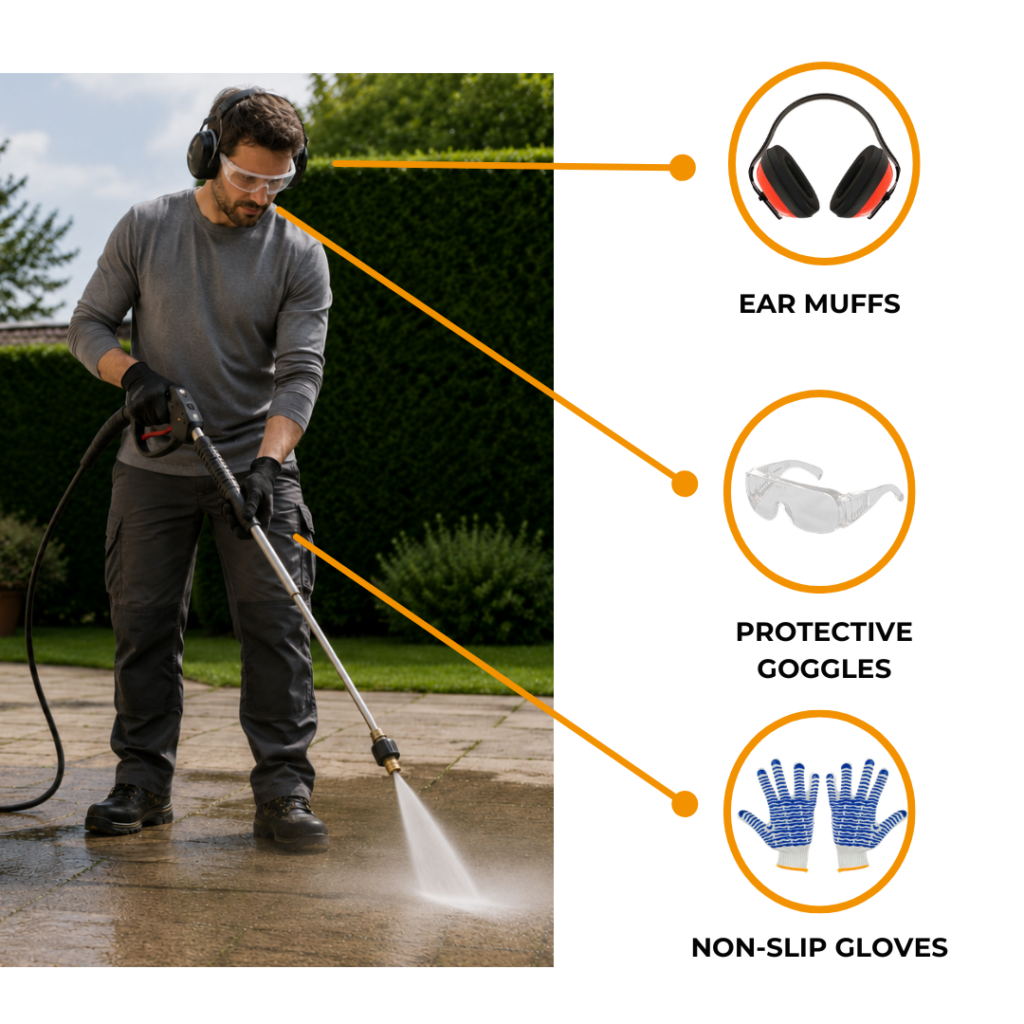
- Protective goggles: They are important to protect eyes and face from splashes, small debris and dirt raised by the jet. Even during seemingly simple jobs, pressurised water can bounce residues back to the operator.
- Water-resistant work gloves with good grip. They help maintain a more secure grip on the gun and lance, especially when hands and grips get wet.
- Closed footwear: They are essential because pressure washers are often used on wet, smooth or dirty surfaces. A stable shoe with good grip reduces the risk of slipping and helps maintain a safer posture while working.
- Practical, close-fitting clothing: It is advisable to wear comfortable but close-fitting clothing that does not restrict movement and provides a basic level of protection against splashes and dirt.
- Noise-cancelling ear muffs (especially with petrol-powered models): It is not always indispensable for short jobs, but becomes advisable when using the pressure washer for longer periods or in contexts where the noise level is higher.
In any case, before use, it is always a good idea to consult the manufacturer’s manual and check the specifications for the machine and working environment.