


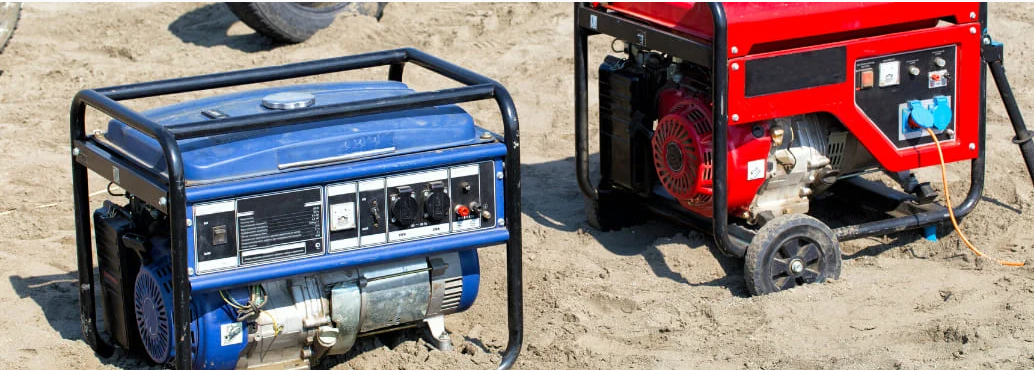
A comprehensive guide to purchasing a power generator, designed to help you choose the best machine based on your needs.
The Guide to Choosing the Best Power Generator
Complete and Edited by Real Experts in Electrical Engineering
Power Generators are part of a very complex universe within which it is not always easy to navigate, especially for first-time users with limited experience. This is because there are thousands of very different products on the market, in terms of price, power and features, increasing the confusion of the user grappling with the purchase..
This guide has been created with the aim of helping you to choose the best power generator for your needs and to better understand this type of product, illustrating in a clear and simple manner some fundamental aspects that are most often overlooked during the purchase phase.
CONTENTS
- 1. Introduction
- 2. 1500 rpm VS 3000 rpm
- 3. The 4 Most Common Mistakes Not to Make
- 4. Usage Level
- 5. Power: KW and KVA
- 6. Manufacturing Country, Materials and Brands
- 7. Single-phase or Three-phase
- 8. Quietness and Noise
- 9. Power Supply
- 10. Calculating the Power Consumption of an Electrical Device
- 11. Usage Locations
- 12. Stabilised Power Generators: Inverter or AVR
- 13. Start-up
- 14. Portable Power Stations
1. Introduction
Power Generators (or Generator Sets) are devices capable of converting mechanical energy into direct or alternating current in order to supply electrical loads. These machines are essential when an independent source of electrical power is required in locations without a stable electricity supply—such as construction sites, remote areas, and campsites—or where power distribution may be interrupted due to temporary faults or malfunctions (e.g., blackouts).
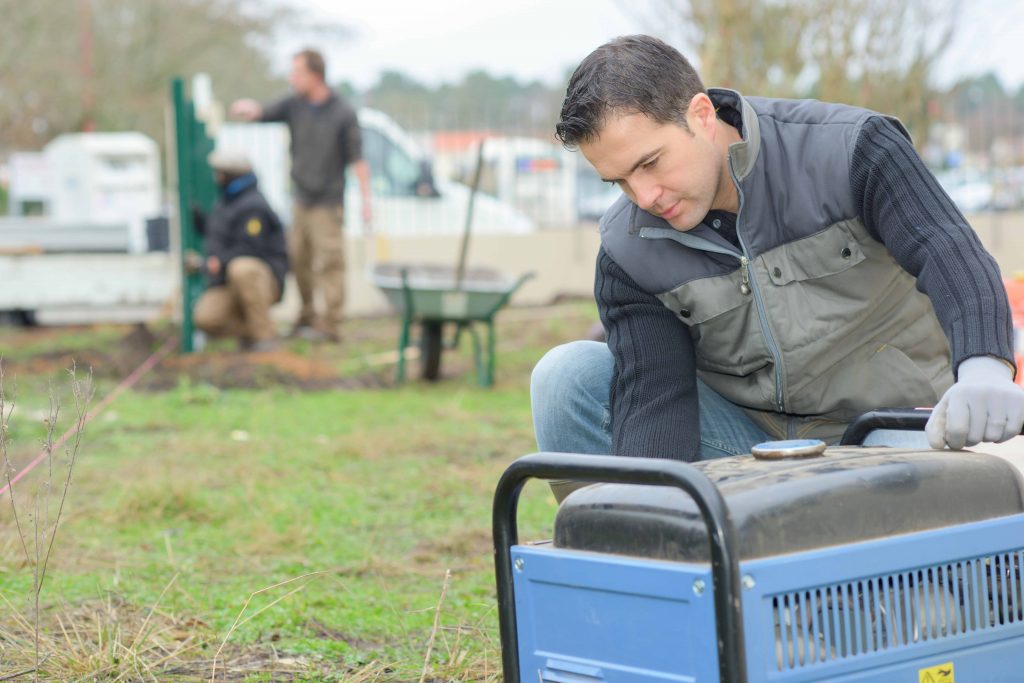
2. 1500 rpm VS 3000 rpm
A first major distinction can be made by dividing them into two main categories: generators operating at 1,500 rpm and those operating at 3,000 rpm. The abbreviation ‘rpm’ stands for ‘revolutions per minute’, i.e., the number of engine rotations completed in 60 seconds.
- Generators operating at 1,500 rpm are less common on the consumer market and are designed for more demanding applications, where many consecutive hours of operation are required or where there is a need to power industrial equipment (e.g., factories and construction sites);
- Generators operating at 3,000 rpm are the most widely available on the market and are recommended for strictly emergency, occasional, or short-duration use.
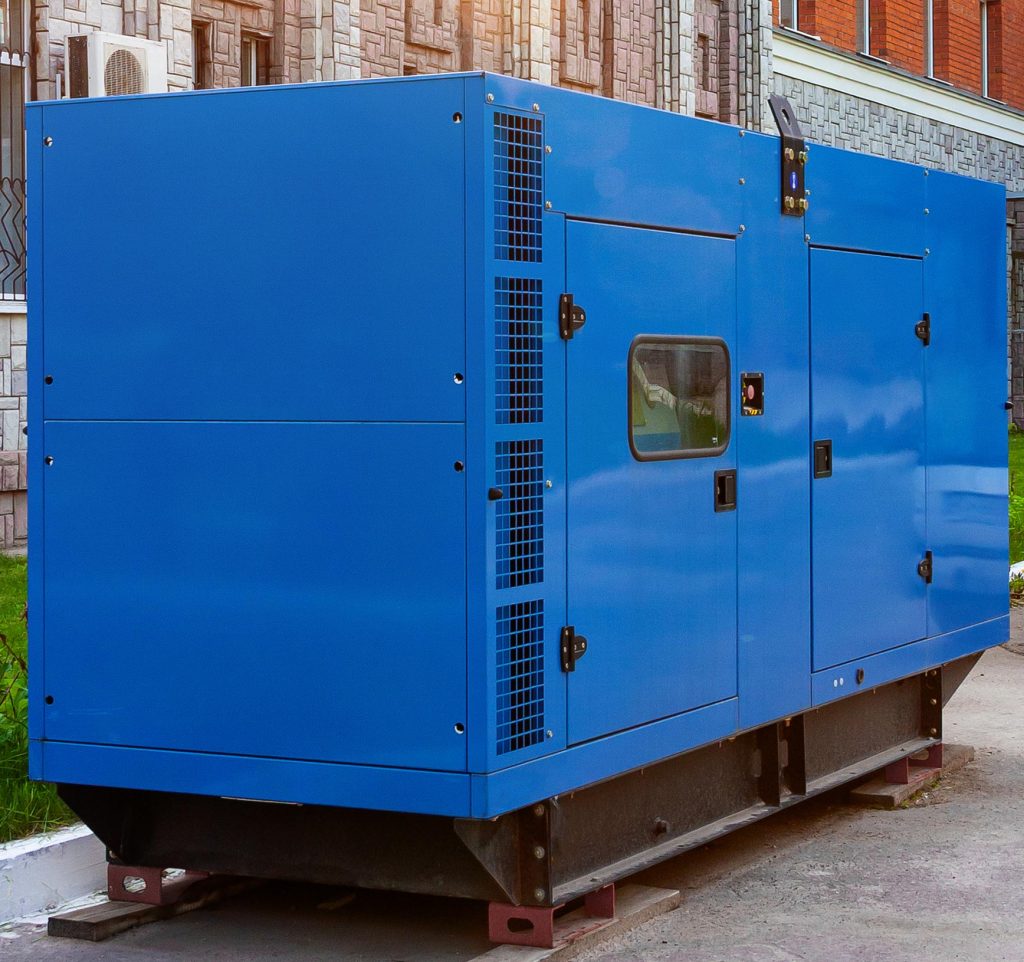
Hospital 1500 rpm power generator 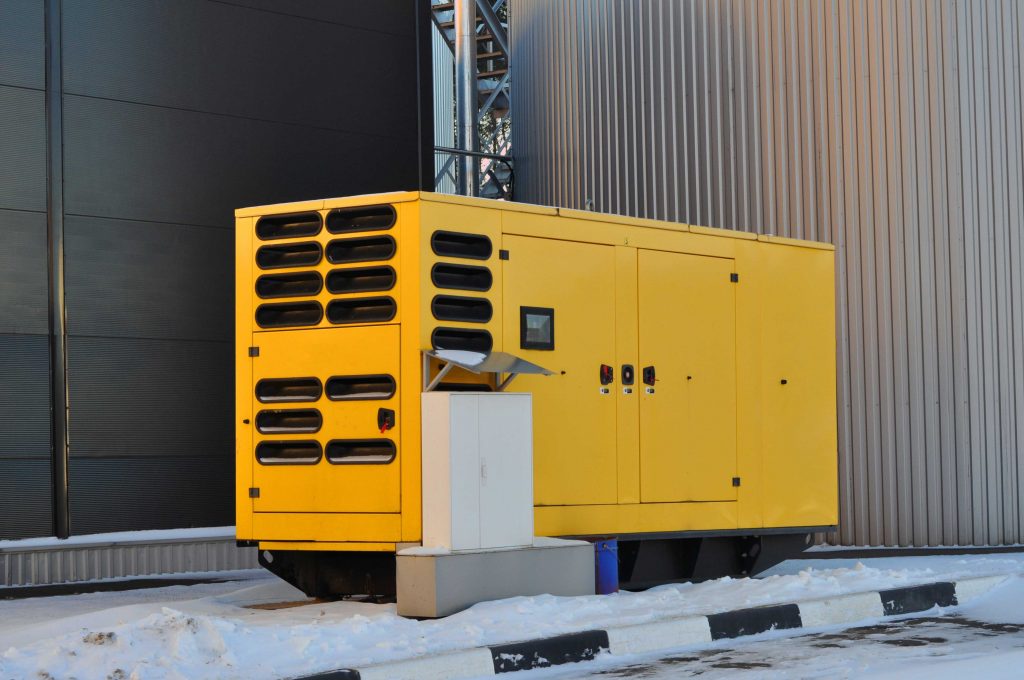
Factory 1500 rpm power generator
3. The 4 Most Common Mistakes Not to Make
- MISTAKING GENERATOR’S POWER OUTPUT WITH POWER REQUIREMENT
Most people believe that, to supply a system rated at a given number of kilowatts, it is sufficient to have a generator with the same power output. Wrong. What not everyone knows is that most equipment needs more power to start up than it needs for normal operation, the so-called ‘inrush power‘.
Example:
Imagine you need to use a standard 3 HP air compressor with a nominal power consumption of 2.3 kW, and you need to power it with a generator. The motor, however, will need 2-3 times its nominal power input to start. In short, you should use a generator delivering at least 7 kW, fitted with a 32 A industrial-type socket.
Remember: purchasing an undersized generator can shorten the unit’s service life or make it completely unsuitable for the intended application, and it may also be dangerous in certain situations.
| APPLIANCE | CONSUMPTION | INRUSH COEFFICIENT | CALCULATION | REQUIRED POWER |
| Light bulb | 100 watts | 1 | 100 x 1 | 100 watts |
| Electric heater | 1500 watts | 1 | 1500 x 1 | 1500 watts |
| Angle grinder | 280 watts | 1.5 | 280 x 1.5 | 420 watts |
| Circular saw | 800 watts | 3 | 800 x 3 | 2400 watts |
| Circular saw | 1500 watts | 2 | 1500 x 2 | 3000 watts |
| Refrigerator | 250 watts | 3 | 250 x 3 | 750 watts |
| Air conditioner | 2000 watts | 3 | 2000 x 3 | 6000 watts |
- NOT KNOWING THE ACTUAL POWER DRAW OF THE EQUIPMENT TO BE SUPPLIED
Surely among the most important aspects is knowing the actual power draw of the system, machine, or device that will be powered by the generator. Therefore, before making the purchase, carefully calculate the actual power requirements of what you need to supply, so you can choose a generator suited to the intended use. - SINGLE-PHASE OR THREE-PHASE?
The third point concerns the type of power required, which may be single-phase, i.e. with a 230 V phase-to-neutral voltage, or three-phase (380-400 V).
To simplify, household or general residential loads typically require single-phase power, whereas industrial loads generally require three-phase power. - A common mistake is to purchase a three-phase generator because it is considered ‘more powerful’ and then use it in single-phase mode, effectively using only one third of the generator’s total capacity. This is because the output power of a three-phase generator is distributed across three phases, and each individual phase cannot deliver more than one third of the total power. In short, a 9 kW generator set can deliver only 3 kW per phase—no more and no less.
- It is worth noting that the market also offers generators capable of delivering the same power output in both single-phase and three-phase operation; these are marketed a “Full Power” models.
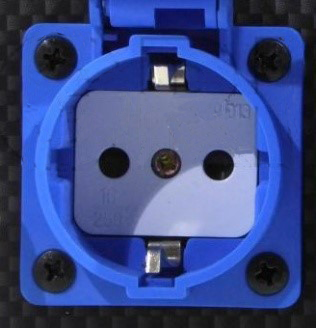
16A schuko socket (single-phase) 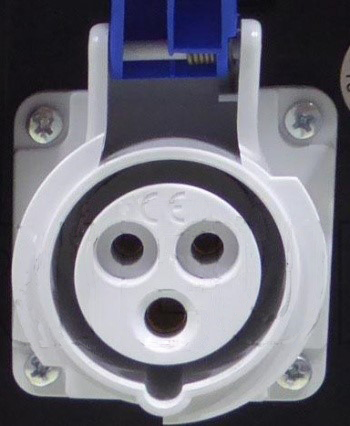
16A industrial socket (single-phase) 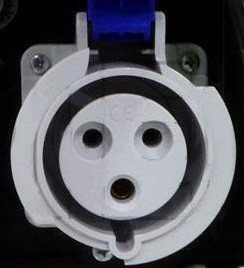
32A industrial socket (single-phase)
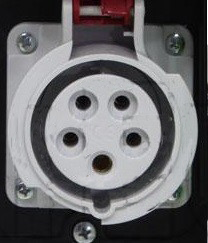
16A industrial socket (three-phase) 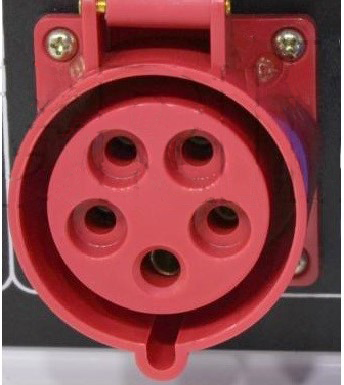
32A industrial socket (three-phase) 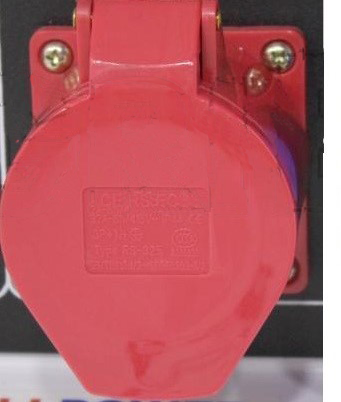
32A industrial socket (three-phase)
- GIVING TOO LITTLE IMPORTANCE TO THE END USE
Each product is designed and manufactured for a specific use, which may be industrial, professional, semi-professional, hobby or occasional use.
A frequent and significant mistake is to place excessive emphasis on price while overlooking real fitness for purpose, resulting in the purchase of equipment that does not meet the requirements of the intended application. Essentially, this happens both because of an overly superficial approach at the time of purchase and because many retailers (both physical and online) do not explain this important aspect sufficiently—or at all. To avoid making such a mistake, remember to gather sufficient technical information prior to purchase to fully understand whether the product corresponds to your real needs.
4. Usage Level
As we have emphasized several times, it is essential to choose a power generator based on how it will be used.
There are 5 usage levels, namely:
- LIMITED: The generator may be used for occasional, short-duration work sessions.
- HOBBISTIC: The generator may be used for work sessions that are not too frequent and excessively long (up to 4 consecutive hours). Within this category, there are already solid, good-quality power generators featuring 4-stroke petrol engines, with rated output ranging from 1 to 7 kW.
- SEMI-PROFESSIONAL: This category includes models that come very close to professional-level equipment, especially in terms of performance and power (most of these units are rated between 4 and 7 kW). Although superior to hobbyist models, these generator sets are not suitable for prolonged, intensive, or overly frequent use. Again, it is recommended not to exceed 4 hours of consecutive use.
- PROFESSIONAL: This usage category includes all machines that, in addition to their power output, are built with technologies and materials suitable for heavy-duty, intensive operation. A professional power generator is a high-quality, reliable piece of equipment.
- INDUSTRIAL: In this case, we are referring to top-quality, high-performance equipment, designed to operate intensively and for extended periods, such as in industrial plants, construction sites, businesses, and similar settings. Generally, 1500 rpm generators fall into this class.
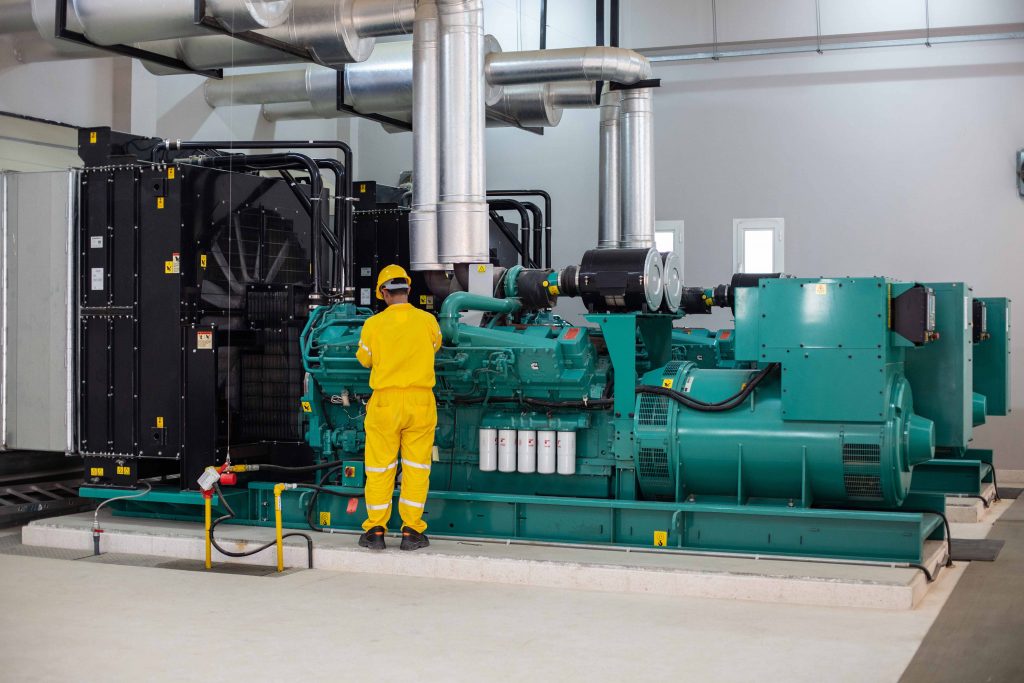
In case of uncertainty, it is best to select the higher usage class. It is true that you will most likely spend a little more, but you will have the assurance of a higher-quality, more reliable product—one that is unlikely to make you feel you made the wrong purchase.
5. Power: KW and KVA
Power generators are available on the market in a wide range of outputs, from smaller units under 3 kW to models exceeding 20 kW, designed specifically for industrial-level use. Power may also be calculated and stated in KVA (KiloVolt-Ampere) and to obtain the power in KW (Kilowatt) simply multiply the kVA value by the power factor, which is generally 0.8. For example, a 5 KVA generator will correspond to 4 KW (5 x 0.8 = 4).
Power in Kilowatts = Power in KVA x Power Factor (0.8)
6. Manufacturing Country, Materials and Brands
- MANUFACTURING COUNTRY
As with many other products, a generator’s country of manufacture is, in itself, an indicator of quality—an important factor that is often given little consideration or even overlooked. Consider a Chinese-made product, for example, which—due to the quality of its internal components, assembly, and materials—may be inferior to an Italian- or German-made product. - MATERIALS
When choosing a generator, it is essential to consider the quality of the materials it is built from—especially if you know it will be used outdoors. A machine made of good materials, not easily subjected to rust, is a strong indicator of quality, safety and performance. - BRANDS
It may seem obvious, but it is always worth reiterating: a brand name is not necessarily a guarantee of reliability; however, equipment manufactured by a company with many years of industry experience will very likely offer an ‘extra edge’. The reason is simple: a brand that has been operating in a given segment for years can draw on such extensive experience and understanding of customer needs that it is able to build high-quality equipment in line with the standards required by the market. Moreover, an established brand is also reliable in terms of local service support and spare parts availability.
Among the best brands are: Pramac, Honda, TecnoGen and Mosa
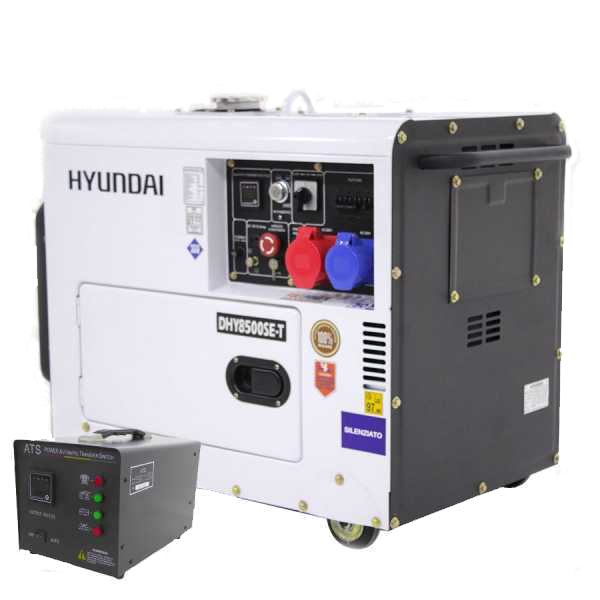
Hyundai DHY8500SE-T 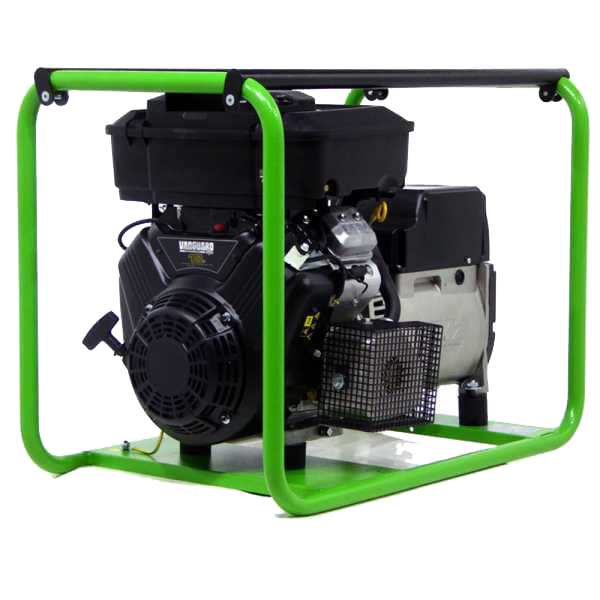
Energy EY-12TB
Briggs&Stratton Vanguard engine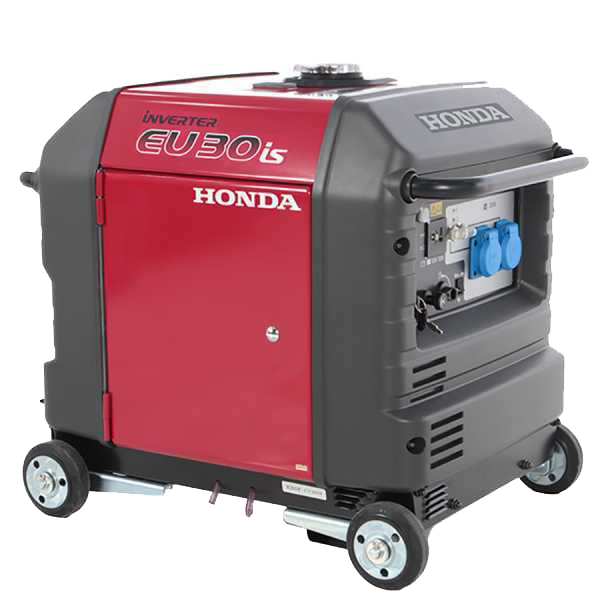
Honda EU30is
Honda GX200 engine
7. Single-phase or Three-phase
Among the factors to take into consideration when choosing a generator set is the voltage, which, as we have explained in previous paragraphs, can be: single-phase or three-phase; the former (single-phase) are mainly used for domestic applications, whereas three-phase models are more suited to professional and industrial use, delivering up to 380–400 V and being intended for situations where high-demand equipment must be powered.
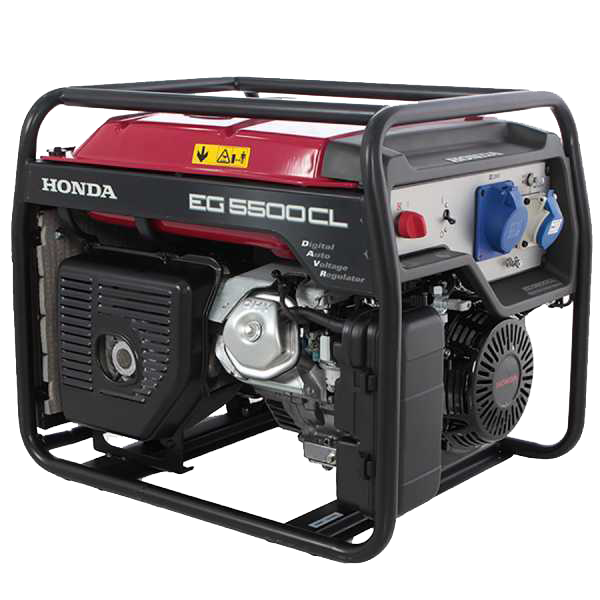
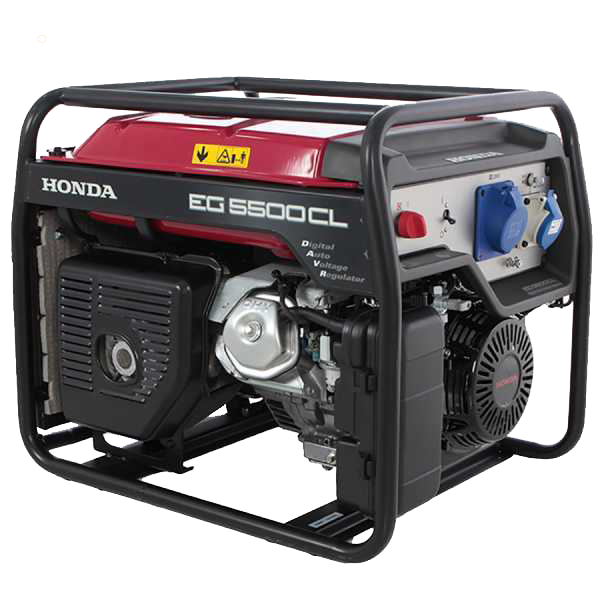
Honda EG 5500CL
single-phase power generator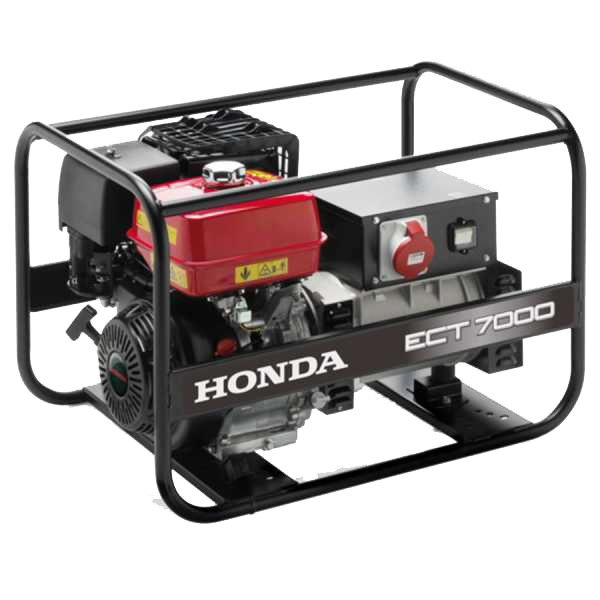
Honda ECT 7000
three-phase power generator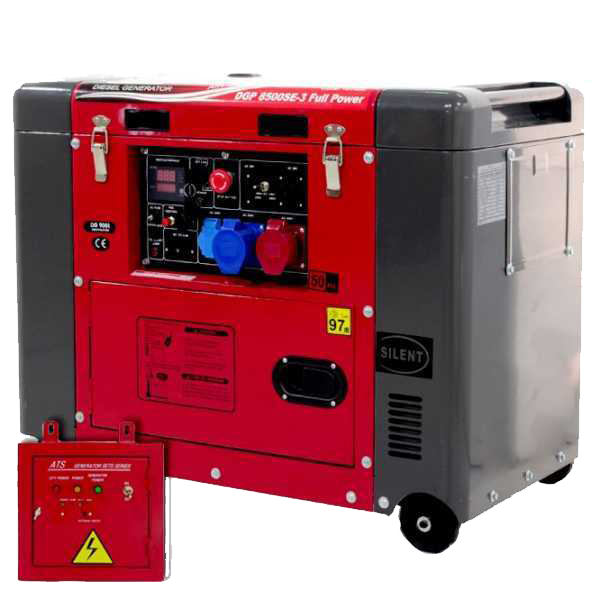
GeoTech Pro DGP8500SE-3
Full-power generator
As explained above, while a single-phase generator cannot be used in place of a three-phase one, a three-phase generator can power single-phase loads; however, this results in a reduction to one third of its usable output.
Example: A 6 kW three-phase generator can also be used in single-phase mode, but only at 2 kW—not 6 kW as is often mistakenly assumed.
8. Quietness and Noise
A very important factor for a generator set is its noise level, especially if it is to be used in specific environments such as homes, apartment buildings, or any context where strict noise pollution regulations apply . In all these cases, there is only one solution: rely on a silenced (or silent) power generator. We are referring to generator sets equipped with low-noise engines and high-efficiency acoustic insulation panels that wrap around the machine to attenuate noise, with dedicated openings at the exhaust outlet and alternator area.
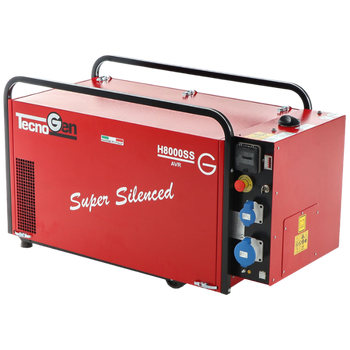
TecnoGen H8000SS
enclosed silenced power generator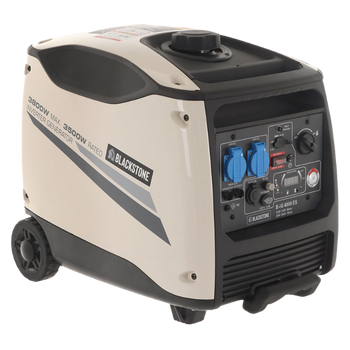
BlackStone B-iG 4000
silenced power generator
Unlike non-silenced models, which are generally intended for shorter periods of use, silenced (or supersilenced) generator sets are recommended for domestic applications and for all situations where prolonged operation is required. As a general indication, a 2–3 kW generator operates at around 70 dB—roughly the same noise level as a loud conversation.
To avoid unpleasant inconveniences, we recommend always checking the decibels produced by your generator during operation and consulting the applicable local regulations on noise emissions and acoustic pollution, which may vary from one area to another.
9. Power Supply
Many users start by narrowing down their options according to the fuel required.
9.1 Petrol-powered Power Generators
- PETROL
Petrol generators are generally more affordable and slightly quieter than other types, plus they have the great advantage of having a compact design and a lower weight, making them easier to move around. - In most cases, they are less powerful than diesel generator sets and are recommended for short and occasional use.
- A great strength of petrol-powered models is their drive, which compared to diesel ones have a practical recoil start.
9.2 Diesel Power Generators
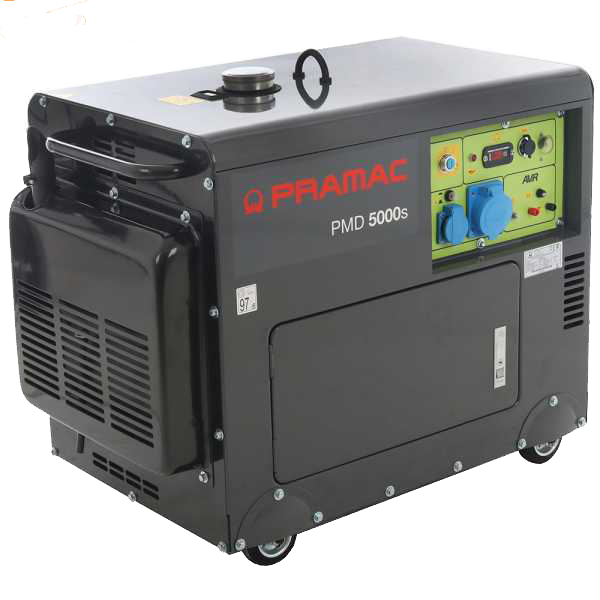
- DIESEL
Diesel generators are, without a doubt, the most widespread on the market and the most commonly used for intensive applications. Besides reducing consumption and consequently fuel costs, diesel is also more environmentally friendly and safer, as it is less flammable than petrol. - The main disadvantages of diesel generators are their noise level (compared to a petrol generator, these generators are less quiet and therefore more limited in this respect) and greater weight.
9.3 LPG or Natural Gas Power Generators
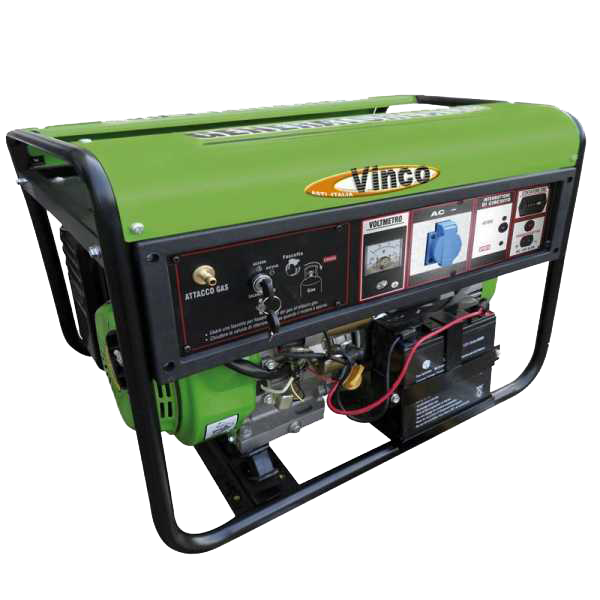
- LPG or NATURAL GAS
Power generators fuelled by LPG or Natural Gas have become increasingly popular in recent years, as this type is considered more environmentally friendly and cost-effective. - Unlike the more common petrol or diesel generators, all those fuelled by natural gas, such as LPG or methane, can operate without producing the strong odours, typically associated with the previously mentioned types.
9.4 Photovoltaic Generator Sets
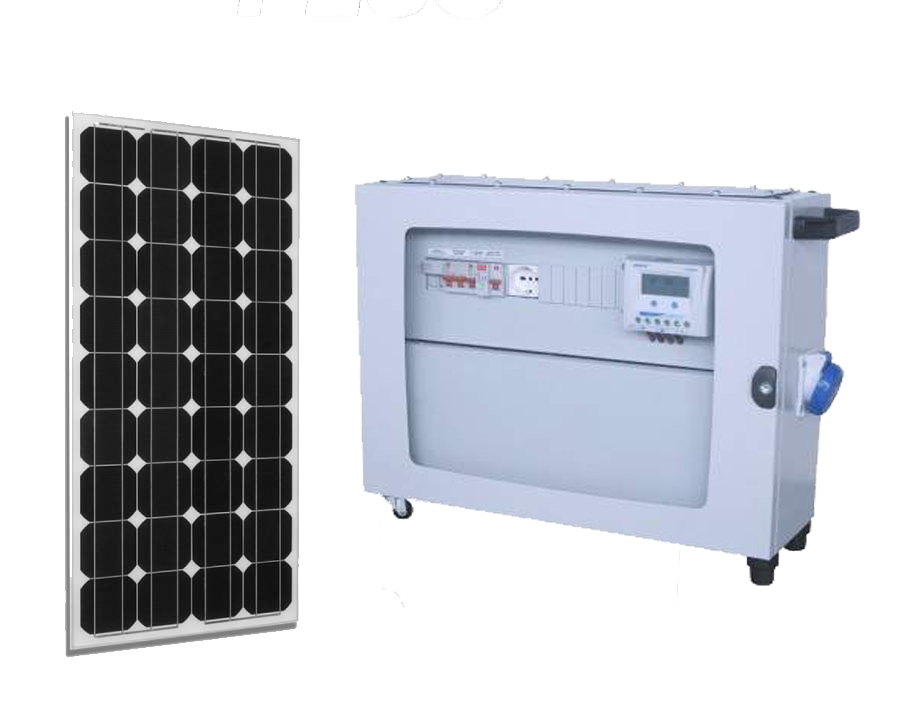
- SOLAR ENERGY
To conclude, for those who place particular emphasis on environmental sustainability, solar-powered power generators may be an option worth considering. Photovoltaic generator sets can be connected to standard solar panels to obtain 100% clean energy at a significantly lower cost.
10. Calculating the Power Consumption of an Electrical Device
To determine the real starting (inrush) power of your equipment, there are four possible approaches:
- Use a power consumption meter (clamp meter);
- Contact the manufacturer directly and ask for the peak current draw value, also known as the ‘starting (inrush) draw’. In this case, it should be specified that the device will be powered by a generator;
- Consult your trusted electrician.
To calculate the power required to supply the device you own, , you will need to perform a simple calculation that identifies two values for each electrical appliance you intend to use: Consumption and Inrush Coefficient. These two values must then be multiplied to determine the required power for each device.
Power = Rated Power Consumption x Inrush Coefficient
(as shown in the table above)
11. Usage Locations
Before purchasing a generator set, there is another key aspect to keep firmly in mind, namely the location where the unit will be used: Where will it be placed? Will it have to be moved between jobs or will it remain stationary in one place? What power supply does it use? Is it silenced?
For example, if you have a stationary generator, it should be placed in a cool, dry, well-ventilated area.
As previously mentioned, power generators produce exhaust fumes; for this reason, it is advisable to position them in open areas and, if necessary, use protective covers to shield the unit from weather conditions that may occur during operation. On the other hand, if the unit is to be used in enclosed environments, it is essential to identify a location with adequate ventilation, both to safely disperse the exhaust gases and to prevent the generator from overheating.
Equally important is the earthing, as required by safety regulations in order to prevent hazards to people and to the machine itself. This procedure is carried out by driving an earth (ground) rod into the ground and performing the relevant resistance calculation; it is an operation normally carried out by an electrician.
The last aspect to take into account is the noise. As mentioned earlier, a generator set that is particularly noisy—or that produces a noise level likely to disturb nearby areas (homes, businesses, hospitals, schools, offices, etc.) or to exceed the legally permitted decibel limits (e.g., municipal regulations)—cannot be used. In these cases, the only solution is to rely on quiet or low-noise models, designed to absorb or attenuate vibrations and the noise emissions produced during operation.
For domestic use, we recommend generators with a noise level between 55 dB and 70 dB, so they can be run even at night without causing disturbance.
Below is a brief summary table outlining the general characteristics each model should have, depending on the environment in which it will operate:
| ENVIRONMENT | FUEL TYPE | TECHNOLOGY | STARTING METHOD | GENERAL FEATURES |
 |
Petrol | Inverter | Recoil | Due to space constraints, the generator should be compact, easy to transport, lightweight, and provide good power output. |
 |
Petrol | Inverter | Recoil | These are easily portable units with low weight and limited output (they usually power the stall’s lighting). |
 |
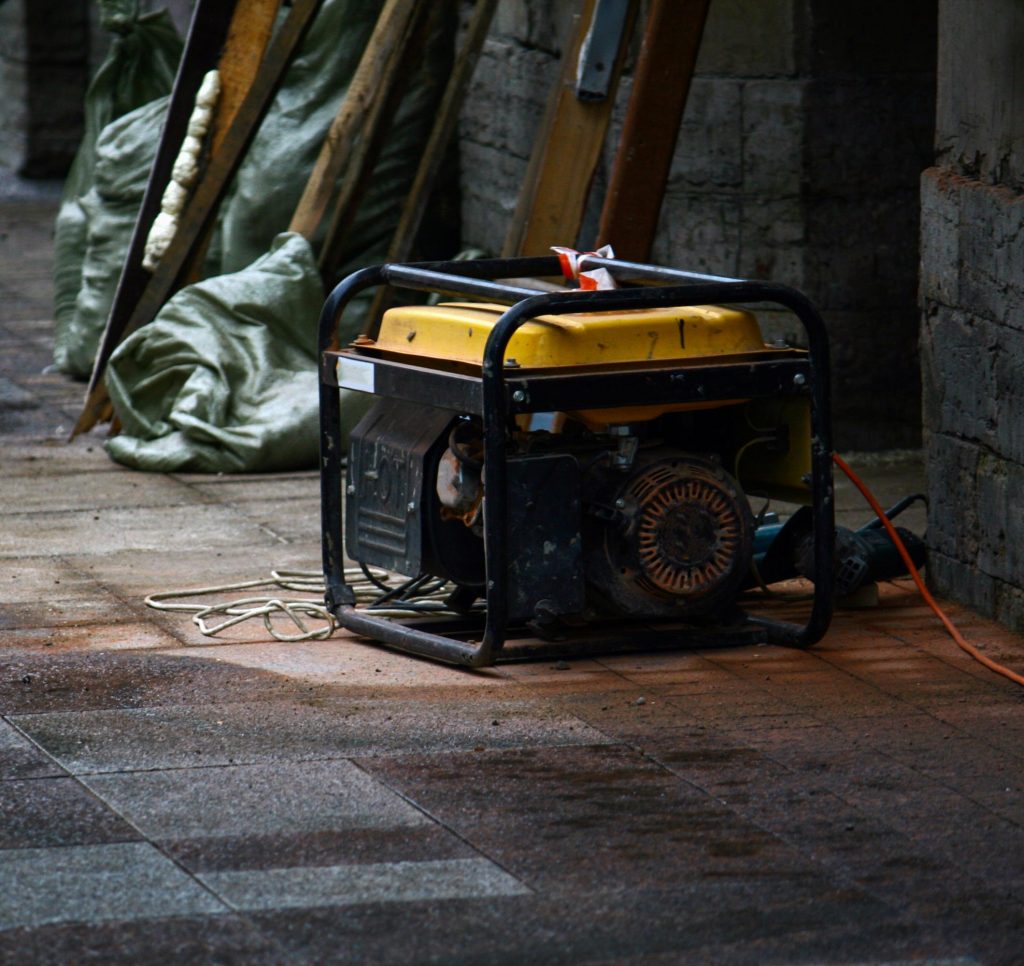
Petrol Diesel |
Non stabilizzato | Recoil | These are basic, open-frame machines with few features, suitable for prolonged and frequent work sessions. |
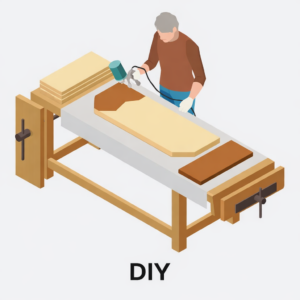 |
Petrol Diesel Mixture |
AVR | Electirc or Recoil | DIY equipment is not particularly complex and can be powered by generators equipped with an AVR system. |
 |
Petrol Diesel |
AVR + ATS | Automatic electric | Generators connected to safety devices are typically equipped with an automatic start control panel. |
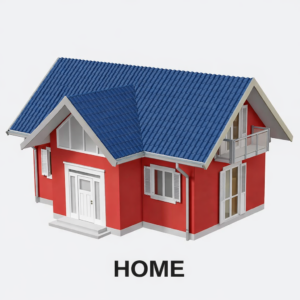 |
Petrol |
AVR + ATS | Automatic electric | These generators, both petrol and diesel, are equipped with an ATS panel (diesel models allow longer fuel storage), which enables automatic start-up in the event of a power outage. |
12. Stabilised Power Generators: Inverter or AVR
In addition to the operating location, it is important to have a clear understanding of which devices will be connected to the generator. For example, if the generator set is intended to supply a home, a camper, or a boat, it is safe to assume there will be several sensitive loads—such as TVs, household appliances, and devices that are particularly vulnerable to dangerous voltage fluctuations, which can impair or seriously damage them.
Power generator to supply a market stall 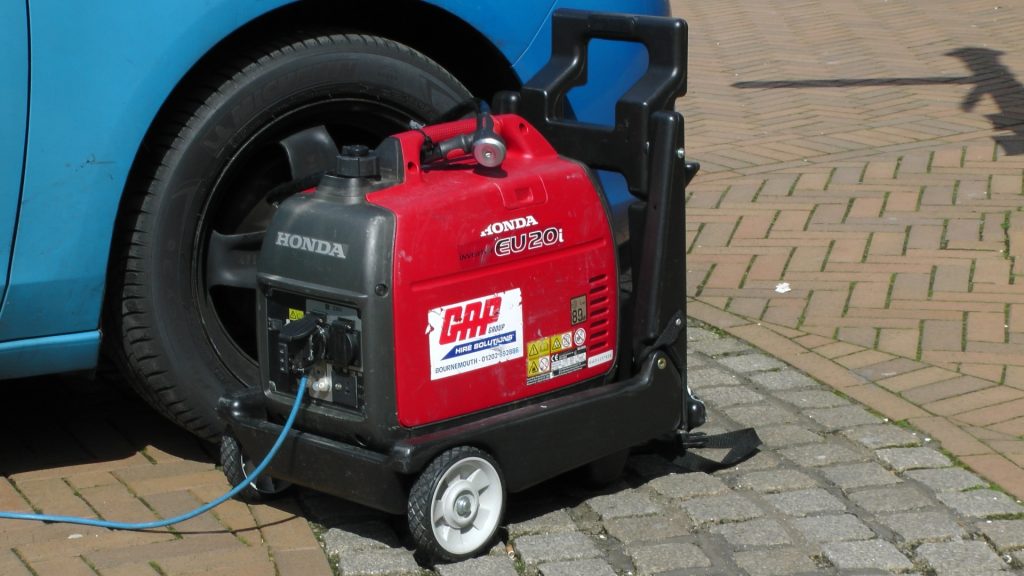
Wheeled generator
for DIY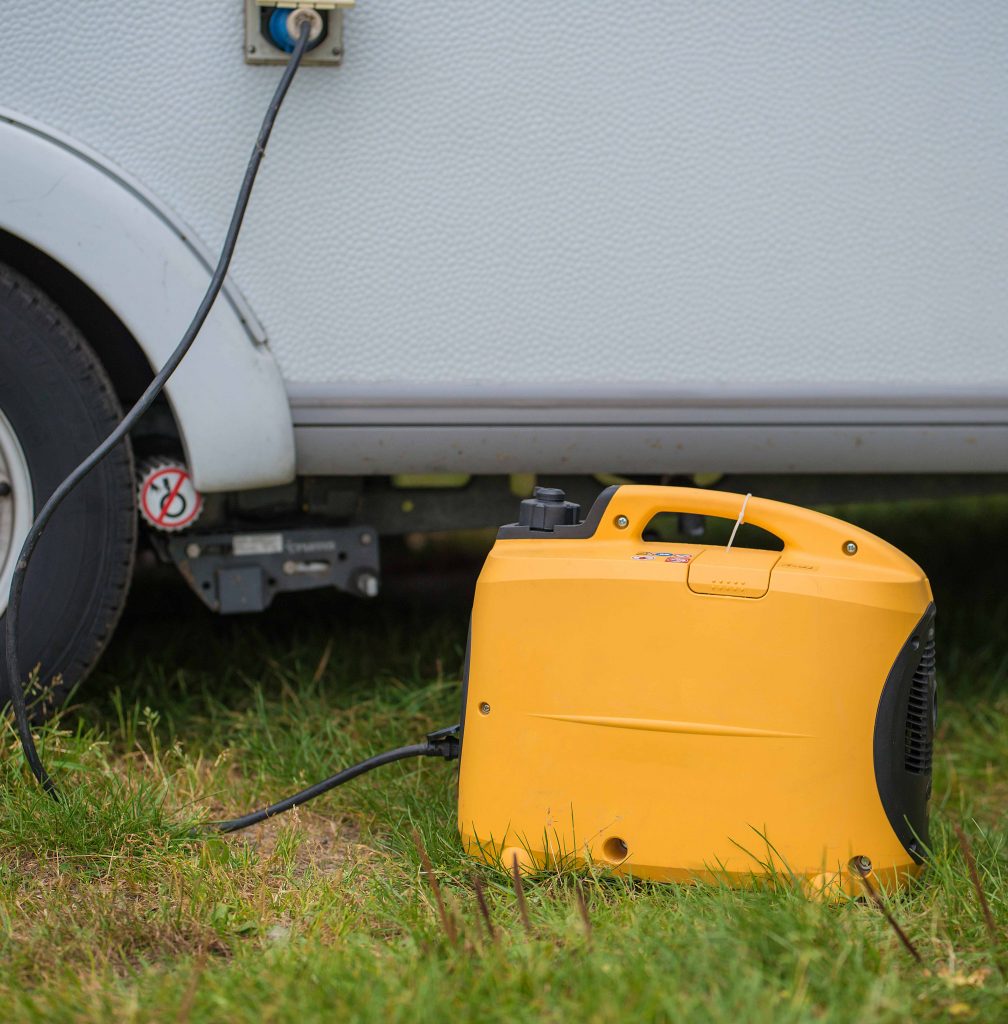
Power generator
for campers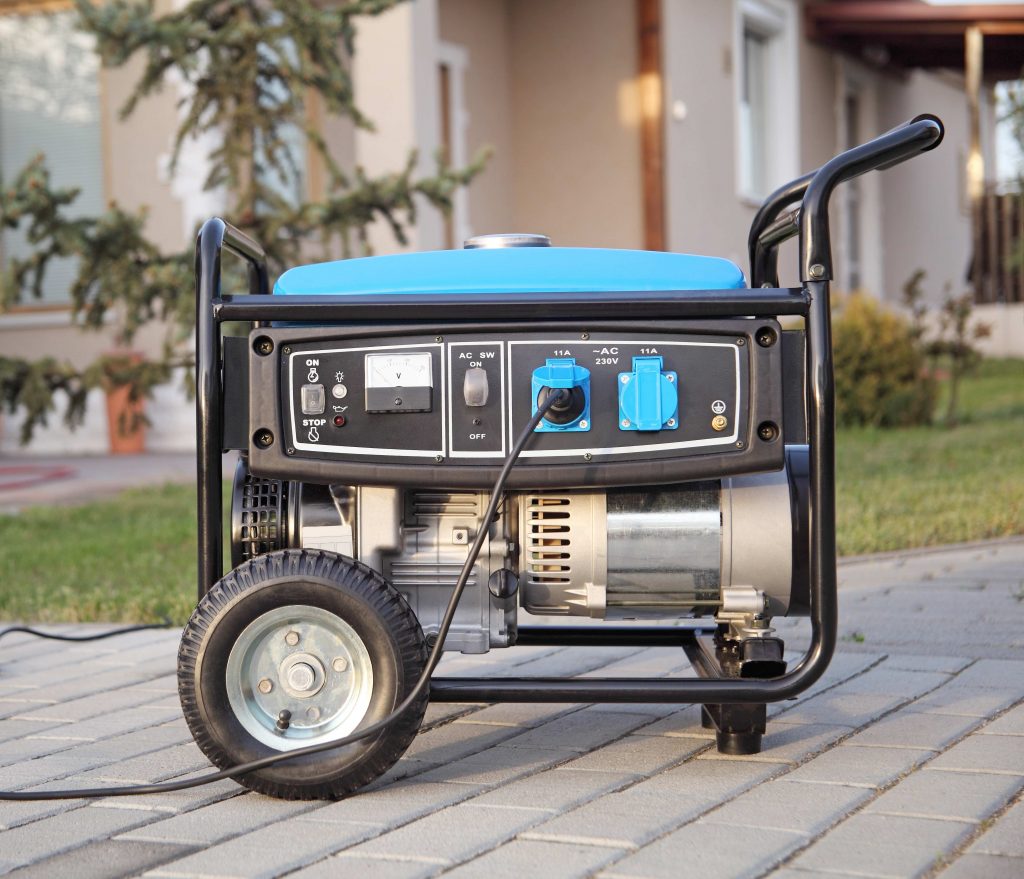
Power generator
for homes
The main systems found in voltage-stabilised generators are: an Inverter or AVR
12.1 Inverter Power Generators
- INVERTER POWER GENERATORS
This type of generator is the most suitable choice for having stable, constant, clean power, but above all free from voltage fluctuations. The generated electrical power has a purer sinusoidal waveform (therefore fully stabilized), making it suitable for use with more advanced household or professional equipment featuring electronic control boards (power tools, computers, televisions, household appliances, etc.), as well as for applications in campers, boats, market stalls, and at fairs and events.
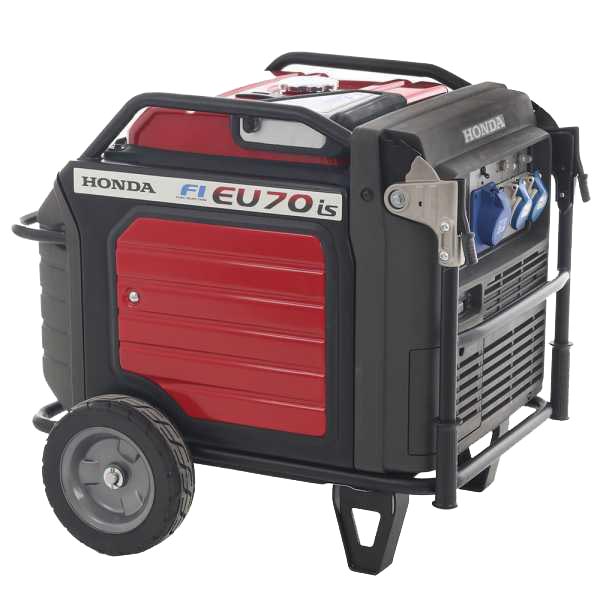
Honda EU70is Inverter Power Generator 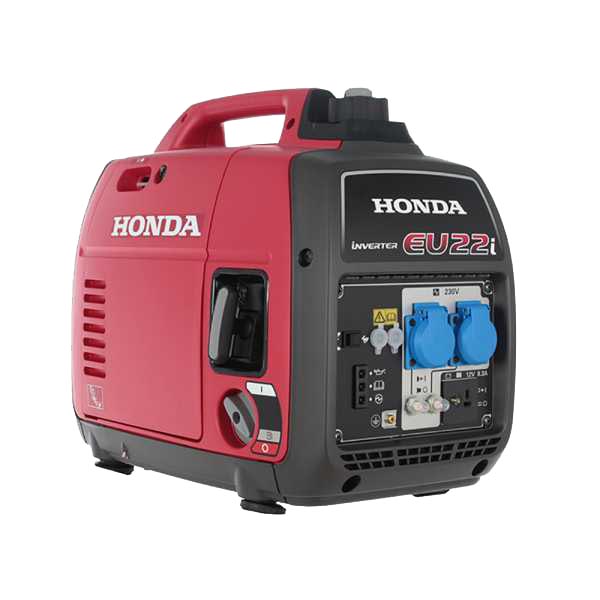
Honda EU22i Inverter Power Generator
12.2 Power Generators with AVR
- POWER GENERATORS WITH AVR SYSTEM
The AVR (Automatic Voltage Regulator) system, also known as “Voltage Regulator“, is recommended for the most common applications and is designed to keep the machine operating steadily, within the range that ensures maximum efficiency. This system, in addition to ensuring proper operation of the machine, also safeguards the service life of the connected equipment.
Furthermore, the AVR allows the output voltage to remain constant, ensuring fewer voltage drops or power surges.
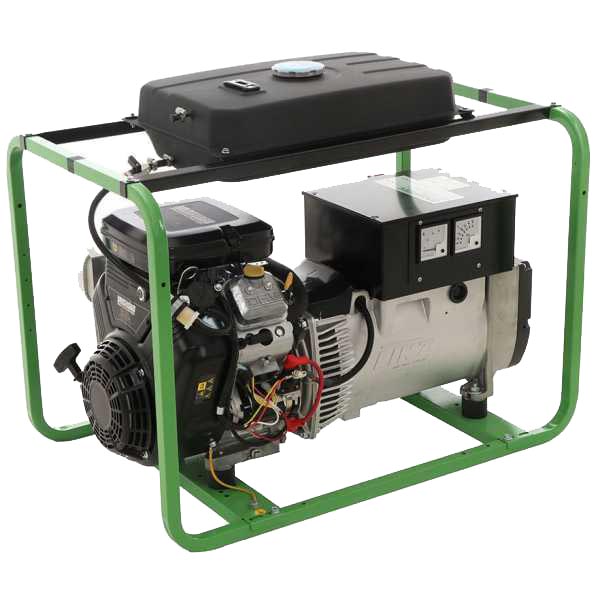
Energy EY-16TBE
AVR Power Generator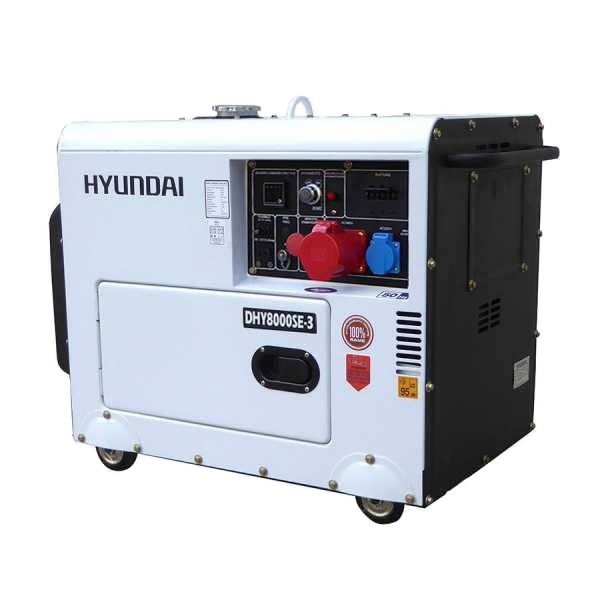
Hyundai DHY8000SE3
AVR Power Generator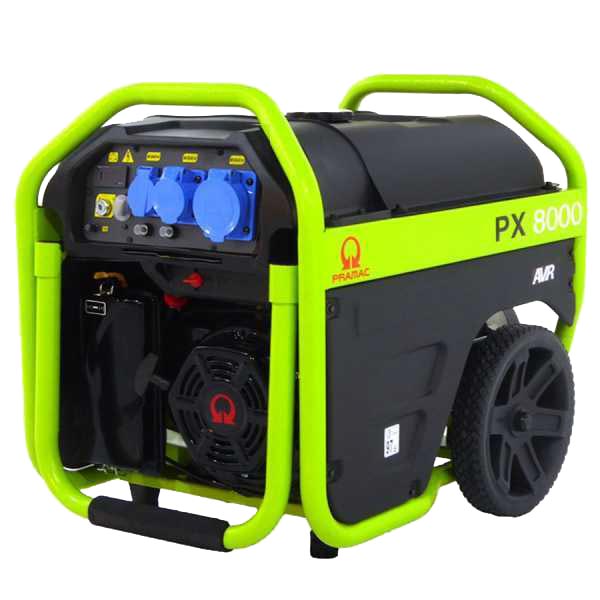
Pramac PX 8000
AVR Power Generator
13. Start-up
Generator sets may feature different starting systems: recoil or electric/automatic.
- RECOIL START
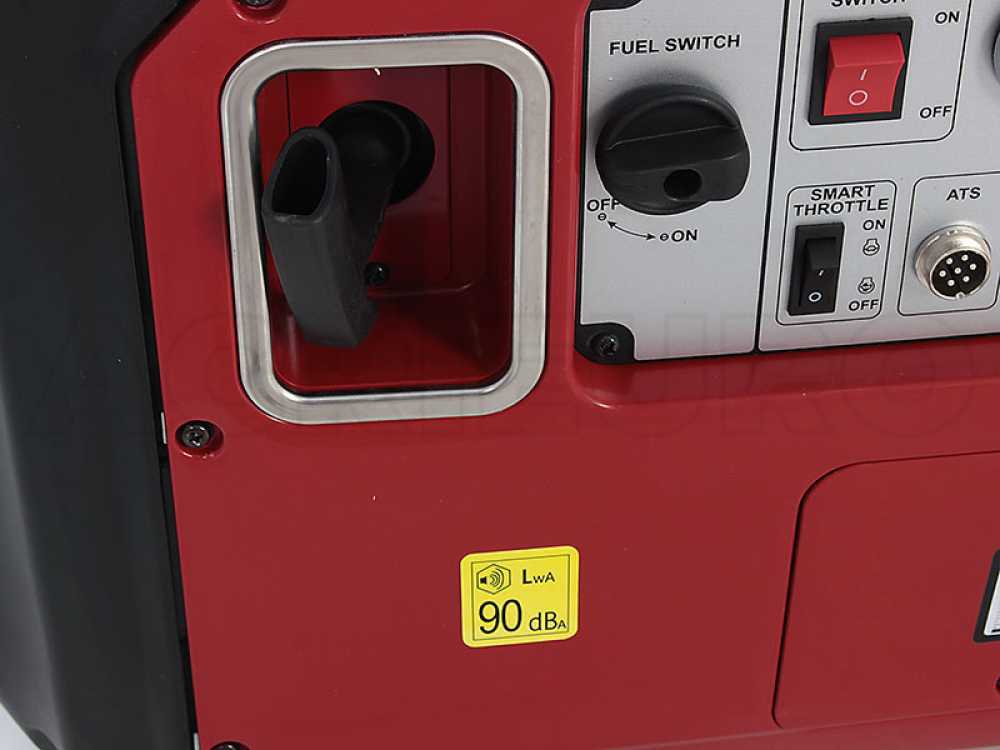
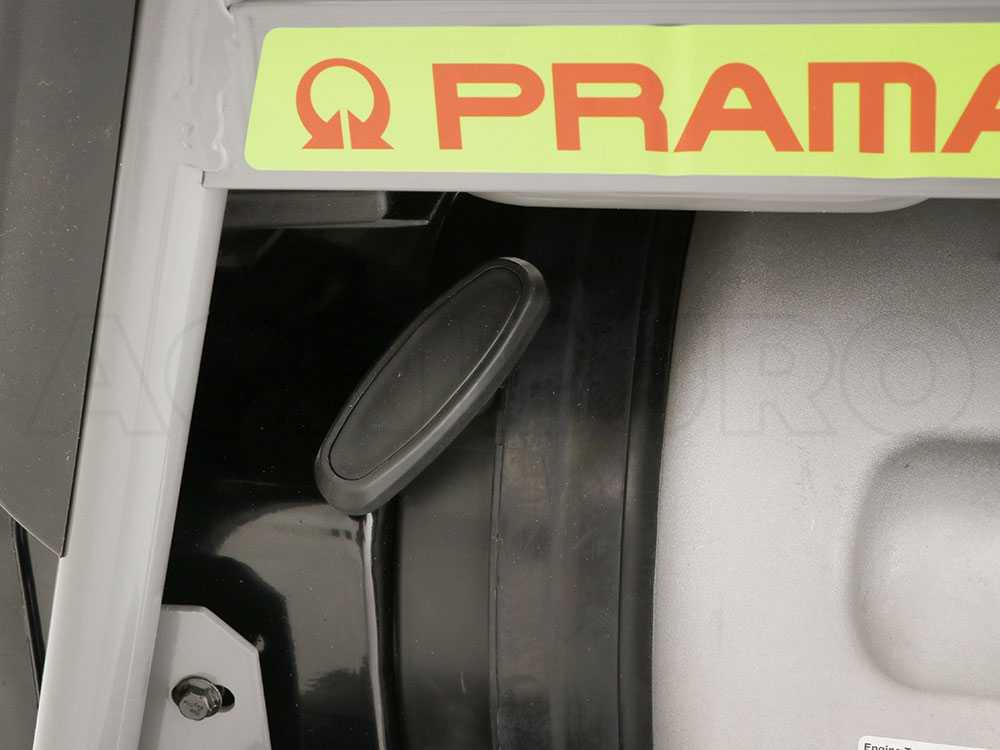
The recoil (pull-cord) starting mechanism consists of a cord wound around a pulley and held under tension by a spring. To start the engine, the cord must be pulled with the appropriate force in order to provide the initial impulse required to set the engine in motion.
- ELECTRIC START
In this case, an electric starter motor is fitted and operates for a few seconds, until the engine begins running normally.
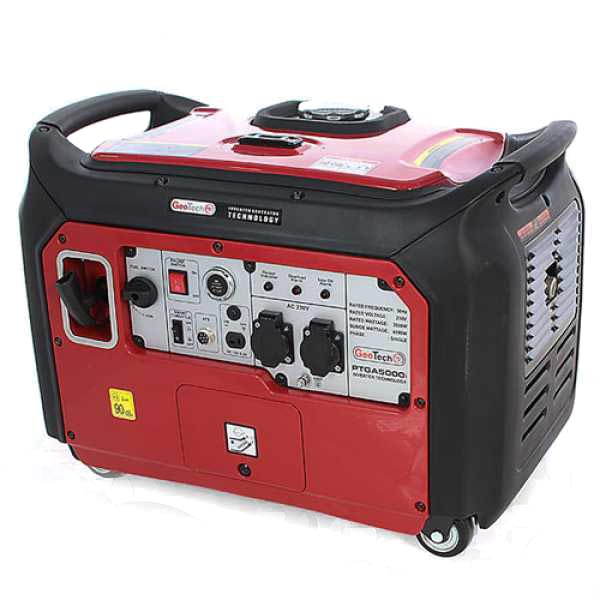
GeoTech PTGA5000 Power Generator 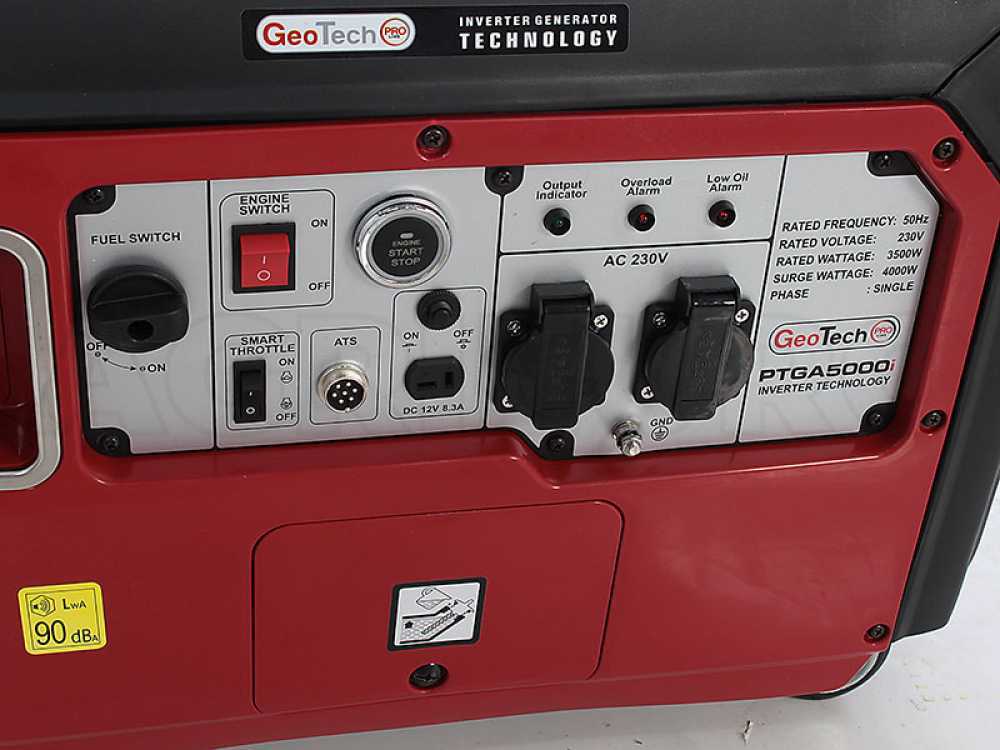
Electric starter panel with ‘Start/Stop’ button
- AUTOMATIC START (ATS)
Some generators may have an automatic start system (integrated on certain models and external on others) typically referred to as ATS (Automatic Transfer Switch).
This system enables the generator to start fully autonomously in the event of a mains power failure, without any human intervention. In fact, thanks to the ATS system, the unit can be interfaced with the public utility grid, allowing it to start automatically whenever the power supply is interrupted. Precisely for this reason, they are widely used in homes at risk of power failure, by security companies, in basements at risk of flooding, for cold rooms, and in other potentially emergency situations.
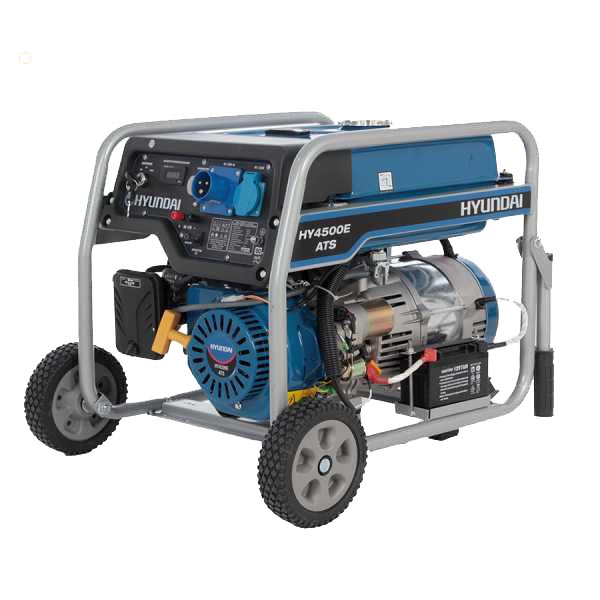
Hyundai HY4500E Power Generator
with integrated ATS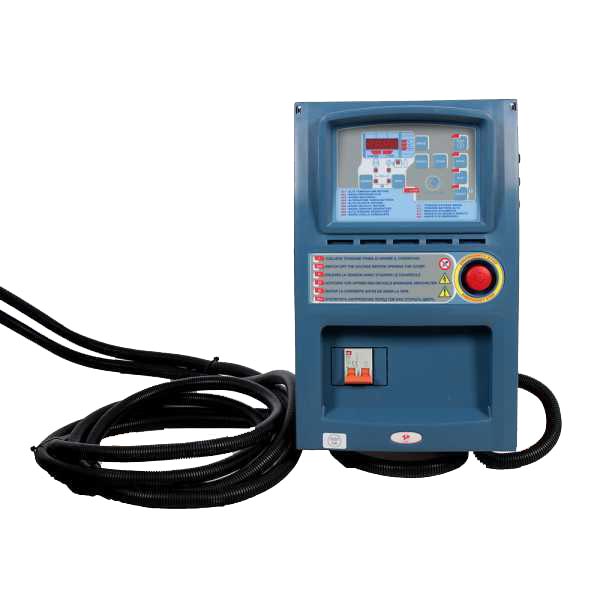
External ATS system 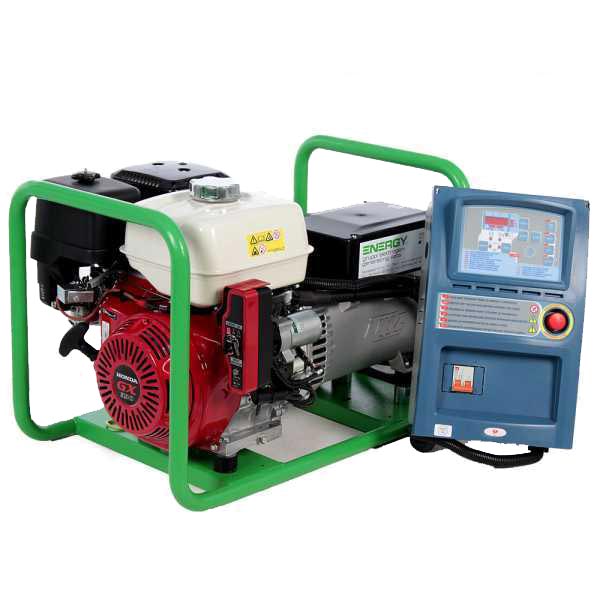
Energy EY-7TBE-A Power Generator
with external ATS
14. Portable Power Stations
In this guide to generator sets and power generators, we could not fail to mention portable power stations. These are not, strictly speaking, true power generators, as they are closer in nature to rechargeable battery systems. For this reason, they are also referred to as portable power stations or portable energy storage units.
However, both power generators and portable power stations are two systems for obtaining power when the mains grid is not available.
Portable power stations, in particular, provide a versatile and reliable solution for a wide range of energy requirements in virtually any environment, offering a portable energy reserve thanks to the integrated batteries. This makes them ideal for powering a wide range of devices, from smartphones and laptops to power tools and small appliances.
So what is a Power Station for?
Portable power stations are perfect for:
- Powering or recharging electronic devices: smartphones, tablets, laptops, cameras, drones.
- Powering small single-phase household appliances: fans, mini refrigerators, lamps, portable TVs.
- Powering power tools: drills, saws, screwdrivers, compressors.
- Providing power in case of emergency: blackouts, power cuts, camping.
14.1 What are the differences between portable power stations and power generators?
While portable power stations and generator sets both provide electricity in the absence of a grid connection, they differ significantly in terms of features and operating principles. We have listed the main ones in the table below:
| PORTABLE POWER STATIONS | GENERATOR SETS | |
| POWER SUPPLY | Rechargeable lithium batteries. | Petrol, diesel, natural gas or propane. |
| NOISE AND EMISSIONS | Silent, no exhaust gas emissions. | Noisy, with exhaust gas emissions. |
| POWER | Variable, from a few hundred watts to several kilowatts. | High, from several kilowatts to tens of kilowatts. |
| RUNTIME | Limited, requires periodic recharging. | Extended; provides prolonged operating runtime. |
| PORTABILITY | High thanks to compact size and low weight. | Variable, from compact to bulkier models |
| USES | Ideal for electronic devices, small appliances, lighting. | Suitable for powering power tools and machinery as well. |
14.2 How many types of portable power stations are there? What are the main differences?
Portable power stations are mainly divided into two types: wheeled and non-wheeled. Below, we have outlined the main differences between the two types, also explaining when it is more appropriate to use each one.
Wheeled power stations:
- Features: They are called wheeled because they are fitted with wheels and a handle to facilitate transport, since they are larger and heavier than non-wheeled models. Wheeled models usually have a higher amperage, and therefore include more batteries, or in any case larger batteries, inside the unit. It is precisely this that affects their weight and size, increasing both significantly. Some models, for example, weigh up to 35 kg, with a footprint of approximately 50x25x30 cm. In addition, wheeled portable power stations also have a higher power output capacity. For all these reasons, they also generally have a higher price than non-wheeled models.
- Uses: Wheeled power stations are ideal for use on the move and for powering devices with high energy consumption. They offer greater operating autonomy. They stand out for being robust and resistant.
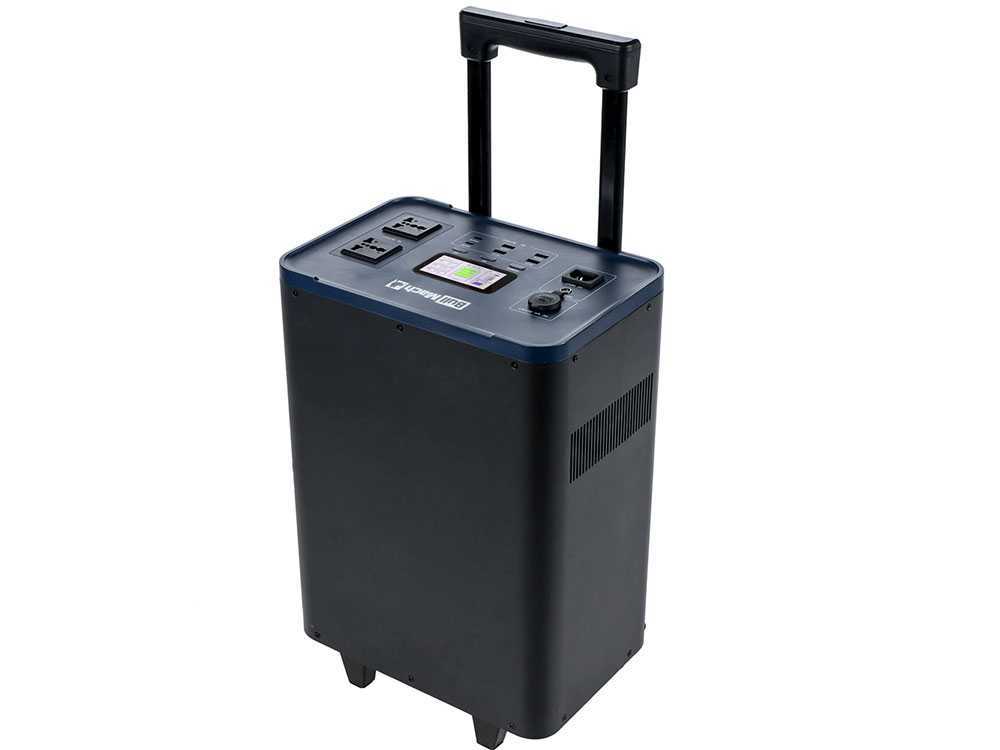
Portable Power Stations:
- Features: Compared to wheeled models, they are smaller and lighter. For example, the weight of these portable power stations is, in the most powerful models, around 19 kg with dimensions around 32x28x24 cm. This makes them relatively easy to transport and store compared to a wheeled power station. As we have just seen, smaller dimensions mean lower battery capacity and lower output power, which in turn affect how these units can be used. Consequently, the price of portable power stations is generally lower than those on wheels.
- Uses: Practical and versatile for everyday use. Suitable for powering electronic devices and small household appliances. Silent and light.
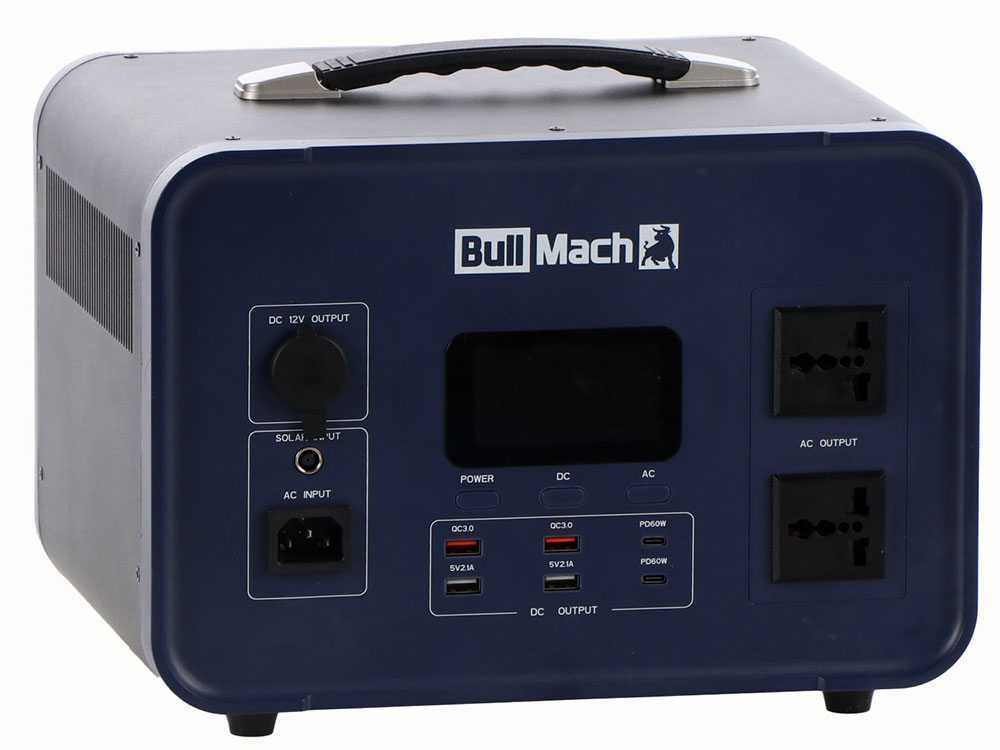
14.3 Power Station Technical Specifications
Regardless of whether the portable power station is wheeled or not, the main technical specifications shared by these portable power stations are as follows.
Power:
The range of portable power stations offers multiple power options, from 500 watts to 3000 watts, to meet the needs of every user. 1000-watt models are ideal for electronic devices and small household appliances, while 2000-watt and 3000-watt models can also power electric tools and machinery.
Recharging:
Portable power stations offer several charging methods:
- Standard charging: via domestic power socket.
- Solar charging up to 60V/300W : with a compatible solar panel (sold separately).
- Fast AC charging: for rapid recharging from high-voltage mains outlets.
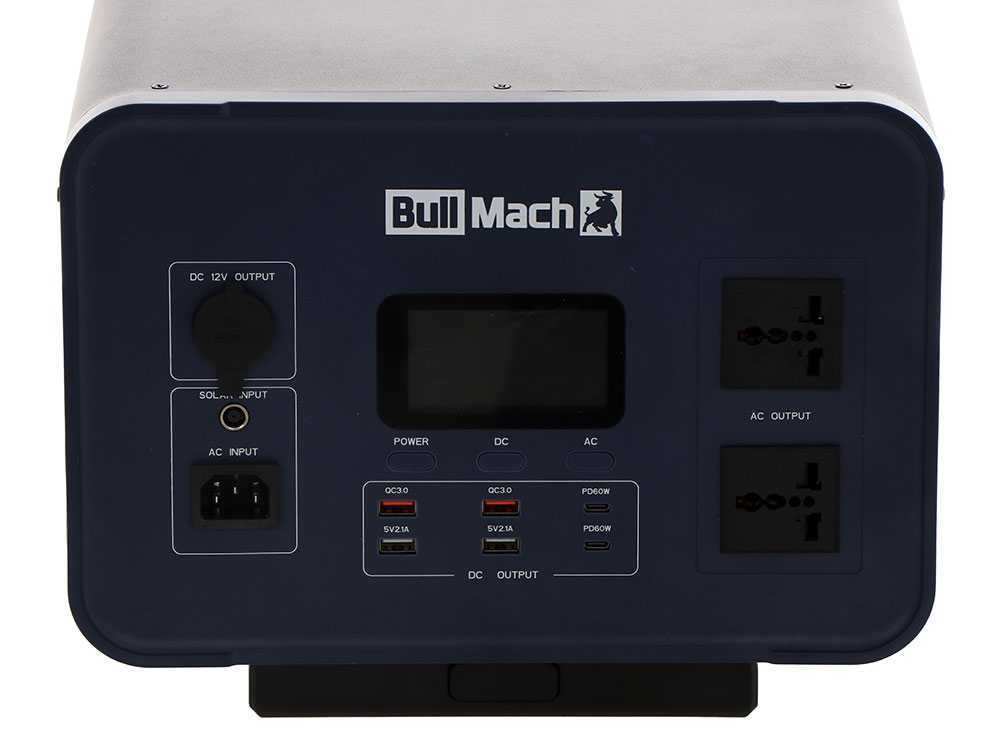
Ports and Outputs:
Portable power stations have different ports and outputs to power different devices. They are usually equipped with:
- One or more continuous power ports: for powering devices with a constant power draw.
- Peak power port: for powering devices with high peak consumption.
- DC ports: 12V, 10A, and a cigarette-lighter socket.
- One or more standard USB-A ports and USB-A QC 3.0 ports for charging smartphones, tablets, and other USB devices.
- USB Type-C ports offering PD 60W and PD 100W.
Safety and Protections:
Portable power stations are equipped with various protective features to ensure safe operation:
- Short-circuit protection.
- Overload protection.
- Overheating protection.
- Overvoltage protection.
Important: Grounding
Portable Power Stations are equipped with grounding and are certified in accordance with all electrical safety standards and CE requirements.
Service Life:
The batteries in portable power stations offer a service life of over 500 cycles up to 80% of their capacity, ensuring long-term use over time.
14.4 Uses
Portable power stations stand out for their practicality and compactness, making them ideal for a variety of situations:
- Camping and outdoor activities: enjoy nature without giving up everyday comforts, by recharging your electronic devices or powering lighting and small appliances.
- Emergencies and blackouts: in the event of power outages, portable power stations provide emergency power for essential devices.
- Work on the move: they provide a reliable power source for running power tools and laptops on job sites or in any location without access to mains outlets.
Naturally, the choice of portable power station type depends on your specific usage requirements. Therefore, before purchasing one, it is advisable to carefully consider how it will be used and to review the technical specifications of the devices you intend to power.
