


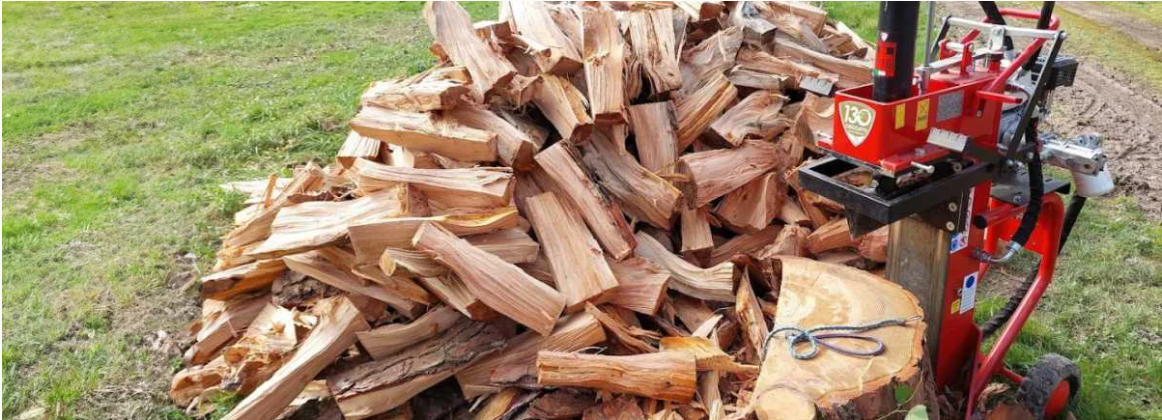
A comprehensive guide covering all stages of log splitter maintenance, with many useful tips, the various tasks to carry out, and the correct procedures for completing them.
The log splitter is an essential tool for cutting large quantities of firewood, both for domestic and professional use. Its constant use, often under load, exposes it to significant mechanical and hydraulic stresses which, if not handled correctly, can lead to failure.
That is why regular maintenance is important, to preserve the efficiency and durability of the machine for many years.
Together, we will explore which components are most prone to wear, how to carry out the necessary interventions, and how often the various checks should be performed.
We will analyse the various procedures by dividing them into three key stages: commissioning maintenance, routine maintenance, and, where applicable, maintenance to be carried out during periods of non-use.
- Commissioning maintenance: This stage concerns preparing the log splitter for extended downtime and periods in which the machine is not in use.
- Routine maintenance: During regular operation, it is essential to keep the log splitter efficient through periodic inspections.
- Maintenance for periods of non-use: The log splitter can be used at any time of the year. However, if a long period of inactivity is foreseen, it is advisable to carry out some maintenance work to best preserve the machine during downtime.
CONTENTS
- 1. Commissioning Maintenance
- 2. Routine Maintenance
- 3. Maintenance for Periods of Non-Use
- 4. Maintenance Safety
- 5. What is Needed for Log Splitter Maintenance?
- 6. Frequently Asked Questions from our Customers
1. Commissioning Maintenance
The log splitter can be put into operation at any time. However, if the machine has been idle for a long time, it is important to carry out a series of checks to ensure its efficiency, safety, and full operational readiness at the time of use. Let’s see what the main interventions to be performed are:
- General machine inspection;
- Checking and topping up the hydraulic oil;
- Check the hydraulic oil filter;
- Checking engine components (for internal combustion models);
- Checking the condition of the wedge guides;
- Checking and sharpening the wedge.
1.1 General Machine Inspection
First, carry out a complete visual inspection of the log splitter’s structure.
Ensure that the frame shows no deformations, cracks, or signs of mechanical stress resulting from use during the previous season. Particular attention should be paid to bolts and screws, as operation and vibration can cause them to loosen and compromise the machine’s stability.
The condition in which the machine is found after a period of downtime largely depends on how the storage phase was carried out; in the dedicated section, we will cover all the required steps and precautions.
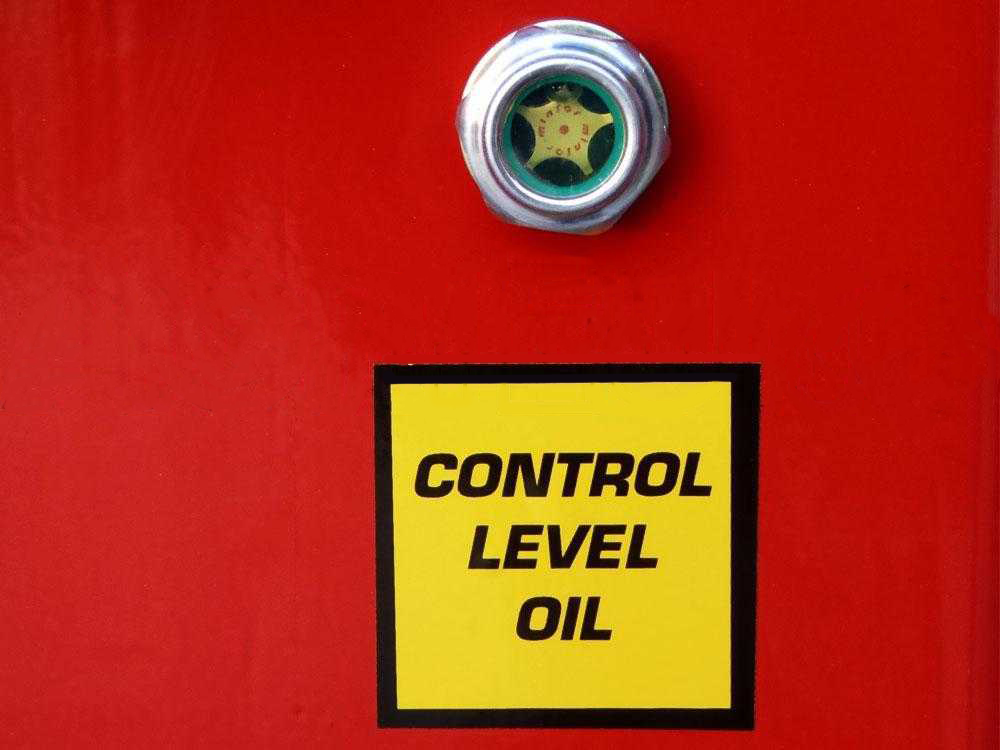
hydraulic oil level
1.2 Checking and Topping Up the Hydraulic Oil
Hydraulic oil is the log splitter’s vital fluid; ensure that the level is between the minimum and maximum marks indicated on the dipstick or on the inspection sight glass.
To carry out the check, the hydraulic cylinder must be fully retracted.
If the level is low, top it up using only the hydraulic oil recommended by the manufacturer.
This check must be carried out before each season and every 20-30 operathours thereafter.
1.3 Checking the Hydraulic Oil Filter
The hydraulic oil filter retains impurities and particles that would otherwise damage the pump and valves.
Before putting the log splitter back into operation, perform a visual inspection of the filter (if it is transparent) or replace it as a preventive measure, in accordance with the instructions in the manual (generally every 100–200 operating hours).
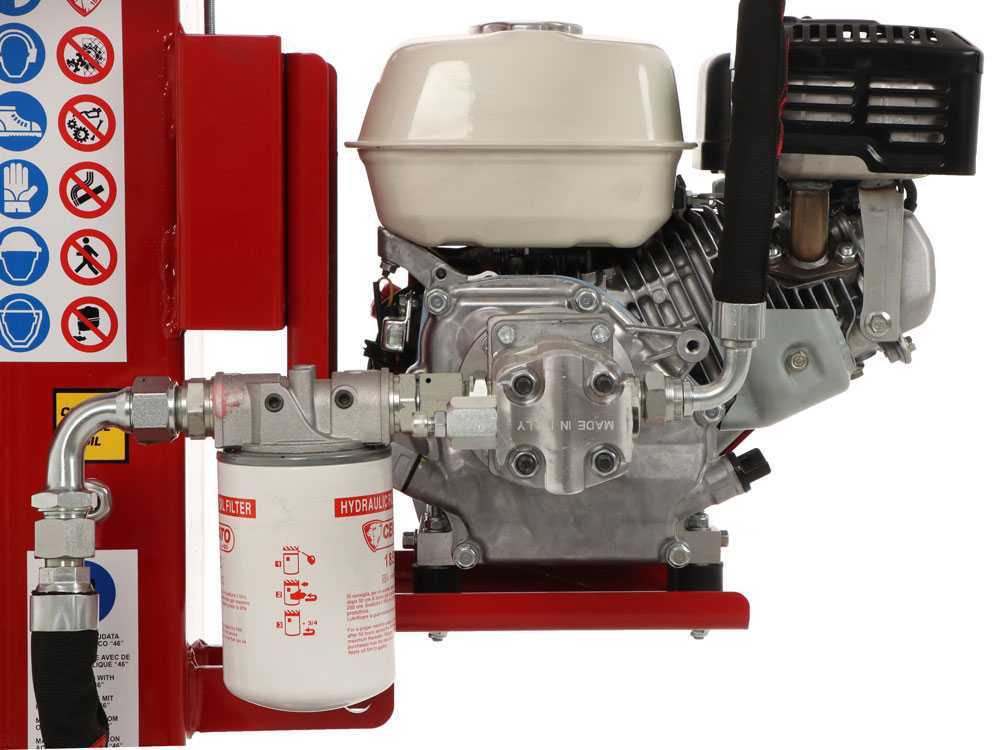
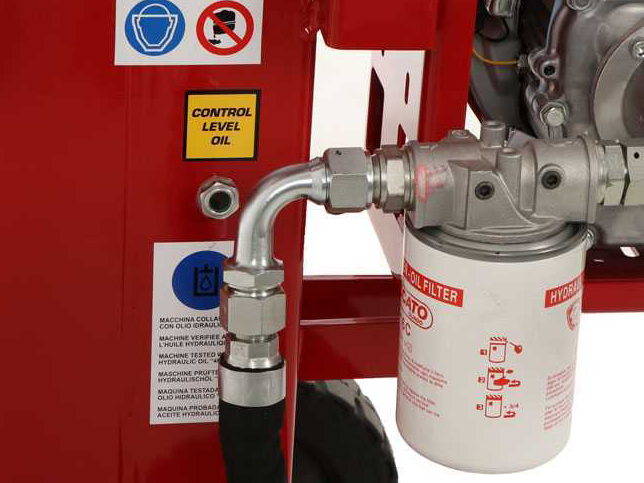
To replace the filter, remove it using the appropriate filter wrench, lubricate the new gasket, and fit the new filter, tightening it by hand only
1.4 Checking the Condition of the Guides
Before using the log splitter, especially if it is the first time it has been switched on in a long time, it is essential to carry out a thorough check of the wedge guides, i.e. the rails on which the wedge slides during the splitting cycle.
These components, which are subject to significant mechanical stress, must be perfectly clean, free of rust, debris, or wood residues, and properly lubricated to ensure smooth and precise wedge movement.
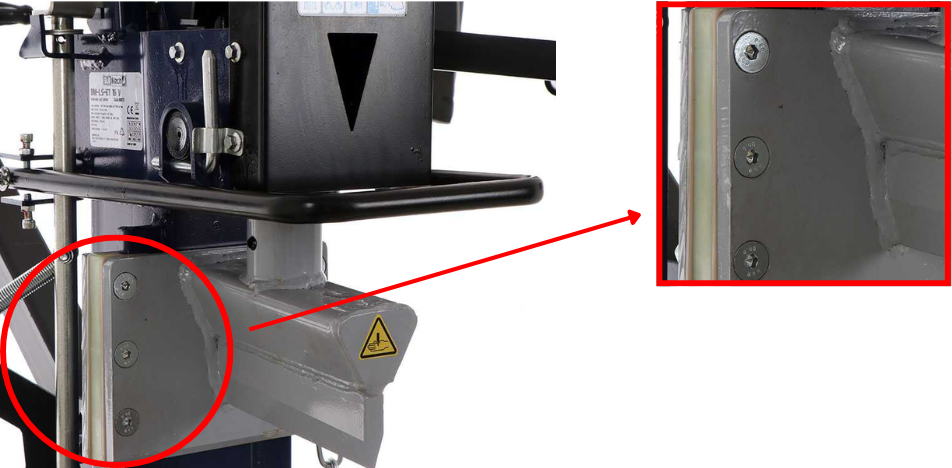
Tip: If there are traces of light rust or oxidation, you can treat them using fine steel wool or a dedicated rust remover.
At this point, proceed with lubrication, using a high-performance grease or a lubricating spray.
Effective lubrication reduces friction, prevents wear of metal components, and above all allows the wedge to slide with precision and force, without placing unnecessary strain on the piston or the hydraulic system.
During this initial inspection, it is also advisable to check that there is no abnormal play or any signs of structural damage to the guides.
1.5 Checking and Sharpening the Wedge
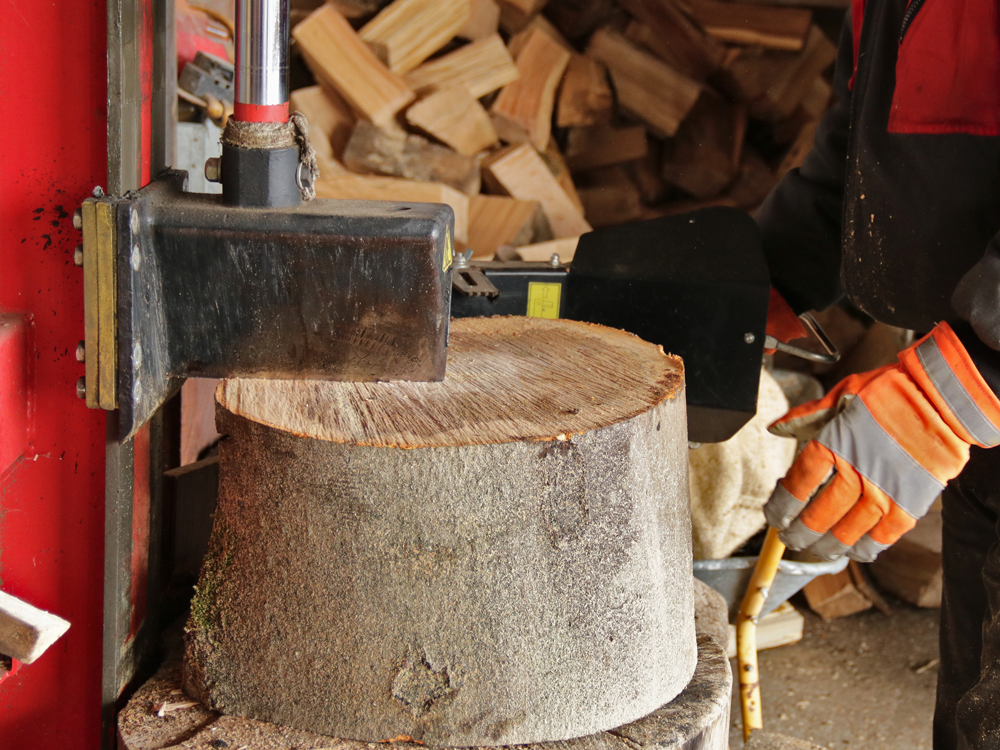
nspect the wedge to ensure the cutting edge is sharp and free of chips; this reduces the effort required from the machine and ensures quick, clean splitting.
Any minor damage can be corrected with a file, grinding wheel, or angle grinder, working carefully and keeping the original angle.
Repeat this procedure whenever necessary throughout the season.
How do you sharpen the splitter’s wedge?
- The first step is to remove the wedge from the log splitter, if possible, so that it can be worked on a stable surface.
- Use a fine file or a grinding wheel to sharpen the wedge, maintaining the original sharpening angle.
- Sharpening must be carried out evenly on both sides of the wedge, taking care not to overdo it so as not to compromise the metal’s structural integrity.
1.6 Checking the Engine Components (on internal-combustion models)
In the case of an internal combustion log splitter, an overhaul of its main components is essential.
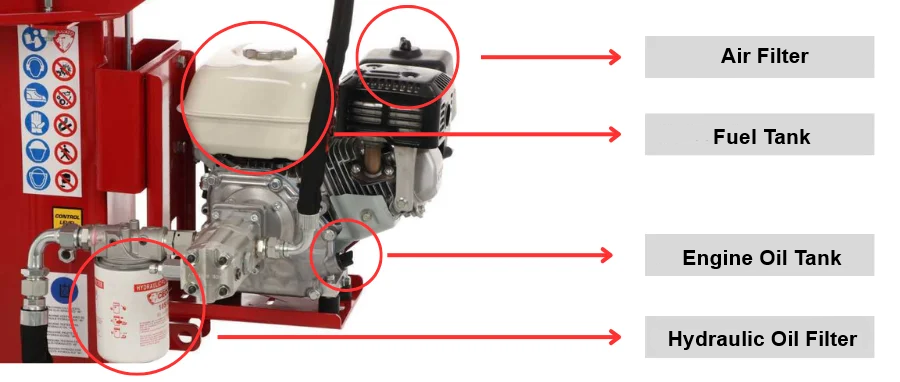
The main operations to be performed are:
- Replacing old fuel with fresh one;
- Changing engine oil;
- Checking or replacing the air filter;
- Checking or replacing the spark plug.
1.6.1 Replacing Old Fuel with Fresh One
On internal-combustion models, the very first step is to refresh the fuel.
In the chapter dedicated to storage, we will discuss why it is not advisable to leave fuel in the tank for a long time. If this step is followed, recommissioning will simply require refilling the fuel tank.
If, instead, the fuel has been left standing for a long time, the first step is to replace it with fresh fuel.
1.6.2 Changing Engine Oil
A well-performing internal-combustion engine depends on a lubricant in perfect condition.
Engine oil is essential for proper engine operation, as it reduces wear and ensures cooling of the internal components.
During commissioning maintenance, the first step is to replace it with fresh oil.
Important: It is essential to use the type of oil recommended in the machine manufacturer’s user manual.
Before proceeding with the replacement, make sure the engine is switched off and has cooled down.
1.6.3 Checking or Replacing the Air Filter
The air filter prevents dust and debris from entering the engine; for this reason, it is important to ensure it is always in good condition, so as to guarantee proper engine breathing and efficient combustion.
In some cases, the air filter may be dirty or damaged:
- In the first case, a thorough cleaning will suffice;
- While in the case of excessive damage it must be replaced.
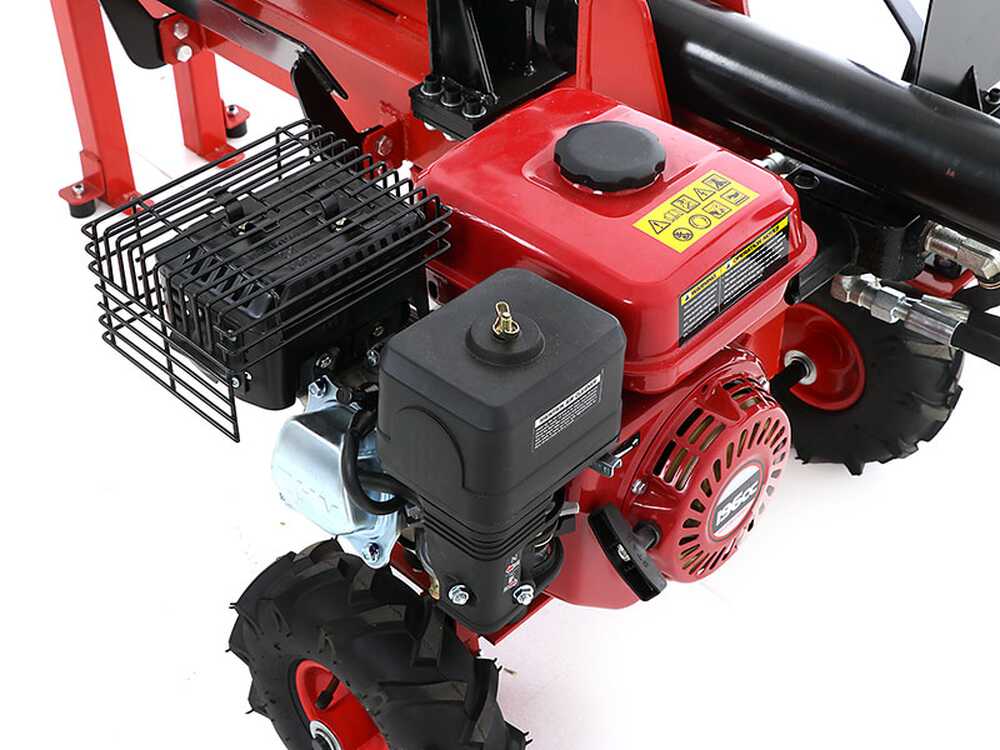
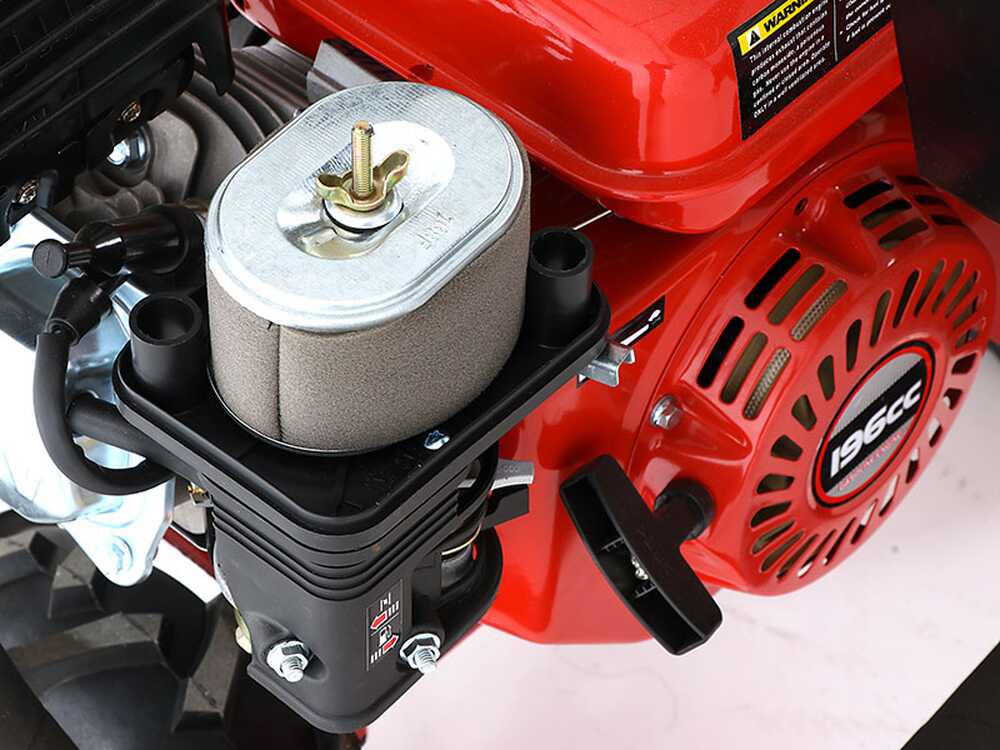
Remove the air filter and check that it is not clogged with dust or dirt. If it is in good condition, clean it thoroughly with water and soap, and allow it to dry completely before reinstalling it.
If the filter is damaged or excessively dirty, it must be replaced with a new one to prevent dust particles from entering the engine and compromising its operation.
1.6.4 Checking or Replacing the Spark Plug
The spark plug is essential to ensure reliable starting and optimal combustion.
During maintenance, remove the spark plug and inspect the electrode for carbon deposits or oxidation:
- If the spark plug is dirty but otherwise in good condition, simply clean it and measure the gap (the distance between the electrodes);
- If it is too worn or damaged, replace it with a new one.
How to clean a log splitter spark plug?
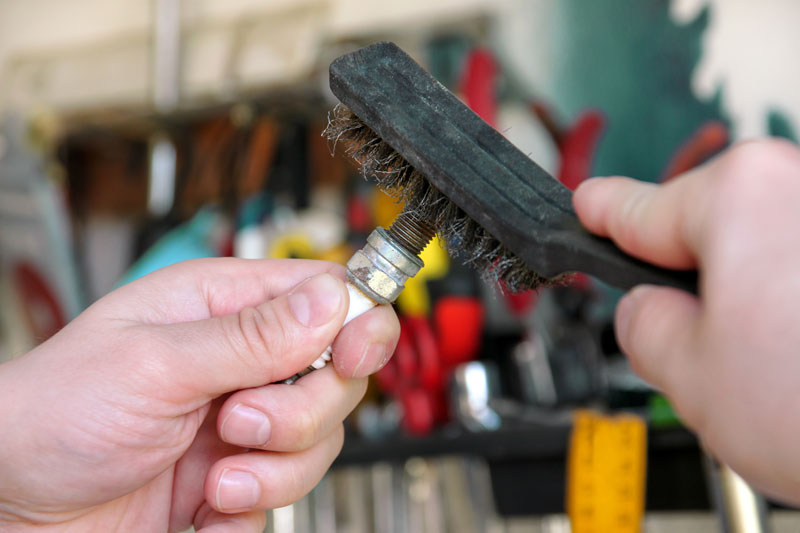
Remove any oil and dirt residues from the plug seat and surrounding area; for the threads, use a steel-bristle brush to remove most of the deposits.
How to replace a log splitter spark plug?
Replacing the spark plug is not a very difficult process, but one that requires precise procedures:
- First, locate the spark plug;
- Remove it with a swivel-type spark plug wrench. To unscrew it, turn it counterclockwise. The spark plug — especially if it has never been removed before — may present slight resistance to the wrench. At this stage, it is important to apply firm movements, but not excessive force; otherwise, there is a risk of breaking the upper part of the spark plug;
- Once removed, it can be replaced with a new one.
- Once positioned in its seat, start by turning it in by hand, then complete the correct tightening using the swivel wrench.
It is also important to make sure that the spark plug is inserted correctly, in order to avoid serious damage to the engine.
1.6.5 Checking the Fuel System
Check the condition of the tank, fuel lines, and fuel filter.
Adequate fuel flow is essential for correct engine starting and operation. Inspect the fuel tank to ensure there are no leaks and that the fuel is free from contaminants. Also inspect the fuel lines for any cracks or hardening that could cause leaks.
2. Routine Maintenance
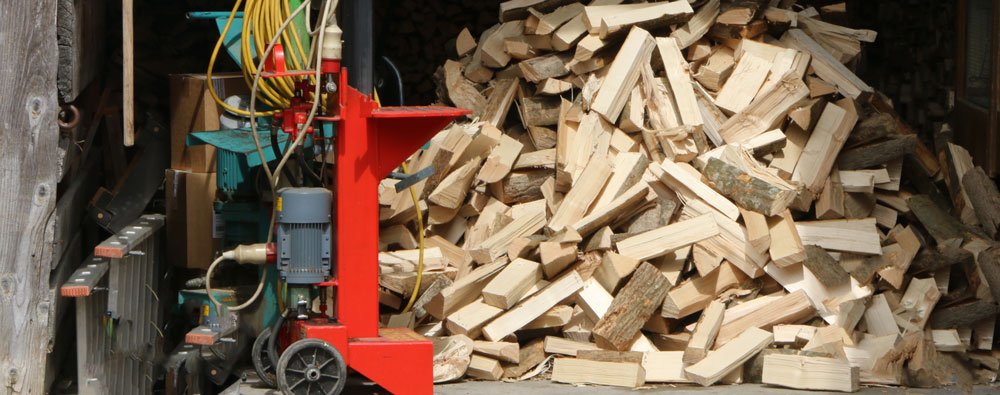
During periods of active use, it is essential to carry out regular routine maintenance on the log splitter. These measures help maintain efficiency and prevent failures from occurring during operation:
- Cleaning after each use;
- Checking the hydraulic oil level;
- Checking the condition of the guides;
- Checking the condition of the wedge (sharpening or replacement);
- Checking engine components (for internal combustion models);
- Checking the condition of the safety controls.
2.1 Cleaning After Each Use
After each work session, it is good practice to clean the log splitter of bark residues, sawdust and shavings.
Cleaning should be carried out using a stiff brush and, if necessary, compressed air to reach the most hidden areas.
2.2 Checking the Hydraulic Oil Level
After several work sessions, the hydraulic oil level may decrease slightly due to micro-leaks or normal consumption during operation.
The level should be checked every 20-30 working hours, always with the machine on level ground.
Any top-ups should be carried out using the oil recommended by the manufacturer in the relevant manual.
An inadequate oil level may result in reduced performance and possible damage to the hydraulic pump.
2.3 Checking the Condition of the Guides
The wedge guides should be inspected and lubricated regularly, especially when working with hardwoods or resinous wood, which tend to leave sticky and abrasive residues along the wedge travel path.
Routine maintenance involves light and frequent cleaning, ideally every 4-5 hours of continuous operation or at the end of the day.
How to carry out cleaning and lubrication?
A brush or a small plastic scraper is sufficient to remove any accumulated wood chips, followed by a dry cloth. For lubrication, the use of a spray lubricant with anti-wear properties is recommended, as it can be applied easily even in hard-to-reach areas.
2.4 Controllo dello stato del cuneo
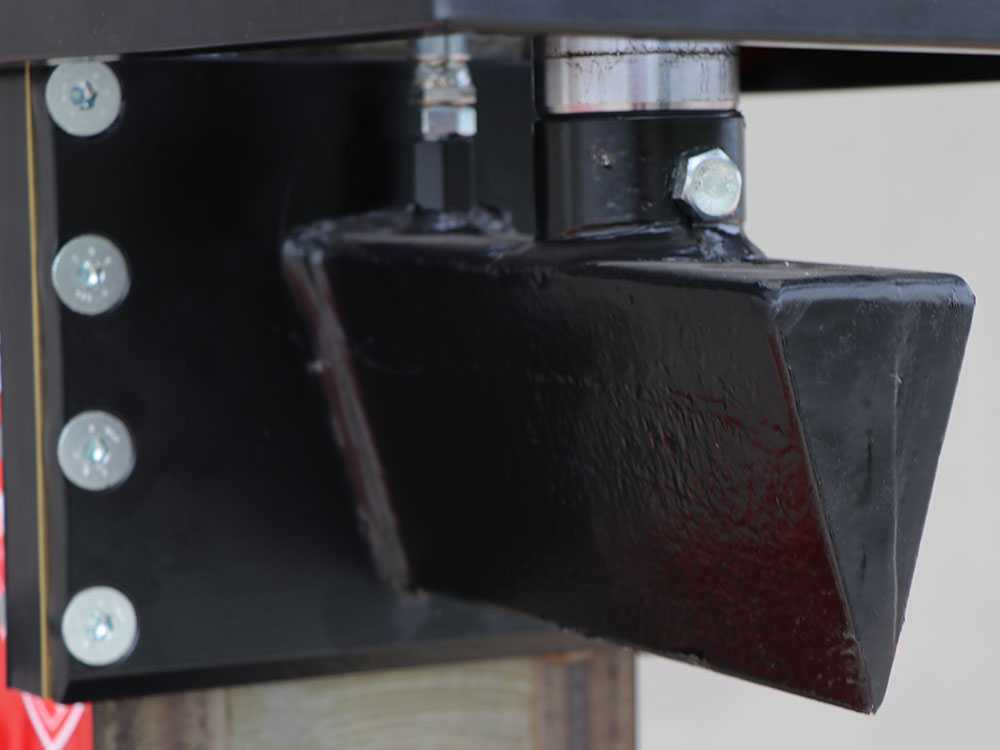
Depending on the quality of the wood being processed, the wedge may lose sharpness over the course of the season.
In addition to checking its sharpness, it is also advisable to ensure that it has no chips or deformations and that it retains a regular, well-balanced shape.
In the event of damage, it may be necessary to replace the wedge with a new one.
2.5 Checking Engine Components (for internal-combustion models)
For internal-combustion units, it is important to carry out regular checks of all engine components.
2.5.1 Engine Oil Level Check
Its inspection is one of the key routine maintenance operations to ensure the engine’s longevity and efficiency. In this step, check the engine oil level using the dipstick or the inspection cap, if fitted. The level should be between the indicated minimum and maximum marks.
If the oil appears to be dirty or thick, it is recommended to replace it, even if the level is correct, to avoid premature engine wear.
2.5.2 Air Filter Inspection
Another important routine maintenance task is the regular inspection and, if necessary, cleaning of the air filter, to prevent clogging that could restrict airflow and compromise combustion.
How to check the condition of the air filter?
- Remove the filter, visually inspect for damage or dust build-up.
If the filter is in good condition, you can clean it gently with compressed air or wash it, depending on the type of filter (foam, metal mesh, or paper). - If the filter appears too worn or damaged, replace it to ensure optimal air flow to the engine.
2.6 Checking the Condition of the Safety Controls
To operate in complete safety, the emergency devices and the two-hand control system must always be in perfect working order. Periodically check the responsiveness of the buttons, their correct return to the neutral position, and the integrity of the wiring (for electric models). In the event of faults, cease operation and proceed with the necessary repairs.
3. Maintenance for Periods of Non-Use
As also mentioned in the introduction, the log splitter can be used at any time of the year. However, if a long period of inactivity is foreseen, it is essential to carry out a series of procedures to preserve it in the best possible way and avoid damage due to prolonged downtime.
Planned interventions:
- Thorough cleaning of the machine;
- Fuel draining (for internal-combustion models);
- Spark plug maintenance (for internal-combustion models);
- Storage.
3.1 Thorough Machine Cleaning
The first step in this phase is a thorough cleaning of the entire machine, going beyond the simple removal of residues. Use soft wire brushes, damp cloths, and compressed air to remove all traces of resin, dust, and accumulated dirt.
Particular attention should be paid to the guides, pistons, and joint points to prevent organic residues from attracting moisture and promoting rust formation during periods of downtime.
3.2 Fuel Draining (for internal-combustion models)
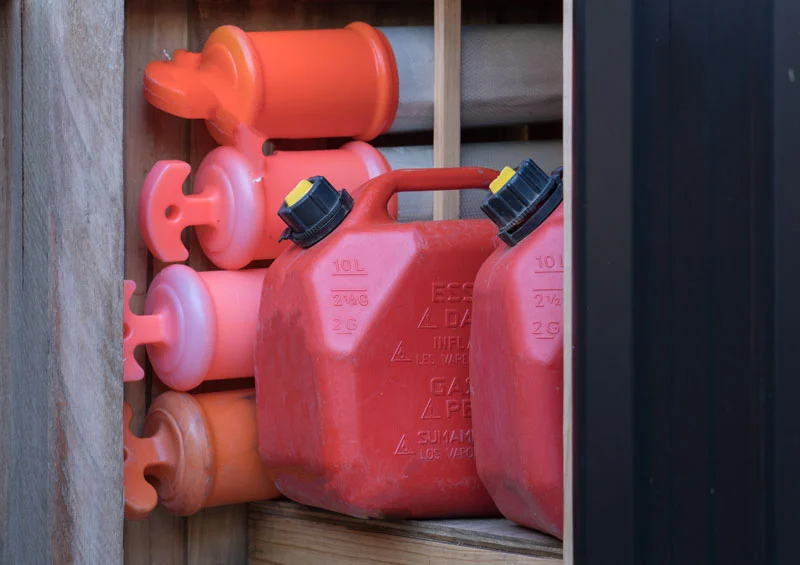
Before long downtimes, it is advisable to empty both the drain and the carburettor.
Petrol, if left idle for long periods and subjected to significant temperature changes, tends to produce condensation.
This moisture, when mixed with the fuel, is the primary cause of deposits; in addition, natural residues can accumulate in the fuel, compromising its quality.
Tip: To ensure that no fuel remains, it is advisable to let the engine run until it shuts off on its own.
If you plan to keep fuel in the tank, it is advisable to use additives during winter to prevent deposits from forming.
For proper fuel storage, durable red plastic canisters are available, designed to prevent accidental puncture and protect the fuel from light.
3.3 Spark Plug Maintenance (for internal-combustion models)
For log splitters with an internal combustion engine that will remain unused for an extended period,it is advisable to pour a teaspoon of oil into the spark plug opening to prevent the cylinder from seizing, then refit the spark plug.
3.4 Storage in a Dry and Sheltered Place
As a final step, the log splitter should be stored in a place protected from rain and moisture. It is recommended to cover it with a breathable cloth that prevents condensation and to place it on surfaces that are not in direct contact with the ground.
As we also mentioned in the first chapter on commissioning maintenance, proper storage ensures a trouble-free restart in the following season.
4. Maintenance Safety
As with its use, maximum attention to safety is also required during log splitter maintenance, given the presence of sharp blades, pressurized hydraulic components, and heavy parts.
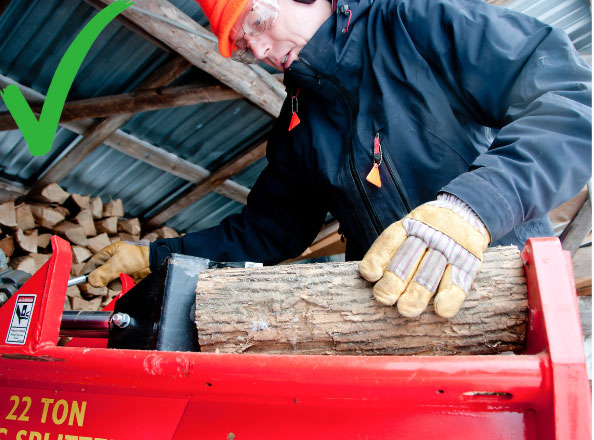
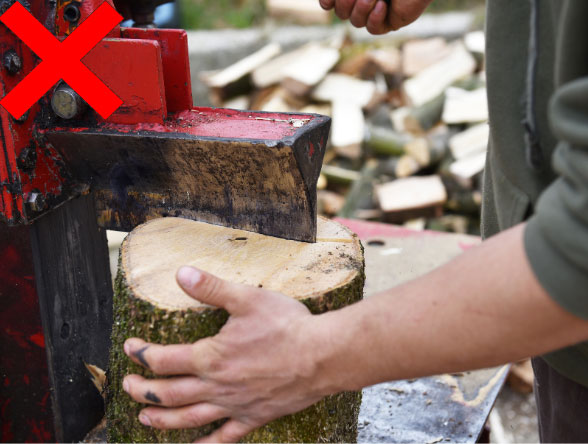
How to safely maintain the log splitter?
- When working on the wedge, it is important to wear certified cut-resistant gloves and secure the wedge in a safe position to prevent accidental movement.
- Sharpening operations should only be carried out on a fixed bench and with intact tools.
- When topping up or changing fluids, it is necessary to protect oneself from splashes with goggles and gloves, work in a well-ventilated environment and properly handle the disposal of used oil.
- The log splitter must always be handled with the aid of suitable equipment to avoid excessive manual effort.
It is always good practice to read the user manual, which outlines maintenance operations as well as the correct steps and procedures.
5. What is Needed for Log Splitter Maintenance?
To carry out thorough, safe, and accurate maintenance on your log splitter, it is important to have all materials, the appropriate tools, and the required personal protective equipment (PPE) prepared in advance.
5.1 Materials
- Hydraulic oil specified by the manufacturer;
- Engine oil specified by the manufacturer;
- Replacement hydraulic oil filters;
- New air filter (for internal-combustion models);
- New spark plugs (for internal-combustion models);
- Containers for collecting and disposing of used oil.
5.2 Tools and Implements
- A spark plug wrench should be used to remove and reinstall the spark plug. They differ in the size of their fittings, which determines compatibility with the various spark plug models.
- Engine oil, which provides lubrication and helps keep the engine clean.
- The engine oil replacement kit includes a large suction syringe for extracting oil from the engine, a bottle for storing the used oil to be disposed of, and a funnel for refilling.
5.3 Clothing and PPE
- Durable work gloves;
- Safety goggles;
- Work overalls or tear-resistant technical clothing;
- Safety footwear with a reinforced toe cap.
6. Frequently Asked Questions from our Customers
Loosen the bleeding screw by turning it a few turns, until air can enter and exit the oil tank without difficulty.
The oil level must be checked regularly via the oil level sight glass.
It is the triangular, hardened steel component responsible for splitting the log.
Power is measured in tonnes and should be chosen according to one’s needs. Typically, a semi-professional rating ranges between 10 and 20 tonnes.
